• Police seek suspects in deadly birthday party shooting
  • Lawmakers launch inquires into U.S. boat strike
  • Nov. 29, 2025, 10:07 PM EST / Updated Nov. 30, 2025,…
  • Mark Kelly says troops ‘can tell’ what orders…

Be that!

contact@bethat.ne.com


Be That ! Menu   ≡ ╳
  • Home
  • Travel
  • Culture
  • Lifestyle
  • Sport
  • Contact Us
  • Politics Politics
☰

Be that!

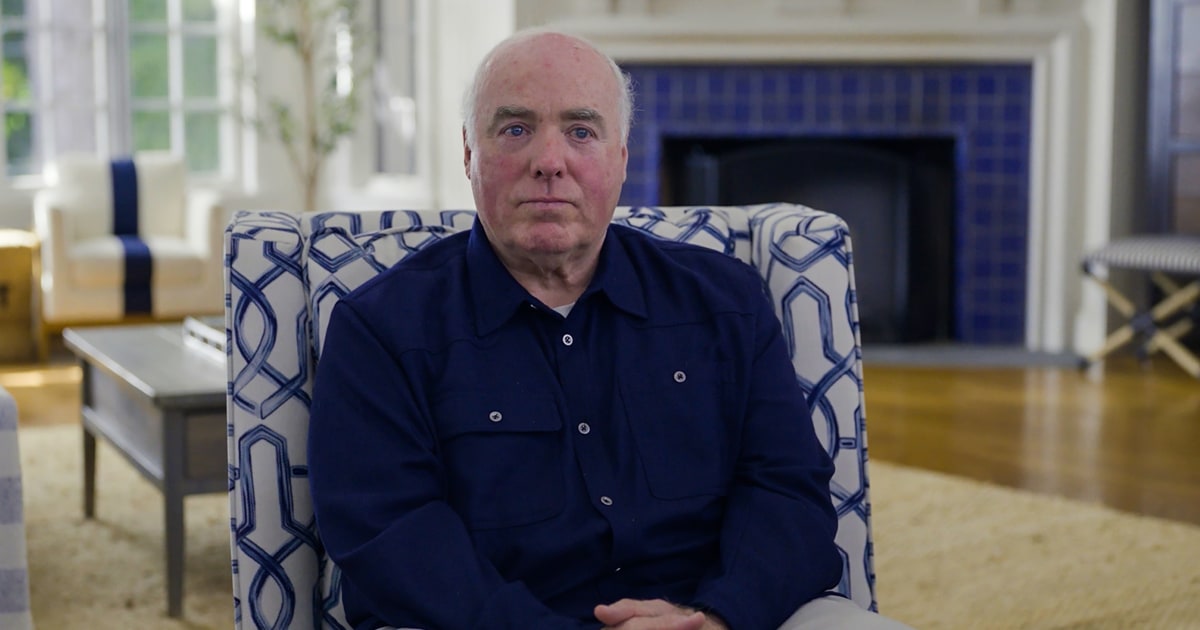
Nov. 3, 2025, 10:38 AM ESTBy Corky SiemaszkoIt is, in many ways, a quintessentially American unsolved murder mystery.The victim was a rich and beautiful teenage girl found beaten to death with a golf club in a ritzy and supposedly safe Connecticut suburb. There was national news media frenzy followed by a stymied police investigation. And at the center of it all, there was murder suspect Michael Skakel, who also happens to be related to the fabled Kennedy family. Eventually, there would be celebrity cameos from another high-profile murder investigation in this unfolding drama.But 50 years after the 15-year-old was found dead beneath a tree in the backyard of her family home, there still is no definitive answer to the question: Who killed Martha Moxley?Undated photo of Martha Moxley released as evidence during the trial of Michael Skakel.Getty Images fileNow, for the first time since his conviction in the killing of Moxley was overturned in 2013, Skakel is speaking at length about the death in Greenwich that sent him to prison for more than 11 years.“Um, my name is Michael Skakel and why am I being interviewed?” he asks veteran journalist Andrew Goldman in “Dead Certain: The Martha Moxley Murder,” NBC News Studios’ new podcast that makes its debut Tuesday. “I mean, that’s kind of a big question, isn’t it?”On several occasions, Skakel and his brother Stephen Skakel were interviewed at the modest rental home they share in Norwalk, Connecticut, which is a far cry from the mansion in which they grew up.“For the first half of the 20th century, the Skakels were incalculably rich robber baron rich, a kind of wealth we now associate with the Koch brothers. Certainly richer than the Kennedys,” Goldman said. “Not so anymore.”The first five episodes of the podcast delve into the history of the murder case that transfixed the country after Moxley was found dead Oct. 31, 1975, setting off a hunt for her killer that continues to this day.Goldman is not new to the Moxley case; he ghostwrote “Framed: Why Michael Skakel Spent Over a Decade in Prison for a Murder He Didn’t Commit,” a 2016 bestseller by Skakel’s cousin, now-Health and Human Services Secretary Robert F. Kennedy Jr. After finishing his work on the book, Goldman continued to reinvestigate the case on his own for nearly a decade.But Goldman, in the podcast, admits he wasn’t initially sold on the idea of Skakel being innocent.“When I first met him back in 2015, to be honest, being in the same room with him made me physically uncomfortable,” Goldman says. “The media coverage of the case had convinced me I was shaking a murderer’s hand.”Skakel is the fifth of seven children born to Rushton and Anne Skakel, who were fabulously wealthy and ultraconservative Catholics. They were the nieces and nephews of Ethel Skakel Kennedy, the widow of Robert F. Kennedy. The Skakel children lost their mother to cancer in 1972 and their father struggled with alcoholism.The family lived across the street from the Moxleys in a Tudor-style mansion.Moxley was last seen alive Oct. 30, 1975, when she was hanging out with a group of friends that included then 15-year-old Skakel and his older brother Thomas Skakel on Mischief Night, which is the night before Halloween when children roam the neighborhood and pull pranks such as ringing doorbells and toilet-papering trees and yards.Described by friends as “joy on legs,” the vivacious teen was found dead the next day in the brush on her family’s property with her pants and underwear pulled down.An autopsy revealed Moxley had not been sexually assaulted, but had been bludgeoned and stabbed in the neck with a broken six-iron golf club that was traced back to the Skakel home.Skakel wasn’t the first person police suspected of killing Moxley. Thomas Skakel landed on investigators’ radar well before him because he was seen flirting with her before she died. Later, police focused on the Skakel children’s live-in tutor, Kenneth Littleton. Neither were charged with a crime.Skakel said in the podcast that his life was a horror show before Moxley died.Skakel said his father beat him at age 9 when he found him with some Playboy magazines and often beat him for no reason at all.“He was about as Orthodox Catholic as it got,” Skakel said of his father. “I just never knew when it was going to happen. I didn’t know why it happened.”During Skakel’s sentencing hearing in 2002, his lawyer submitted 90 letters from people close to him that included details of abuse he allegedly suffered at the hands of his father.Skakel said his mother was cold and left most of the child-rearing to the household help. When he broke his neck at age 4, he said, his mother barely visited him during his two-month stay in the hospital.“She wasn’t really touchy-feely,” he said.When his mother got sick, Skakel said his father blamed him.“If you only did better in school, your mother wouldn’t have to be in the hospital,” Skakel recalled his father telling him. “And I remember just going, ‘Oh, my God, I wanted to die. I just wanted to die’.”Skakel said he was around 12 years old when his mother died. And like his father, he sought solace in drinking. He was sent away to a private school in Maine after he was caught driving under the influence at age 17. He said he was subjected to beatings from his classmates at Elan School. The school, which aimed to help troubled teens, closed down in 2011.“They literally picked me up over their head and carried me downstairs like I was a crash test dummy,” Skakel said of one beating. “And when I was probably 10 feet from the stage, they threw me. And I thought I broke my, my back on the stage.”Skakel made it through reform school and rebuilt his life. He stopped drinking in 1982, got married in 1991 and later had a son. He earned a college degree in 1993 and competed on the international speed skiing circuit.Meanwhile, the long-stalled Moxley investigation was revived after another Skakel relative, William Kennedy Smith, was tried and acquitted in 1991 for an unrelated rape. Amid the tabloid frenzy of that case, an unfounded rumor emerged that he had been at the Skakel home on the night that Moxley died.The speculation around Smith went nowhere, but the media attention breathed new life into the stalled Moxley case. And that prompted Skakel’s father to fund a private investigation aimed at clearing the family name.That move backfired. The end result was a report that was leaked to the media, casting doubt on the alibis of Thomas and Michael Skakel.Among the revelations was Michael Skakel’s admission that on the night of the murder, he climbed a tree by Moxley’s house and tossed pebbles at her window. When she didn’t come out, he masturbated while sitting in the tree.Pressure to reinvestigate the Moxley killing ratcheted up further in 1993 when author Dominick Dunne published a novel called “A Season in Purgatory” based on the Moxley murder. That was followed five years later by “Murder in Greenwich,” which was written by disgraced O.J. Simpson detective Mark Fuhrman and which named Michael Skakel as Moxley’s likely murderer.Two years later, on March 14, 2000, Skakel, 39, was arrested after investigators secured testimony from two former classmates at the Elan School who claimed he confessed to killing Moxley.Skakel was arraigned on a murder charge in juvenile court because he was 15 at the time of the crime. The case was later moved to regular court. He said his lawyer, Mickey Sherman, promised him that he’d never see the inside of a courtroom.But two years later, Skakel was convicted of killing Moxley and sentenced to 20 years to life in prison. He was released in 2013 after his conviction was overturned.The judge ruled that Skakel had been denied a fair trial because, among other things, Sherman had failed to contact a witness who could have provided his client with an alibi. And in 2020, the state dropped the case against Skakel saying it would not be able to prove the case against him beyond a reasonable doubt.“Mickey Sherman basically proved to be the anti-Nostradamus,” Goldman says in the podcast. “Every one of his predictions turned out to be dead wrong.”Corky SiemaszkoCorky Siemaszko is a senior reporter for NBC News Digital.
admin - Latest News - November 3, 2025
admin
13 views 7 secs 0 Comments


It is, in many ways, a quintessentially American unsolved murder mystery


Source link

TAGS:
PREVIOUS
Nov. 3, 2025, 11:10 AM ESTBy Mirna AlsharifAs the government shutdown nears its second month, airports across the country are feeling its impact, with flight delays piling up because of staffing shortages.This weekend saw the most difficult travel conditions yet at dozens of American airports, where lines of frustrated travelers appeared endless. More than 5,000 flights traveling from and to U.S. airports were delayed Sunday alone. As the shutdown drags on, more delays and cancellations can be expected, according to Transportation Secretary Sean Duffy. Air traffic controllers, who are relied on to coordinate aircraft within the airspace and are required to work as essential workers during a government shutdown, have been working without pay. Duffy said he wants them to return to work, adding that those who do not will receive a disappointing paycheck at the end of the week. “None of them can miss two paychecks,” Duffy said on CNBC’s “Squawk Box” on Monday. “They all start — their home finances fall apart, and they’re all going to have to look at taking second jobs or quitting and getting into another line of work. And the consequence of that is very real for our air system.”Duffy underscored the dire need for air traffic controllers, adding that the system is short anywhere from 2,000 to 3,000 controllers. “I’m trying to put more air traffic controllers into the system,” he said. On Monday morning, more than 900 flights traveling within, to and out of U.S. airports were delayed, and more than 430 were canceled, according to FlightAware.com. John F. Kennedy International Airport and Newark Liberty International Airport account for most of it, with more than 110 delays and 16 cancellations between them. It is not immediately clear if staffing shortages directly caused the delays and cancellations Monday. The unpredictable flight schedule has frustrated travelers. Many are questioning the safety of air travel if control towers are not fully staffed.Duffy said delays and cancellations are an attempt to make air travel safer.”You’ll see more delays, you’ll see more cancellations of flights, and that’s because we slow traffic down because we don’t have enough controllers in the towers and TRACONs to make sure we can navigate the flights,” he said, referring to terminal radar approach control facilities. “So, that’s a tool that we have to keep the system safe.”If air travel was unsafe, the Transportation Department would “shut the whole airspace down,” Duffy said. “We won’t let people travel,” he said. “We’re not there at this point. It’s just significant delays.”Mirna AlsharifMirna Alsharif is a breaking news reporter for NBC News.
NEXT
Two girls thrown off of Ferris wheel at Louisiana fair
Related Post
November 23, 2025
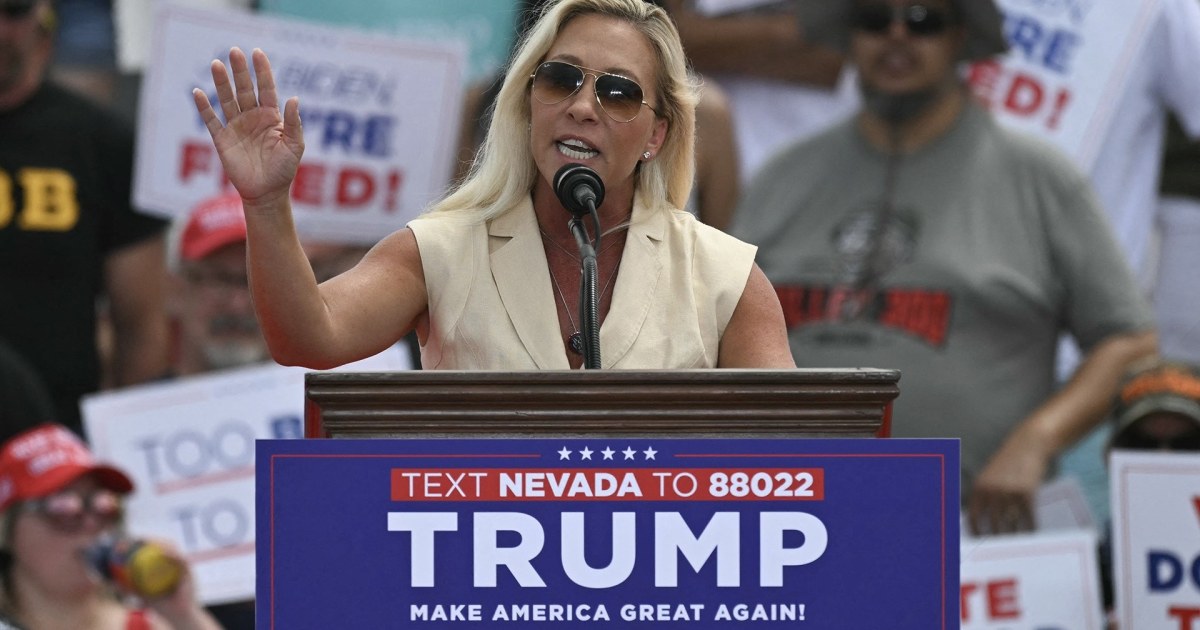
What Does Marjorie Taylor Greene’s Resignation Mean for MAGA?
September 28, 2025
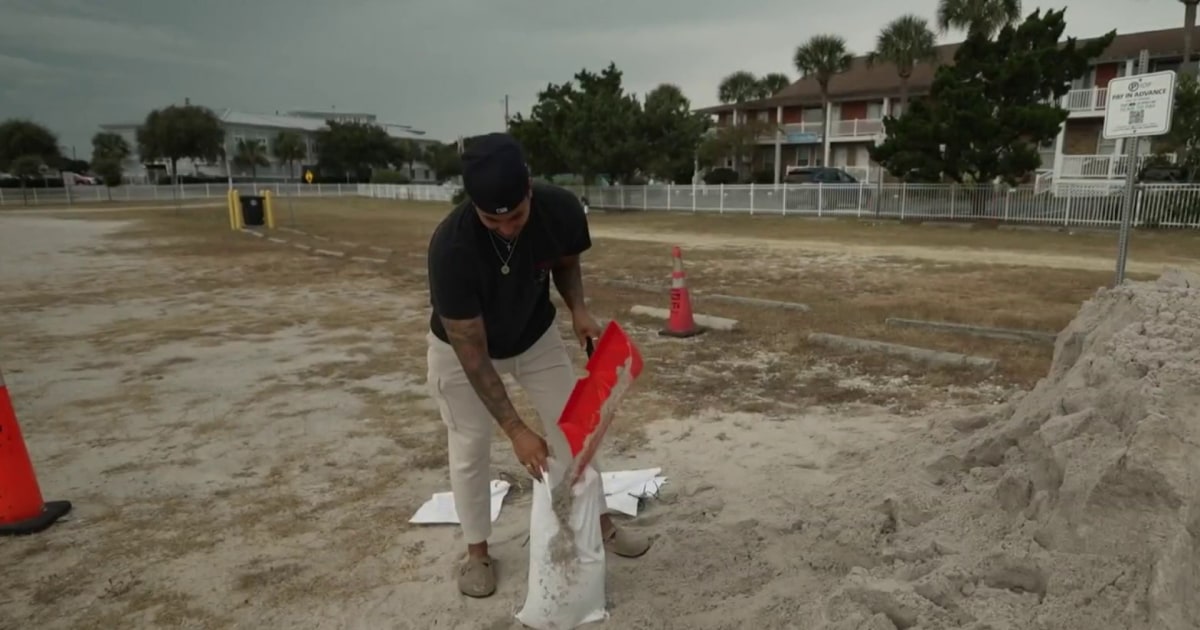
Carolinas declare states of emergency, brace for storm threat
November 8, 2025
Sydney Sweeney describes her training regimen for upcoming boxing biopic
October 8, 2025
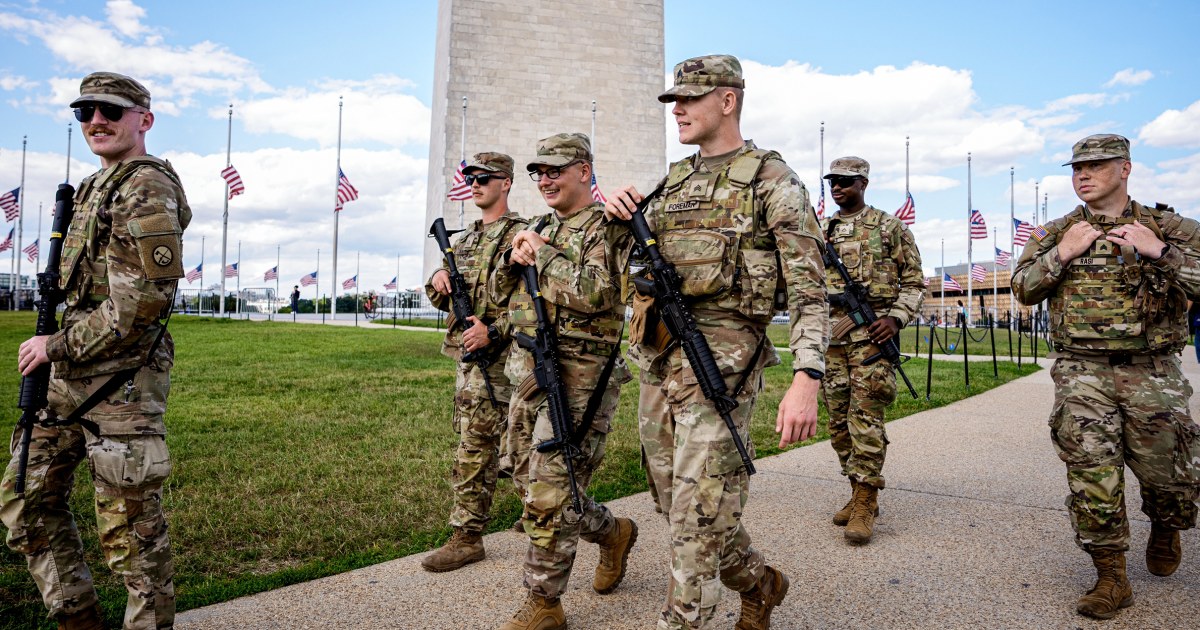
Oct. 7, 2025, 5:17 PM EDTBy Gary Grumbach and Dareh GregorianPresident Donald Trump suggested numerous times this week that he could invoke the sweeping presidential powers granted by the Insurrection Act “if necessary.””It’s been invoked before,” Trump told reporters Tuesday, adding, “We want safe cities.”Using the Insurrection Act was something Trump repeatedly suggested he might do in his first term, although he never actually did.A spokeswoman for the White House, Abigail Jackson, said in a statement Tuesday that the president has “exercised his lawful authority to protect federal officers and assets. President Trump will not turn a blind eye to the lawlessness plaguing American cities.”Here’s a look at what the Insurrection Act is, and what it would enable the president to do.What is the Insurrection Act?While the military is generally barred from being deployed for domestic law enforcement without congressional authorization, the Insurrection Act gives the president power to deploy the U.S. military domestically and to federalize National Guard troops during specific circumstances.It was signed into law by President Thomas Jefferson in March 1807.Has it ever been used before?Many times, but not in decades.George Washington used an earlier version of the law to stamp out the Whiskey Rebellion in 1792.President George H.W. Bush was the last to use it during the deadly 1992 Los Angeles riots, following a request from the city’s Democratic mayor and the state’s Republican governor.What can trigger the use of the Insurrection Act?While one justification for invoking the act is clear — that the president can take action if asked to do so by a governor or a Legislature — the other standards mentioned in the statute are broad and vague, giving the president wide latitude.“Whenever the President considers that unlawful obstructions, combinations, or assemblages, or rebellion against the authority of the United States, make it impracticable to enforce the laws of the United States in any State by the ordinary course of judicial proceedings, he may call into Federal service such of the militia of any State, and use such of the armed forces, as he considers necessary to enforce those laws or to suppress the rebellion,” the statute reads.Another section says the president, “by using the militia or the armed forces, or both,” shall “take such measures as he considers necessary to suppress, in a State, any insurrection, domestic violence, unlawful combination, or conspiracy” if it “hinders the execution of the laws of that State, and of the United States within the State,” or if it “opposes or obstructs the execution of the laws of the United States or impedes the course of justice under those laws.”The statutes don’t define the terms, essentially leaving it up to the president to determine what constitutes an insurrection or rebellion, and when it’s been quelled.A 2022 review from the Brennan Center, a progressive policy group, called that provision “so bafflingly broad that it cannot possibly mean what it says, or else it authorizes the president to use the military against any two people conspiring to break federal law.”How does Trump define insurrection?The president — who was impeached on a charge of inciting insurrection on Jan. 6, 2021 — has indicated he has a low bar for what he considers insurrection, but has also said he doesn’t believe the criteria to use the act have been met.Trump mentioned the word insurrection — which the Encyclopaedia Britannica defines as “an organized and usually violent act of revolt or rebellion against an established government or governing authority” — five times on Monday.”Portland is on fire. Portland’s been on fire for years. And not so much saving it — we have to save something else, because I think that‘s all insurrection, really criminal insurrection,” Trump said at one point in the Oval Office on Monday. He told Newsmax later in the day that the situation in Portland was “pure insurrection.”Earlier in the day, he said he’d invoke the act “if it was necessary. So far it hasn’t been necessary but we have an Insurrection Act for a reason. If I had to enact it, I’d do that. If people were being killed and courts were holding us up, or governors or mayors were holding us up, sure I’d do that. I want to make sure that people aren’t killed.”Speaking to reporters on Tuesday, he broadened his definition, saying “these Democrats are like insurrectionists” because they opposed his “big beautiful bill.”How would using the Insurrection Act be different from what Trump is already doing?The Insurrection Act gives the military more freedom to perform law enforcement duties, such as conducting searches and making arrests.When Trump deployed the National Guard and the Marines in Los Angeles amid protests over his immigration policies, they were publicly assigned a more limited role, focused on protecting federal buildings and activities.A federal judge in California last month found they actually did more than that, and violated the Posse Comitatus Act of 1878, which prohibits the president from using the military as a domestic police force without approval from Congress or under special circumstances — such as an invocation of the Insurrection Act.“The evidence at trial established that Defendants systematically used armed soldiers (whose identity was often obscured by protective armor) and military vehicles to set up protective perimeters and traffic blockades, engage in crowd control, and otherwise demonstrate a military presence in and around Los Angeles,” U.S. District Judge Charles Breyer wrote in his ruling.“In short, Defendants violated the Posse Comitatus Act,” he said.The administration is appealing the ruling and an appeals court has put the ruling on hold while the case proceeds.Gary GrumbachGary Grumbach is an NBC News legal affairs reporter, based in Washington, D.C.Dareh GregorianDareh Gregorian is a politics reporter for NBC News.Tara Prindiville contributed.
Comments are closed.
Scroll To Top
  • Home
  • Travel
  • Culture
  • Lifestyle
  • Sport
  • Contact Us
  • Politics
© Copyright 2025 - Be That ! . All Rights Reserved