• Police seek suspects in deadly birthday party shooting
  • Lawmakers launch inquires into U.S. boat strike
  • Nov. 29, 2025, 10:07 PM EST / Updated Nov. 30, 2025,…
  • Mark Kelly says troops ‘can tell’ what orders…

Be that!

contact@bethat.ne.com


Be That ! Menu   ≡ ╳
  • Home
  • Travel
  • Culture
  • Lifestyle
  • Sport
  • Contact Us
  • Politics Politics
☰

Be that!

Oct. 24, 2025, 9:29 AM EDTBy Rob WileThe Social Security Administration announced Friday that benefit payments will increase 2.8% next year to account for the higher cost of living.The 2026 cost-of-living adjustment, knowns as the COLA, represents an increase over last year’s 2.5% figure, but it is lower than the historical average of about 3.7%. Individual retirement benefits will climb an average of about $56 per month, the agency said in a statement. The COLA is typically calculated using benchmark inflation data from July, August, and September. While pandemic-era inflation has ebbed since hitting a high of nearly 10% in 2022, households across the U.S. continue to report feeling price pressures.Many senior citizens’ advocates say that that demographic has been hit particularly hard — and that the way the annual Social Security adjustment is made has become part of the problem. Since it was first instituted in 1975, the annual adjustment has been calculated using a somewhat obscure inflation index that the advocates say gives inadequate weight to items that seniors tend to spend a greater share of their earnings on, like medical care, prescription drugs, rent, and home energy costs. “The index doesn’t necessarily reflect the spending habits of older adults,” said Jessica Johnston, senior director of the Center for Economic Well-Being at the National Council on Aging (NCOA). By her estimates, she said, a 4% adjustment would more accurately reflect these costs.More than one-in-five Americans currently receive some form of social security assistance, including approximately 58 million Americans aged 65 and over. Seniors have historically been more likely to report worsening consumer sentiment, according to the University of Michigan’s closely watched monthly survey. The gap in sentiment has narrowed in recent years — but other data suggest that hard times are getting harder for the most vulnerable seniors. Between 2018 and 2023, older Americans were the only demographic age group that saw an increase in its poverty rates — though their overall rate remains the lowest. An NCOA report published earlier this month found that mortality rates among older adults in the bottom 60% of wealth were nearly double those of older adults in the top 20%. And individuals in the bottom-20% of wealth died nine years earlier on average than those in the top 20%. The NCOA also estimates that 45% of older-adult households — more than 19 million — do not have the income needed to cover basic living costs based on cost-of-living data from its proprietary Elder Index. And a full 80%, or about 34 million senior households, would be unable to weather a major shock such as widowhood, serious illness, or the need for long-term care.Economic insecurity has shown to be particularly acute for aging minorities. Some 43% of Black and 44% of Hispanic adults aged 65 and up have incomes that are below 200% of the federal poverty line, according to 2022 U.S. Census data cited by the National Council on Aging.Johnston said there is a commonly held belief that older Americans have vast wealth holdings — especially those from the post-World War II Baby Boom generation — and are more likely to be financially secure than other groups. But that’s not the whole story, he story.Many members of the generation that immediately preceded the Baby Boomers, known as the Silent Generation, are still around — and possess only a fraction of the same level of financial security as their immediate successors, according to Federal Reserve data. Silent Generation members own total assets worth approximately $20 trillion — compared with approximately $85 trillion for Baby Boomers.Individuals are also living longer than ever before, Johnston said. Yet while some report overall steady levels of well-being as they age, others are “aging into poverty,” Johnston said. Rob WileRob Wile is a Pulitzer Prize-winning journalist covering breaking business stories for NBCNews.com.

admin - Latest News - October 24, 2025
admin
20 views 12 secs 0 Comments


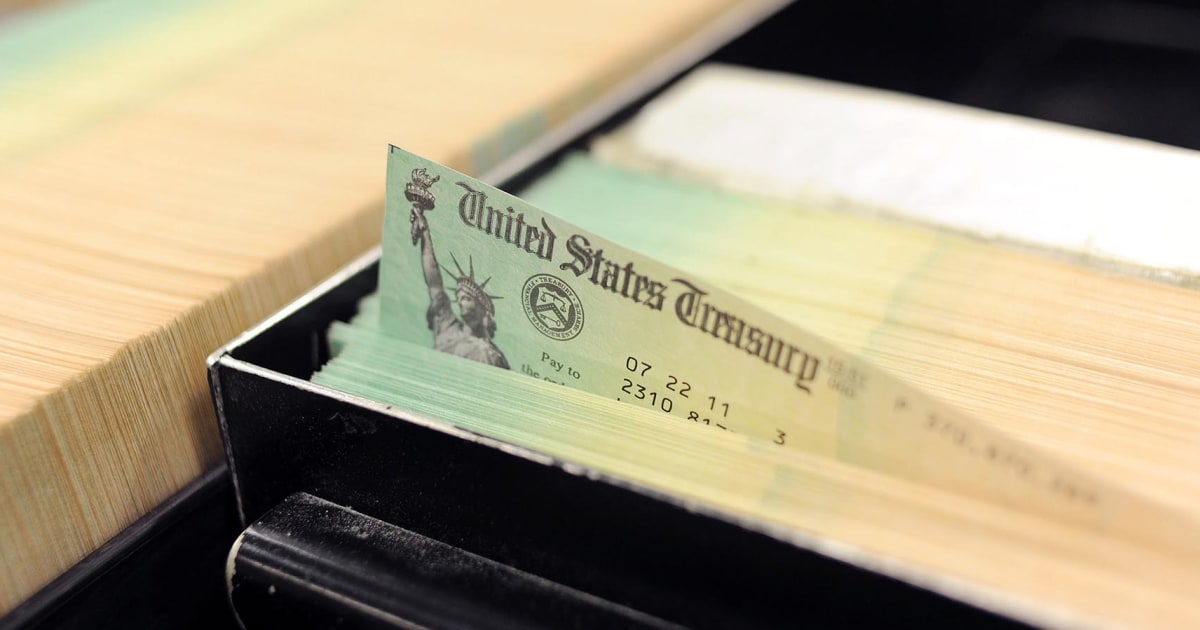
The Social Security Administration announced the 2026 COLA increase in benefits will be 2.8% to account for the higher cost of living.


Source link

TAGS:
PREVIOUS
Savewith a NBCUniversal ProfileCreate your free profile or log in to save this articleOct. 24, 2025, 9:39 AM EDTBy Arata Yamamoto and Jay GanglaniTOKYO — As Japan tries to placate President Donald Trump amid contentious trade talks, officials may be eyeing an icon of American manufacturing that has virtually no presence there: The Ford F-150 pickup truck.Trump, who is visiting the key U.S. ally next week as part of his first trip to Asia since returning to office, has long criticized the lack of American vehicles sold in Japan, citing what he believes are non-tariff barriers.Japanese auto brands such as Nissan, Honda, Mitsubishi and Subaru are ubiquitous in the United States, where Japan exported over 1.37 million vehicles last year, according to the Japan Automobile Manufacturers Association (JAMA). Cars are Japan’s top export to the U.S., though according to JAMA most Japanese cars sold there are actually assembled in North America.By contrast, Japanese brands account for more than 90% of new cars sold in Japan, which imported fewer than 17,000 American vehicles last year, according to the Japan Automobile Importers Association. The Trump administration has been pushing Japan to buy more American cars, including as part of a trade deal announced in July that imposed a 15% tariff on Japanese autos and auto parts. A joint statement on the agreement published last month said Japan would allow vehicles built and certified for safety in the U.S. to be sold in the country without additional testing. In August, Trump suggested that there would soon be a market in Japan for American cars, specifically the Ford F-150.“They’re taking the very beautiful Ford 150, which does very well and I’m sure will do very well there,” he told CNBC. The model has long been the best-selling vehicle in America, according to industry outlets.Reuters reported this week that Ford F-150s were part of a purchase package being finalized to present to Trump during talks in Tokyo next week, citing two sources with knowledge of the preparations. It said the trucks might be used in Japan as snow plows. Local media in Japan have also said the government is considering buying the trucks.Japanese officials have not confirmed the reports, and the new trade minister, Ryosei Akazawa, was not asked about them at his first news conference on Friday.Akazawa, who was previously Japan’s lead trade negotiator with the U.S., said earlier this month that while Trump’s frequent mentions of the Ford F-150 suggested they were a “favorite” of his, he did not have information to share on any potential purchases by the Japanese government.Despite the advocacy by Trump, large, expensive American cars have long been a hard sell in Japan, where roads are typically smaller and narrower than their American counterparts. “Fully-sized pickups simply wouldn’t fit on Japanese roads and into the standard pay parking lots,” Mike Smitka, a member of GERPISA, an international network dedicated to the global automobile industry, told NBC News. Many of the vehicles sold in Japan are mini or “kei” cars that are far smaller and more fuel efficient than the ones produced by American automakers. They are required by law to be no more than about 11.2 feet long and 4.9 feet wide, compared with the F-150 which is typically more than 17 feet long and 6.6 feet wide. Nissan kei cars for sale in Yokohama, Japan in 2022.Stanislav Kogiku / SOPA via Getty Images fileEuropean vehicles are also far more popular in Japan than American ones, accounting for more than 200,000 imports last year. The top-selling European car brand in Japan is Mercedes-Benz. “Unlike European car companies, Ford and General Motors (GM) don’t have dedicated port facilities or dealerships,” Smitka said in emailed comments. “They’d be very expensive to import, expensive to market, and because there’s no network, expensive to service.” Ford did not respond to an emailed request for comment. In 2016, the company said that it would close all operations in Japan, saying it had struggled to gain market share and saw “no reasonable path to profitability.”“They don’t try to sell pickups because they understand the market,” Smitka said. Arata Yamamoto reported from Tokyo, and Jay Ganglani from Hong Kong.Arata YamamotoArata Yamamoto has been an NBC News producer in Tokyo since 1993.Jay GanglaniJay Ganglani is NBC News’s 2025-26 Asia Desk Fellow. Previously he was an NBC News Asia Desk intern and a Hong Kong-based freelance journalist who has contributed to news publications such as CNN, Fortune and the South China Morning Post.
NEXT
Hegseth says U.S. struck alleged Tren de Aragua boat
Related Post
October 20, 2025
Louvre robbers swipe jewels once worn by French royalty
October 12, 2025
JD Vance says Israeli hostages could be released ‘any moment now’
October 18, 2025
Trump posts new video of U.S. strike on ‘drug-carrying submarine’
December 1, 2025
Nov. 29, 2025, 10:07 PM EST / Updated Nov. 30, 2025, 5:57 PM ESTBy Courtney Kube, Gordon Lubold and Raquel Coronell UribeBoth the House and the Senate have started inquiries into a reported second strike on an alleged drug boat in the Caribbean in September that killed the survivors of an initial strike.The Defense Department conducted a second strike on a boat the Trump administration says was carrying drugs from Venezuela after the first strike on the boat failed to kill all of its occupants, one U.S. official and a source familiar with the Pentagon’s actions that day told NBC News. The first of the two strikes conducted on Sept. 2 left at least two survivors, the officials said. The second strike killed the remaining survivors, according to the officials. ​The boat was carrying 11 people, the Pentagon said at the time. Both strikes that day were the first of several known U.S. strikes on vessels in the Caribbean Sea that the administration alleges carry drugs to the U.S. Since then, the Pentagon has conducted more than 20 strikes on vessels it says were transporting drugs from Venezuela, killing more than 80 people. The Washington Post was the first to report about the second strike in the Sept. 2 boat attack. The Post reported that the second strike was ordered by the Joint Special Operations commander overseeing the strike who was complying with a previous order from Defense Secretary Pete Hegseth to “kill everybody.”NBC News has not confirmed that detail. The second strike is significant as some legal experts say that if it was ordered to kill people who would be otherwise incapacitated, it amounts to a war crime. Sen. Mark Kelly, D-Ariz., said Sunday on CNN that if the reporting on the second strike is true, “it seems to” constitute a war crime. “If what has been reported is accurate, I’ve got serious concerns about anybody in that, you know, chain of command stepping over a line that they should never step over,” Kelly said. “We are not Russia. We’re not Iraq. We hold ourselves to a very high standard of professionalism.” Uproar after lawmakers urge troops to defy illegal orders04:23Speaking to reporters Sunday, President Donald Trump said he didn’t know anything about the reported second strike, adding that Hegseth “said he did not say that, and I believe him 100%.”Asked whether he thought it would be legal if a second strike had taken place to kill those wounded in the first, Trump said, “I don’t know that that happened. And Pete said he did not want that — he didn’t even know what people were talking about. “We’ll look into it. But no, I wouldn’t have wanted that. Not a second strike. The first strike was very lethal. It was fine, and if there were two people around, but Pete said that didn’t happen. I have great confidence,” he added.“Pete said he did not order the death of those two men,” Trump said.The top Republican and Democrat on the GOP-led Senate Armed Services Committee said in a statement Friday that the committee was aware of recent reports.“The Committee has directed inquiries to the [Department of Defense], and we will be conducting vigorous oversight to determine the facts related to these circumstances,” Sens. Roger Wicker, R-Miss., and Jack Reed, D-R.I., said in the statement.The Republican-led House Armed Services Committee followed suit Saturday, with Reps. Mike Rogers, R-Ala., and Adam Smith, D-Wash., saying in a joint statement that the House committee is “committed to providing rigorous oversight of the Department of Defense’s military operations in the Caribbean.”“We take seriously the reports of follow-on strikes on boats alleged to be ferrying narcotics in the SOUTHCOM region and are taking bipartisan action to gather a full accounting of the operation in question,” Rogers and Smith wrote.Chief Pentagon spokesperson Sean Parnell told the Post in a statement that “this entire narrative is completely false.” He told the newspaper that the “ongoing operations to dismantle narcoterrorism and to protect the Homeland from deadly drugs have been a resounding success.”Hegseth posted Friday evening on X that the strikes were intended to be “lethal, kinetic strikes.”“The declared intent is to stop lethal drugs, destroy narco-boats, and kill the narco-terrorists who are poisoning the American people. Every trafficker we kill is affiliated with a Designated Terrorist Organization,” he wrote.“Our current operations in the Caribbean are lawful under both U.S. and international law, with all actions in compliance with the law of armed conflict — and approved by the best military and civilian lawyers, up and down the chain of command,” he added.The Trump administration is ratcheting up pressure on Venezuela. Trump is weighing military action against the country following nearly two dozen known U.S. strikes on vessels in the region, which have killed at least 82 people. Trump said Saturday morning that Venezuela’s airspace should be considered “closed.”The strikes have raised concerns in Congress about a lack of information from administration officials. Trump last month indicated that his administration will not seek congressional approval for targeting drug traffickers, saying, “I think we’re just gonna kill people that are bringing drugs into our country.”“We’re going to kill them. They’re going to be, like, dead,” Trump added.Courtney KubeCourtney Kube is a correspondent covering national security and the military for the NBC News Investigative Unit.Gordon LuboldGordon Lubold is a national security reporter for NBC News.Raquel Coronell UribeRaquel Coronell Uribe is a breaking news reporter. Brennan Leach and Kyle Stewart contributed.
Comments are closed.
Scroll To Top
  • Home
  • Travel
  • Culture
  • Lifestyle
  • Sport
  • Contact Us
  • Politics
© Copyright 2025 - Be That ! . All Rights Reserved