• Police seek suspects in deadly birthday party shooting
  • Lawmakers launch inquires into U.S. boat strike
  • Nov. 29, 2025, 10:07 PM EST / Updated Nov. 30, 2025,…
  • Mark Kelly says troops ‘can tell’ what orders…

Be that!

contact@bethat.ne.com


Be That ! Menu   ≡ ╳
  • Home
  • Travel
  • Culture
  • Lifestyle
  • Sport
  • Contact Us
  • Politics Politics
☰

Be that!

Oct. 27, 2025, 5:40 PM EDTBy Steve KopackPresident Donald Trump’s tariffs are hitting toy giants Mattel and Hasbro as the critical holiday season nears. Still, both companies see a successful year end ahead.“This quarter, our U.S. business was again challenged by industry-wide shifts in retailer ordering patterns,” CEO Ynon Kreiz said on Mattel’s recent earnings call. “That said, consumer demand for our products grew in every region, including in the U.S.” During the most recent quarter, which ended Sept. 30, Mattel said sales slipped 6% globally, led by a 12% decline in North America. International sales rose 3%. Some of the company’s top performing categories included Hot Wheels and action figures, primarily from the “Jurassic World,” Minecraft and WWE franchises. Other Mattel brands saw a drop in sales, however, including Barbie and Fisher-Price.With retail stores waiting until the last minute to assess the level of tariffs that would apply to their holiday orders, Kreiz said “since the beginning of the fourth quarter, orders from retailers in the U.S. have accelerated significantly.”Retailers “expect strong demand for the holiday and they are restocking,” he added. Meanwhile, rival toy giant Hasbro’s revenue jumped 8% in the quarter and it raised its financial guidance for the rest of the year. Key drivers of that included “Peppa Pig” and Marvel franchise toys, as well as the Wizards of the Coast games. Hasbro “managed tariff volatility with agility” and used price hikes to protect its margins, said Gina Goetter, the company’s chief financial officer and chief operating officer.The company remains “firmly on track” to achieve its financial targets.“As we calculate the various scenarios of where that absolute rates will play out, we’re really putting all of our levers to work,” she said on the company’s recent earnings call. “From how we think about pricing, how we’re thinking about our product mix, how we’re thinking about our supply chain, and how we’re managing all of our operating expenses to mitigate and offset the impact” of tariffs, she said.For its part, Hasbro also saw “softness” in the U.S. during the quarter due to retail chains waiting longer to place holiday orders, but said momentum is accelerating as the season gets underway.In July, Mattel’s chief financial officer, Paul Ruh, said that the company was raising prices because of tariffs. “We have implemented a variety of actions that will help us withstand some of those headwinds and those include … supply chain efficiencies and some pricing adjustments, particularly in the U.S.,” Ruh said on the company’s earnings conference call.“So with that array of actions, we’re able to withstand some of the uncertainty that is mostly coming in the top line,” Ruh said. “Our goal is to keep prices as low as possible for our consumers.”Still, Kreiz said that “consumers are buying our products and the toy industry is growing.”He also said that consumers are taking price hikes in stride and those increases haven’t hurt demand: “We are not seeing any slowdown in consumer demand so far.”Hasbro CEO Chris Cocks said the company has also raised some prices, but it was “pretty surgical” in what it chose to adjust.“In terms of ongoing pricing, I think we just kind of have to see how the holiday goes and the consumer holds up,” he told analysts on the company’s earnings call. Cocks also cautioned that there may be a two-tier economy forming, something other executives and economists have observed in recent months.“Right now, I think it’s really kind of a tale of two consumers. The top 20%, particularly in the U.S., continue to spend pretty robustly,” he said. “The balance of households are watching their wallets a bit more.”On Friday, the Labor Department released the latest consumer price index data, which showed that inflation is rising at a 3% annual pace, up from August’s 2.9%.In May, Kreiz told CNBC that approximately half of the company’s toys were sourced from China. Beijing has faced some of the steepest tariffs from Washington of any U.S. trade partner, as Trump has rolled out his disruptive trade agenda this year.Mattel’s Ruh said the company continued to adjust its supply chains in response to shifting global tariff policies.“We will be continuing to work with our retailers to make sure that the product is on the shelf,” he said.At the same time, Hasbro’s Goetter said the company is diversifying its supply chains away from high-tariff countries.“By 2026, we expect approximately 30% of our total Hasbro toy and game revenue will be sourced from China and 30% of our revenue will be based in the U.S., as we opportunistically lean into our U.S. manufacturing capacity,” she said. Steve KopackSteve Kopack is a senior reporter at NBC News covering business and the economy.

admin - Latest News - October 28, 2025
admin
14 views 11 secs 0 Comments


President Donald Trump’s tariffs are hitting toy giants Mattel and Hasbro as the critical holiday season nears.


Source link

TAGS:
PREVIOUS
Oct. 27, 2025, 7:22 PM EDTBy Julia Ainsley and Laura StricklerWASHINGTON — The Trump administration is planning to replace some regional leaders at Immigration and Customs Enforcement with Border Patrol officials in an attempt to intensify its mass deportations effort amid growing frustration with the pace of daily arrests, according to two Homeland Security Department officials, one former DHS official and one federal law enforcement official.President Donald Trump’s top aides have welcomed Border Patrol’s more aggressive tactics to secure arrests, such as rappeling into apartment buildings from Black Hawk helicopters and jumping out of rental trucks in Home Depot parking lots, as they’ve become disappointed with ICE, the officials said. “The mentality is CBP does what they’re told, and the administration thinks ICE isn’t getting the job done,” one of the DHS officials said. “So CBP will do it.”The White House has signed off on a list of at least a dozen directors of ICE field officers who are set to be reassigned in coming days, the two DHS officials, the former DHS official and the federal law enforcement official said. They said that at least half of them would be replaced with Border Patrol officials. ICE has 25 field offices around the country, so the move could replace nearly half of the agency’s leaders.The list was compiled by Corey Lewandowski, a special government employee at DHS who advises Homeland Security Secretary Kristi Noem, and Greg Bovino, the Border Patrol sector chief overseeing the agency’s operations in Chicago and previously in Los Angeles, the law enforcement official said. The administration’s shift to leaning more heavily on Border Patrol marks a potential new phase in Trump’s deportation efforts. While ICE has come under criticism for its raids, the agency’s broad approach has been to make targeted arrests of immigrants known to be in the country illegally. Border Patrol’s approach to recent arrests in major U.S. cities has been more aggressive, making large sweeps that have sparked some of the sharpest backlash from protesters and prompted lawsuits. The New York Times was first to report that the Trump administration was planning a shake-up of ICE leadership amid frustration over arrest numbers, citing three people familiar with the plans.As of late September, the latest period for which data is available due to the government shutdown, ICE was arresting 1,178 on average per day — well short of the 3,000 per day that the chief architect of Trump’s deportation policy, White House deputy chief of staff Stephen Miller, has demanded. The Department of Homeland Security did not respond to a request for comment.Asked about any plans to reassign ICE leaders, White House spokesperson Abigail Jackson said in a statement, “The president’s entire team is working in lockstep to implement the President’s policy agenda, and the tremendous results from securing the border to deporting criminal illegal aliens speak for themselves.”Border Patrol has deployed over 1,500 agents to arrest immigrants in cities around the country to assist with deportations, Border Patrol Chief Mike Banks told NBC News. By comparison, there are 8,500 officers working for ICE’s enforcement and removal operations. Border Patrol has been behind some of the most searing images of immigration arrests since Trump took office. Earlier this month in Chicago, Border Patrol agents rappeled from a Black Hawk helicopter into an apartment building as families slept. Last week, videos emerged from Chicago of Bovino throwing a gas canister into a crowd. The incident is now part of a lawsuit accusing the Trump administration of using overly aggressive tactics. Bovino has been ordered before a federal judge in Illinois on Tuesday to face questions on whether recent arrest tactics in the Chicago area, including using tear gas, violated a temporary restraining order against CBP’s use of excessive force. Plaintiffs’ attorneys have pointed to Bovino’s personal use of tear gas as a potential violation of the judge’s order.DHS Assistant Secretary for Public Affairs Tricia McLaughlin said Monday in a statement to NBC News that Bovino had been hit in the head by a rock. “We look forward to the American people viewing the footage,” she said.Some ICE leaders have quietly expressed dismay over Border Patrol’s tactics in cities like Chicago and Los Angeles, the law enforcement official and two DHS officials said. Two former ICE officials said ICE does not own some of the resources Border Patrol has, such as Black Hawks.The White House’s frustration with ICE has been building for months. In mid-May, Miller told ICE’s leaders that if he they did not start arresting 3,000 immigrants per day, he would see that the leaders of the lowest performing regions were taken out of their positions, according to two people who spoke with meeting attendees.At the time, acting ICE Director Todd Lyons resisted the idea of firing ICE field office directors, the two people who spoke with meeting attendees. The Trump administration has increasingly turned to Bovino to oversee Border Patrol operations targeting immigrants in major U.S. cities, most recently in Chicago, where Bovino arrived in mid-October and became the public face of the Trump administration’s enforcement efforts there. The DHS officials said Bovino does not report to the chief of Border Patrol or CBP’s commissioner, as other Border Patrol sector chiefs do. The law enforcement official said Bovino reports directly to Noem, who called him the Border Patrol Commander at Large in a recent op-ed. While the list of ICE field office directors that may soon be removed was compiled by Lewandowski and Bovino, it also is being tightly held inside the White House by Miller, the DHS officials said. The officials did not know the names of the individuals on the list but said they’re expected to be directors whose regions are underperforming in arrest numbers or those who have pushed back on some of the more aggressive tactics that Miller supports and Border Patrol has conducted. Julia AinsleyI am NBC News’ Senior Homeland Security Correspondent.Laura StricklerLaura Strickler is the senior investigative producer on the national security team where she produces television stories and writes for NBCNews.com.Monica Alba and Natasha Korecki contributed.
NEXT
Video shows lightning inside Hurricane Melissa's eye
Related Post
October 21, 2025
Vance delivers remarks during Israel visit
September 21, 2025
How new deal could change TikTok in America
November 6, 2025
Partial SNAP benefits for November will be more than previously estimated by Trump admin
November 11, 2025
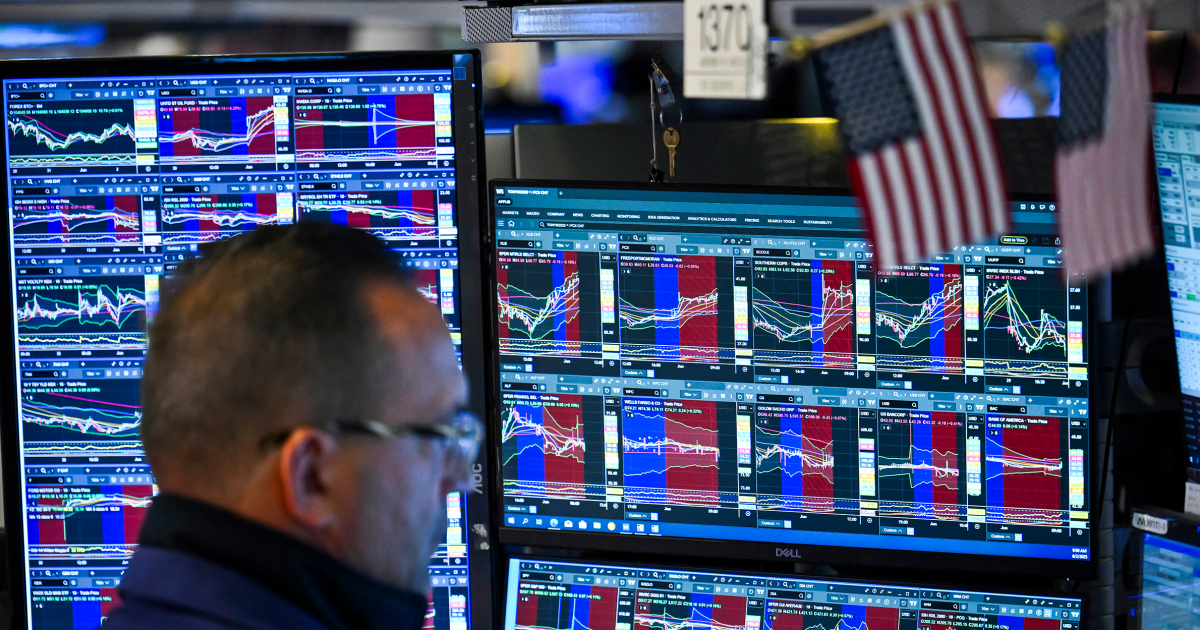
Nov. 11, 2025, 4:20 PM ESTBy Steve KopackFor only the second time in 10 years, one of America’s most broadly representative stock indexes, the S&P 500, is poised to give up its longtime spot as the world’s top performing stock index.But drill down deeper, and the scale of the S&P’s underperformance becomes even starker. Ranked against dozens of other countries’ indexes, the S&P’s annual performance so far is not even among the world’s top 20. Or the top 30, or 40.With annual returns of 16% through Monday, the S&P lands in 41st place among more than 60 stock indexes around the globe, according to an NBC News analysis. This number requires a few caveats, however. The companies in the S&P have created more value so far this year than listings on any other country’s index — more than $7.7 trillion in market value.That exceeds the annual economic output of every country on Earth, except the U.S. and China.Likewise, more than 5,400 companies choose to list their shares on the New York Stock Exchange or Nasdaq, according to the World Federation of Exchanges. This combined total gives the U.S. clear standing as the No. 1 destination for publicly traded companies outside of China.Still, the S&P’s relative performance this year is remarkably out of line with historical norms.window.addEventListener(“message”,function(a){if(void 0!==a.data[“datawrapper-height”]){var e=document.querySelectorAll(“iframe”);for(var t in a.data[“datawrapper-height”])for(var r,i=0;r=e[i];i++)if(r.contentWindow===a.source){var d=a.data[“datawrapper-height”][t]+”px”;r.style.height=d}}});On Wall Street, even the most bullish predictions for where the index will land at the end of 2025 would only bring the S&P just in line with the performance of most international markets.Another way to compare the S&P’s performance against the rest of the world is by comparing its returns to the MSCI All Country World Excluding U.S. Index, which tracks the indexes of 46 countries. The S&P 500 currently trails this index by more than 10%.That places the S&P on track to broadly underperform the rest of the world this year for only the second time in a decade, most recently in 2017.This gap in performance partly reflects the trade uncertainty that has cast a shadow over the U.S. economy since President Donald Trump began his second term in late January. Trump’s on-again-off-again tariff policies have caused investors around the world to look beyond the United States for more stable, safer opportunities. America’s mounting debt, a sinking U.S. dollar and Trump’s attacks on the independence of the Federal Reserve have also given investors pause.The White House did not immediately respond to a request for comment.Tariffs vs. AIAfter Trump won the 2024 election, stocks had a strong start to the year. Markets hit record highs in mid-February. But on worries about his tariff policies, markets plunged in March. When Trump rolled out his long-promised tariff policies in early April it sent markets spiraling further, with more than $5.8 trillion of value erased from the S&P 500 in a matter of days.On April 9, Trump announced he was pausing most of his global tariff rollout. Markets soared and the S&P 500 posted its third largest one-day gain in history. The Supreme Court is now considering the fate of Trump’s sweeping tariff agenda. Supreme Court hears oral arguments in Trump tariff case04:14If the administration loses, it could trigger refunds of the duties paid by importers due back to them, forcing the Treasury Department to issue new debt to pay for them, which could drive up yields.While tariff uncertainty has remained and the administration’s trade agenda has hit a number of speed bumps, most notably with China, equities have been buoyed by the rapidly expanding artificial intelligence boom.Trillions of dollars are being poured into the industry by companies and investments have sent the values of firms such as Nvidia, Apple, Amazon and Alphabet soaring to market values as high as $5 trillion. The U.S. currently has nine companies trading above $1 trillion in value. Fears have grown about a potential bubble in the sector. But still, the performance of U.S. stocks broadly lags the world by a wide margin.With AI and tech stocks fueling the momentum, a look at the other 493 companies in the S&P reveals some major differences. For the third quarter, those seven tech stocks are expected to post earnings growth of nearly 15%. The other 493 companies? The expectation is just 6.7%. “The economy is running at two speeds,” ABN AMRO senior economist Rogier Quaedvlieg wrote Tuesday. “AI and related sectors are thriving, whereas most other areas are stagnant or contracting.”The leadersThrough Monday, South Korea’s Kospi index held the No. 1 spot. The index that trades on the Korea Stock Exchange has posted a return of nearly 70% this year. “While semiconductor exports remain Korea’s central growth driver, the country is also emerging as a formidable defense exporter,” Franklin Templeton’s Dina Ting recently wrote. “Additionally, South Korea’s stock market has been buoyed by the rebound in its technology sector, notably semiconductors, as demand for memory chips recovers globally,” Ting added. “The country’s leadership in semiconductor manufacturing and AI-related investment are key drivers of this momentum.” window.addEventListener(“message”,function(a){if(void 0!==a.data[“datawrapper-height”]){var e=document.querySelectorAll(“iframe”);for(var t in a.data[“datawrapper-height”])for(var r,i=0;r=e[i];i++)if(r.contentWindow===a.source){var d=a.data[“datawrapper-height”][t]+”px”;r.style.height=d}}});After South Korea rank the likes of Kenya, Nigeria, Chile, Poland, Pakistan, Israel, Spain, Czechia and Jordan to round out the top 10.Not until more than 40 countries down the ranking does the S&P 500 appear. One of the ways that trade policies and tariffs have made the gap between the U.S. and other indexes wider than it might otherwise be is by weakening the U.S. dollar. The sinking dollar has helped propel international indexes higher. As the dollar weakens, the values of foreign investments and stock returns rise by comparison. In turn, a rising or stronger dollar would dampen the relative return of money invested outside the U.S.The currency factorThe Dollar Index, a measure of the U.S. currency’s strength against a basket of foreign currencies such as the pound, yen, euro, Swiss franc and Canadian dollar, has sunk 9% since the start of 2025. The continued erosion in the dollar’s value makes it more expensive for American companies and consumers to import goods, go on vacation or send money abroad.“I see signs that the attraction of the dollar is slightly eroded, and [the] future will tell whether there is more erosion of that,” European Central Bank President Christine Lagarde told CBS News in October.“For a currency to be really trusted you need a few things,” she said. “You need geopolitical credibility, you need the rule of law and strong institutions. And you need a military force that is strong enough.”“I think on at least one and possibly two accounts, the U.S. is still in a very dominant position,” Lagarde continued. But the central banker warned that the U.S. “needs to be very careful because those positions erode over the course of time.”Not everyone agrees. “The dollar’s been on a pretty good run over a long period of time and it’s certainly given back — this year given some of the policy actions — some of the gains, but fundamentally the dollar is the reserve currency of the world,” Goldman Sachs CEO David Solomon said on Bloomberg Television on Oct. 30. “I don’t see anything at the moment that threatens that.”“I think it’s something to watch, but I’m not concerned that there’s some fundamental shift,” Solomon said.Steve KopackSteve Kopack is a senior reporter at NBC News covering business and the economy.

Comments are closed.
Scroll To Top
  • Home
  • Travel
  • Culture
  • Lifestyle
  • Sport
  • Contact Us
  • Politics
© Copyright 2025 - Be That ! . All Rights Reserved