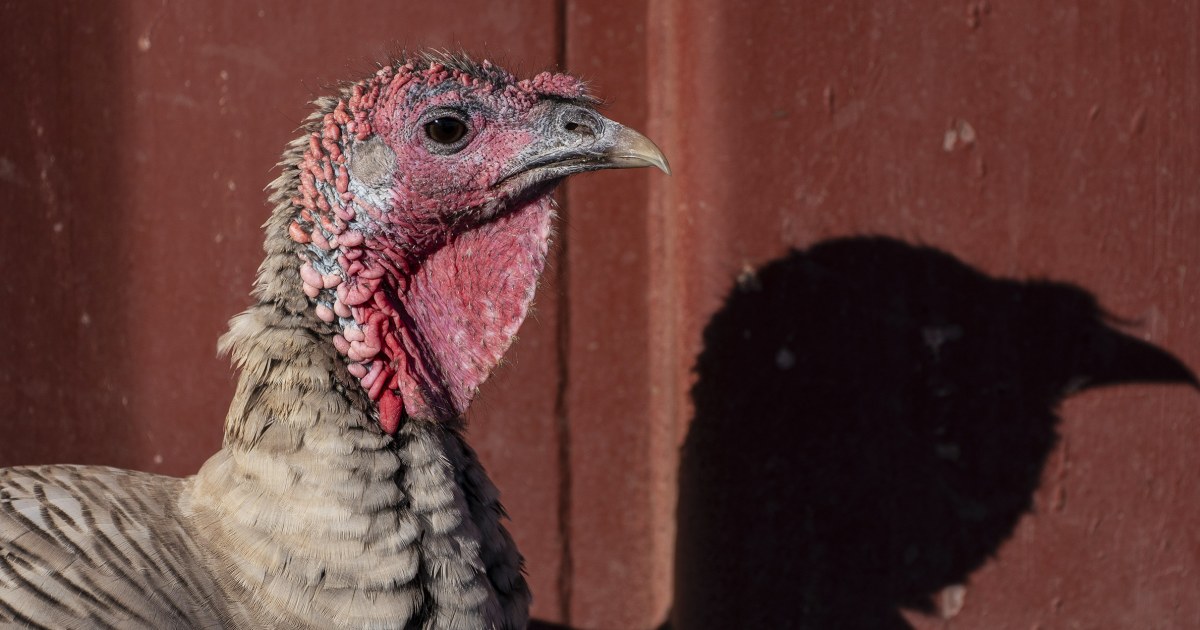
Bird flu cases are rising earlier than expected as wild birds migrate. That could make for a challenging autumn, but it’s too early to say whether egg prices will go up.
Source link
Oct. 9, 2025, 5:00 AM EDTBy Evan BushIt was a quiet summer for bird flu: Egg prices fell a bit, fewer sick poultry flocks were culled on farms, and officials took a breath. “It was lovely,” said Shauna Voss, the assistant director of the Minnesota Board of Animal Health. But it didn’t last. Bird flu is spreading again, now that wild water fowl — geese, ducks and cranes — have begun their seasonal migrations. As the birds travel, they mingle at lakes and ponds and share viruses.In poultry, bird flu cases are spiking earlier than expected. More than 4 million poultry birds have been culled in the last month, in states including Minnesota and Iowa, after members of their flock tested positive for the virus, called H5N1. The trend corresponds to a spike in infections detected among wild birds in northern states. Some state officials are bracing for a challenging autumn, which is when cases have typically spiked in past years. “Last week, we had our first confirmed positive,” Iowa Agriculture Secretary Mike Naig said. The case was on a turkey farm in Calhoun County. “The question for us then is how extensive will it be and what kind of fall will we have.” It’s too early to say what effect the outbreaks will have on egg prices, he added.“The only honest answer to that is we will have to see. I wish I could give you more than that,” Naig said.!function(){“use strict”;window.addEventListener(“message”,function(a){if(void 0!==a.data[“datawrapper-height”]){var e=document.querySelectorAll(“iframe”);for(var t in a.data[“datawrapper-height”])for(var r,i=0;r=e[i];i++)if(r.contentWindow===a.source){var d=a.data[“datawrapper-height”][t]+”px”;r.style.height=d}}})}(); This is the fourth fall in which bird flu infections have risen, a sign the virus is becoming endemic in wild birds and could be a continual threat to poultry. “It’s not going away. It seems pretty embedded,” Voss said. The more the virus circulates, there is a risk that it will unlock a way to readily infect humans. If that becomes a problem, some experts fear that the Trump administration’s cuts to mRNA research could hamper scientists’ ability to rapidly develop a new vaccine. For now, though, the health risk to people remains low. As fall progresses, officials, wildlife experts and virologists are in a watch-and-wait mode.“It’s an interesting time,” said Declan Schroeder, an associate professor of virology at the University of Minnesota’s College of Veterinary Medicine. “Everyone is waiting with bated breath to see what’s going to happen.” Avian influenza was first detected in a U.S. commercial flock in February 2022, after circulating in wild birds before then. The virus is almost always deadly for poultry birds, and as of this summer, more than 175 million birds had been culled or killed. Two years ago, researchers were surprised to discover that bird flu had spread to dairy cows and was found in raw, unpasteurized milk, prompting a slew of changes to farm practices and milk testing. At least 70 people — mostly farmworkers with close contact to birds or cows — have been infected. One person died. !function(){“use strict”;window.addEventListener(“message”,function(a){if(void 0!==a.data[“datawrapper-height”]){var e=document.querySelectorAll(“iframe”);for(var t in a.data[“datawrapper-height”])for(var r,i=0;r=e[i];i++)if(r.contentWindow===a.source){var d=a.data[“datawrapper-height”][t]+”px”;r.style.height=d}}})}(); Wild birds tend to spread the disease to poultry farms in a few ways, scientists think: through direct contact, by contaminating feed or when workers bring contaminated materials into barns. That’s why migration season can be such a catalyst.“If you got one sick bird that moves over an area, infects some others, the math suggests it’s going to spread really fast,” said Michael Ward, a professor of natural resources and environmental sciences at the University of Illinois, who studies migration. Ward added that habitat limitations are pushing birds to congregate and share space, which makes viral spread more likely. In Illinois, wetland habitat has shrunk as the state deals with drought. “It’s a perfect combination for disease to pop up,” Ward said.In response to an inquiry about the rise in bird flu detections and how the federal government plans to deal with it, the U.S. Department of Agriculture pointed to a five-prong strategy it released in February, which included $100 million for research into new biosecurity measures and vaccine development for poultry. Countries like France are already vaccinating poultry birds, but the USDA said it continues to evaluate whether the U.S. should do so. The agency has not approved such a vaccine, and rolling one out would affect U.S. exports. “We really do believe that an effective vaccine strategy would be very helpful for the egg and turkey producers, but we understand that has to be carefully done to ensure there’s not an impact to other markets,” Naig, in Iowa, said. “USDA has put some focus on this and now we’re awaiting what that vaccine strategy could look like.” Scientists have long been concerned that the bird flu virus might eventually develop the ability to spread effectively between people. Even given the low risk to humans at the moment, Dr. Peter Chin-Hong, a professor of medicine at the University of California, San Francisco, who studies infectious diseases, advised people to take basic steps to prevent infection with H5N1 as well as the seasonal flu.“Get your flu shot. Don’t drink raw milk, don’t eat unpasteurized cheese, particularly when cases are circulating. Don’t let your cats feed outside when it’s migratory bird season,” Chin-Hong said.A scenario in which a person gets infected with both H5N1 and seasonal flu at the same time could be problematic because it would enable the bird flu virus to more easily rearrange its genetic code to suit humans. The Centers for Disease Control and Prevention stopped holding coordination calls on H5N1 with health providers this spring — a change Chin-Hong laments. He hopes the agency will resume the calls, and he disagrees with the Trump administration’s termination of mRNA vaccine research funding. The biotech company Moderna was developing a bird flu vaccine that used the mRNA platform, but the Department of Health and Human Services canceled its grant.The CDC did not respond to a request for comment.Evan BushEvan Bush is a science reporter for NBC News.