
6 views

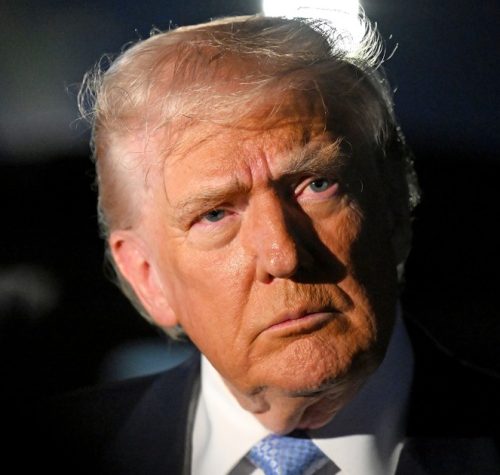
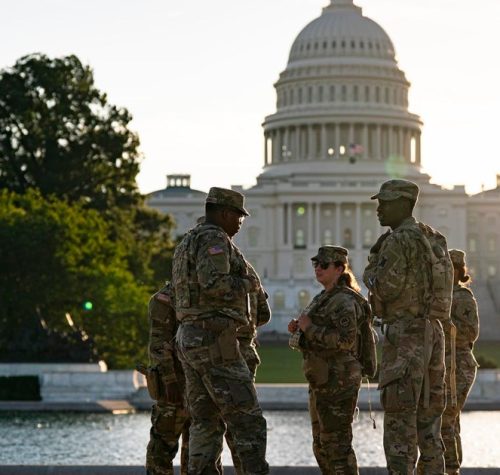
Nov. 28, 2025, 6:10 AM ESTBy Patrick SmithPresident Donald Trump has said he will “permanently pause” all immigration from what he called “third world countries” and demanded a program of “reverse migration” as he intensified his rhetoric after the National Guard shooting in Washington, D.C.Trump offered few details as he disparaged and vowed to remove millions of migrants in the U.S., in a lengthy social media post late on Thanksgiving that came hours after he confirmed the death of National Guard troop Sarah Beckstrom, 20, in the shooting.Officials have said that Wednesday’s attack on two troops was carried out by an Afghan national who worked with a CIA-backed group during the long war in Afghanistan. The incident has served as a catalyst for Trump to escalate his anti-immigrant rhetoric into pledges that would likely face court challenges if enacted and further undermine America’s global standing as a nation welcoming to immigrants.”I will permanently pause migration from all Third World Countries to allow the U.S. system to fully recover, terminate all of the millions of Biden illegal admissions, including those signed by Sleepy Joe Biden’s Autopen, and remove anyone who is not a net asset to the United States,” Trump wrote on Truth Social.It was not clear exactly which countries he was referring to, with the phrasing used in the past to refer to poorer nations.New details after targeted National Guard shooting02:43The president also threatened to “end all federal benefits and subsidies to noncitizens of our country” and to “denaturalize migrants who undermine domestic security.”In remarks that will cause alarm among migrant advocacy and civil liberties groups, Trump said the government would deport any foreign national who was “non-compatible with Western Civilization.”He added: “Only REVERSE MIGRATION can fully cure this situation.”The Trump administration also said Thursday that the government would reexamine the status of Green Card holders from 19 countries “of concern,” including Afghanistan. In a subsequent post, Trump said that “hundreds of thousands” of Somali migrants were “completely taking over the once great state of Minnesota.”Trump has previously threatened action against Somalis and last week said he would end temporary protective status — which prevents deportations to dangerous countries — for Somali migrants in Minnesota, many of whom have fled a brutal civil war in the east African country.It’s unclear how many people this would effect but a report made for Congress in August put the number of people covered by the program nationally at 705. The president also attacked Minnesota Gov. Tim Walk as “retarded” and said Rep. Ilhan Omar, D-Minn, who was born in Somalia, “probably came into the U.S.A. illegally” and is from a “decadent, backward, and crime ridden nation.”Trump’s threats, if enacted by legislation or executive orders, are likely to be challenged in the courts.In his first term, Trump banned people from several majority-Muslim countries in the Middle East and Africa from entering the U.S. This was challenged but eventually the Supreme Court ruled 5-4 in favor of the ban’s legality. Migrant advocacy groups have called for calm and warned against using the D.C. attack to call for a wider crackdown on immigration or to remove the rights of Afghan residents.”Using this horrific attack as an excuse to smear and punish every Afghan, every refugee, or every immigrant rips at something very basic in our Constitution and many faiths: the idea that guilt is personal, not inherited or collective,” the Council on American-Islamic Relations said in a statement early Friday.The term “third world” originated in the Cold War era to describe a country that wasn’t aligned with the western NATO alliance or the USSR and the Warsaw Pact. This later evolved into shorthand for describing economically underdeveloped nations, particularly ones with high levels of poverty.The term has been used to describe several African nations, but until the late 20th century was also attached to descriptions of China.Economists and health experts have for years said the phrase is inaccurate, derogatory and outdated. The World Bank and other global institutions no longer use the phrase and some have suggested also avoiding its successor, “developing countries.”Patrick SmithPatrick Smith is a London-based editor and reporter for NBC News Digital.

President Donald Trump has said he will “permanently pause” all immigration from what he called “third world countries” and demanded a program of “reverse migration” as he intensified his rhetoric.

TAGS:
5 views

Nov. 28, 2025, 5:30 AM ESTBy Erika EdwardsThe surging number of measles cases around the world is a stark warning sign that outbreaks of other vaccine-preventable diseases could be next, the World Health Organization warned Friday.“It’s crucial to understand why measles matters,” said Dr. Kate O’Brien, director of the WHO’s Department of Immunization, Vaccines and Biologicals. “Its high transmissibility means that even small drops in vaccine coverage can trigger outbreaks, like a fire alarm going off when smoke is detected first.”That is, measles is often the first disease to pop up when vaccination rates overall drop.”When we see measles cases, it signals that gaps are almost certainly likely for other vaccine-preventable diseases like diphtheria or whooping cough or polio, even though they may not be setting off the fire alarm just yet,” O’Brien said at a media briefing Monday, ahead of the release of the WHO’s Progress Toward Measles Elimination report, published Friday in its Weekly Epidemiological Record. Indeed, whooping cough cases are also rising in the United States and are on track to be the most in a decade. More than 20,000 whooping cough cases have been reported so far in 2025, according to the Centers for Disease Control and Prevention. In 2024, there were an estimated 11 million measles infections worldwide, according to the report, nearly 800,000 more than were recorded in 2019. Last year, 59 countries reported large measles outbreaks. In 2025, the United States joined the list of countries.Elimination status threatenedThe ongoing outbreaks threaten the so-called measles elimination statuses of some countries.Elimination means a virus has stopped spreading in a specific country or region. (Only one virus — smallpox — has been eradicated, or wiped out permanently, worldwide.)In total, 81 countries had reached elimination status in 2024, according to the WHO. Canada eliminated measles in 1998. Two years later, the United States did the same.Elimination status means a country has the capacity to stop an outbreak when measles cases arrive from abroad, O’Brien said. If vaccination rates are high enough, the virus won’t have enough unvaccinated people to infect, halting an outbreak in its tracks. But vaccination rates in the United States are falling: An NBC News investigation revealed that since 2019, 77% of counties and jurisdictions have reported declines in the number of kids getting routine childhood vaccinations like the measles-mumps-rubella shots. The key determining factor for a country to lose its measles elimination status is the ongoing spread of the same strain of the virus for a full year.Canada met that threshold this month. The United States could be next if scientists can trace current cases to a Texas outbreak that began in January.window.addEventListener(“message”,function(a){if(void 0!==a.data[“datawrapper-height”]){var e=document.querySelectorAll(“iframe”);for(var t in a.data[“datawrapper-height”])for(var r,i=0;r=e[i];i++)if(r.contentWindow===a.source){var d=a.data[“datawrapper-height”][t]+”px”;r.style.height=d}}});Nearly all of the samples analyzed from those early cases were identified as a genotype of measles called D8, according to a CDC report published in April.The D8 genotype was recently detected in a South Carolina outbreak. Preliminary results from specimens sent from South Carolina to CDC labs “are the same type, D8, that is seen in other settings in the United States,” Dr. Linda Bell, state epidemiologist for the South Carolina Department of Public Health, said at a news briefing Tuesday.Additional genetic sequencing is needed to make a definitive link between the Texas outbreak and the one in South Carolina, as well as outbreaks in Utah and Arizona. A South Carolina Department of Public Health spokesman said the agency “expects those results in the next few weeks.”Bell said that as of Tuesday, 58 cases had been reported in South Carolina, mostly in Spartanburg County in the northwest part of the state. An outbreak along the border of Arizona and Utah continues to grow. The Arizona Department of Health Services reported 153 cases this week, nearly all in Mohave County. Cases in Utah have reached 102, according to the state Department of Health and Human Services. While the bulk of those cases are linked to the cluster at the Utah-Arizona border, case numbers are also rising near Salt Lake City. NBC affiliate KSL reported that eight students at a high school in Wasatch County had been diagnosed. As of Wednesday, the CDC had reported 1,798 confirmed measles cases in 42 states in 2025. Three people, an adult in New Mexico and two little girls in Texas, have died.Erika EdwardsErika Edwards is a health and medical news writer and reporter for NBC News and “TODAY.”

The surging number of measles cases around the world is a stark warning sign that outbreaks of other vaccine-preventable diseases could be next, the World Health Organization warned Friday.“It’s crucial.

TAGS:
5 views

Nov. 28, 2025, 5:00 AM ESTBy Ben KamisarAmericans have grown sour on one of the longtime key ingredients of the American dream.Almost two-thirds of registered voters say that a four-year college degree isn’t worth the cost, according to a new NBC News poll, a dramatic decline over the last decade.Just 33% agree a four-year college degree is “worth the cost because people have a better chance to get a good job and earn more money over their lifetime,” while 63% agree more with the concept that it’s “not worth the cost because people often graduate without specific job skills and with a large amount of debt to pay off.”In 2017, U.S. adults surveyed were virtually split on the question — 49% said a degree was worth the cost and 47% said it wasn’t. When CNBC asked the same question in 2013 as part of its All American Economic Survey, 53% said a degree was worth it and 40% said it was not.The eye-popping shift over the last 12 years comes against the backdrop of several major trends shaping the job market and the education world, from exploding college tuition prices to rapid changes in the modern economy — which seems once again poised for radical transformation alongside advances in AI.“It’s just remarkable to see attitudes on any issue shift this dramatically, and particularly on a central tenet of the American dream, which is a college degree. Americans used to view a college degree as aspirational — it provided an opportunity for a better life. And now that promise is really in doubt,” said Democratic pollster Jeff Horwitt of Hart Research Associates, who conducted the poll along with the Republican pollster Bill McInturff of Public Opinion Strategies.“What is really surprising about it is that everybody has moved. It’s not just people who don’t have a college degree,” Horwitt added.National data from the Bureau of Labor Statistics shows that those with advanced degrees earn more and have lower unemployment rates than those with lower levels of education. That’s been true for years.But what has shifted is the price of college. While there have been some small declines in tuition prices over the last decade, when adjusted for inflation, College Board data shows that the average, inflation-adjusted cost of public four-year college tuition for in-state students has doubled since 1995. Tuition at private, four-year colleges is up 75% over the same period.Poll respondents who spoke with NBC News all emphasized those rising costs as a major reason why the value of a four-year degree has been undercut.Jacob Kennedy, a 28-year-old server and bartender living in Detroit, told NBC News that while he believes “an educated populace is the most important thing for a country to have,” if people can’t use those degrees because of the debt they’re carrying, it undercuts the value.Kennedy, who has a two-year degree, reflected on “the number of people who I’ve met working in the service industry who have four-year degrees and then within a year of graduating immediately quit their ‘grown-up jobs’ to go back to the jobs they had.”“The cost overwhelms the value,” he continued. “You go to school with all that student debt — the jobs you get out of college don’t pay that debt, so you have to go find something else that can pay that debt.”The 20-point decline over the last 12 years among those who say a degree is worth it — from 53% in 2013 to 33% now — is reflected across virtually every demographic group. But the shift in sentiment is especially striking among Republicans.In 2013, 55% of Republicans called a college degree worth it, while 38% said it wasn’t worth it. In the new poll, just 22% of Republicans say the four-year degree is worth it, while 74% say it’s not.Democrats have seen a significant shift too, but not to the same extent — a decline from 61% who said a degree was worth it in 2013 to 47% this year.Over the same period, the composition of both parties has changed, with the Republican Party garnering new and deeper support from voters without college degrees, while the Democratic Party drew in more degree-holders.Remarkably, less than half of voters with college degrees see those degrees as worth the cost: 46% now, down from 63% in 2013.Those without a college degree were about split on the question in 2013. Now, 71% say a four-year degree is not worth the cost, while 26% say it is.Preston Cooper, a senior fellow at the right-leaning American Enterprise Institute, said enough cracks have proliferated under the long-standing narrative that a college degree always pays off to create a serious rupture.“Some people drop out, or sometimes people end up with a degree that is not worth a whole lot in the labor market, and sometimes people pay way too much for a degree relative to the value of what that credential is,” he said. “These cases have created enough exceptions to the rule that a bachelor’s degree always pays off, so that people are now more skeptical.”The upshot is that interest in technical, vocational and two-year degree programs has soared.“I think students are more wary about taking on the risk of a four-year or even a two-year degree,” he said. “They’re now more interested in any pathway that can get them into the labor force more quickly.”Josiah Garcia, a 24-year-old in Virginia, said he recently enrolled in a program to receive a four-year engineering degree after working as an electrician’s apprentice. He said he was motivated to go back to school because he saw the degree as having a direct effect on his future earning potential.But he added that he didn’t feel that those who sought other degrees in areas like art or theater could say the same.“A lot of my friends who went to school for art or dance didn’t get the job they thought they could get after graduating,” he said, arguing that degrees for “softer skills” should be cheaper than those in STEM fields.Jessica Burns, a 38-year-old Iowa resident and bachelor’s degree-holder who works for an insurance company, told NBC News that for her, the worth of a four-year-degree largely depends on the cost.She went to a community college and then a state school to earn her degree, so she said she graduated without having to spend an “insane” amount of money.But her husband went to a private college for his degree, and she quipped: “We are going to have student loan debt for him forever.”Burns said she believes a college degree is “essential for a lot of jobs. You’re not going to get an interview if you don’t have a four-year degree for a lot of jobs in my field.”But she framed the value of degrees more in terms of how society views them instead of intrinsic value.“It’s not valuable because it’s brought a bunch of value added, it’s valuable because it’s the key to even getting in the door,” she said. “Our society needs to figure out that if we value it, we need to make it affordable.”Burns said she believes that a lot more people in her millennial generation are “now saddled with a huge amount of debt, even as successful business professionals,” which will influence how her peers approach paying for college for their children.There hasn’t just been a decline in the cost-benefit analysis of a degree. Gallup polling also shows a marked decline in public confidence in higher education over the last decade, albeit with a slight increase over the last year.“This is a political problem. It’s also a real problem for higher education. Colleges and universities have lost that connection they’ve had with a large swath of the American people based on affordability,” Horwitt said. “They’re now seen as out of touch and not accessible to many Americans.”The NBC News poll surveyed 1,000 registered voters Oct. 24-28 via a mix of telephone interviews and an online survey sent via text message. The margin of error is plus or minus 3.1 percentage points.Ben KamisarBen Kamisar is a national political reporter for NBC NewsRob Wile contributed.

Americans have grown sour on one of the longtime key ingredients of the American dream

Source link

TAGS:
4 views

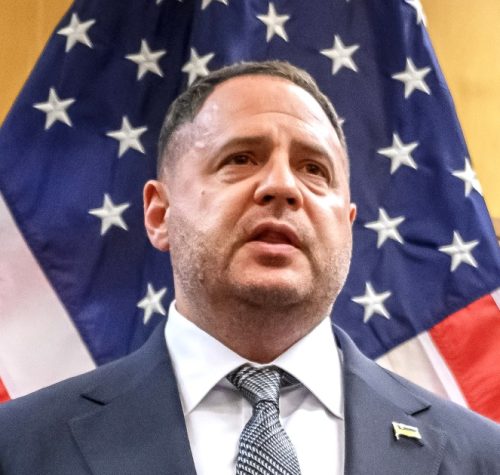
Nov. 28, 2025, 4:42 AM ESTBy Yuliya TalmazanA top Ukrainian official at the heart of peace talks was thrust Friday into the center of a massive corruption scandal, threatening to further weaken President Volodymyr Zelenskyy at a crucial moment in negotiations to end Russia’s war. The home of Andriy Yermak, Zelenskyy’s powerful chief of staff, was searched early Friday by investigators with Ukraine’s National Anticorruption Bureau, the NABU, which is leading the $100 million kickback probe involving the country’s energy sector.In a post on Facebook early Friday, NABU said that its investigators, along with those from the Specialized Anti-Corruption Prosecutor’s Office, SAPO, were “conducting investigative actions” into the president’s chief of staff. Yermak, a key figure in talks with the United States, confirmed in a statement on Telegram shortly after that corruption investigators were “conducting procedural actions” at his home and that he was fully cooperating. “There are no obstacles for the investigators,” he said. “They were given full access to the apartment, my lawyers are on site, interacting with law enforcement officers. From my side, there is full cooperation.”There was no immediate comment from Zelenskyy. Trump Envoy Witkoff Advises Russian Aide, Transcript Reveals02:16It comes after weeks of mounting pressure on Zelenskyy to fire Yermak, who has been a steady right hand to the Ukrainian president throughout four years of war. Speculation has long swirled that Yermak could be embroiled in the scandal, which has fueled public anger and been seized on by the Kremlin to try to undermine Ukraine’s leadership.Friday’s searches make him the highest-ranked government official to be implicated by NABU so far. Ukraine’s justice minister, German Galushchenko, was suspended amid the probe earlier this month, and former defense minister Rustem Umerov, who has also featured prominently in negotiations with the U.S., has been mentioned by investigators but not faced any charges.The scandal centers on an alleged scheme in which prosecutors said current and former officials, and businesspeople, received benefits and launder money through the country’s state energy company, Energoatom, according to investigators. Yermak has been a constant presence next to Zelenskyy through the ups and downs of the war, and has emerged as one of the few men that the Ukrainian leader appeared to really trust. But critics have said for years that Yermak had accumulated too much power and wielded excessive influence over Zelenskyy. As recently as Thursday, Yermak vowed that Zelenskyy would not agree to give up land in exchange for peace, a key sticking point in negotiations.“Not a single sane person today would sign a document to give up territory,” Yermak said in an interview with The Atlantic.Ukraine is facing immense pressure from the Trump administration to accept a deal to end the war, but Kyiv and its allies in Europe have pushed back against Kremlin demands that it cede key territory it still holds in the east.Trump’s envoy Steve Witkoff will be going to Moscow next week to discuss the plan with President Vladimir Putin, who has long sought to portray the Ukrainian government as corrupt and weak.Putin has already used the corruption scandal as a way to discredit Zelenskyy’s government and its legitimacy, accusing the president and his officials of sitting on “golden pots” and not caring about ordinary Ukrainians. Putin and his entourage have themselves been subject of numerous corruption investigations in the past. Yuliya TalmazanYuliya Talmazan is a reporter for NBC News Digital, based in London.

A top Ukrainian official at the heart of peace talks was thrust Friday into the center of a massive corruption scandal, threatening to further weaken President Volodymyr Zelenskyy at a.

TAGS:
6 views

Nov. 27, 2025, 8:11 PM ESTBy Katherine DoylePresident Donald Trump suggested Thursday night that the U.S. could “very soon” begin targeting alleged Venezuelan drug traffickers on land, expanding operations that have so far focused on the Caribbean Sea.In Thanksgiving remarks to U.S. troops around the world, Trump thanked the Air Force’s 7th Bomb Wing for their work to “deter Venezuelan drug traffickers” and said “it’s about 85% stopped by sea … and we’ll be starting to stop them by land.”“Also, the land is easier, but that’s going to start very soon,” the president added, speaking from his Mar-a-Lago estate.The comments come as Trump weighs whether to take military action against Venezuela as part of what his administration has called a campaign against drug trafficking. Senior U.S. military officials have also made recent visits to leaders in the Caribbean.For months, the president has intensified U.S. military presence in the region, ramping up pressure on Venezuela with strikes on alleged drug boats since early September. The military has carried out nearly two dozen known strikes on vessels they said were carrying drugs, killing at least 82 people.The USS Gerald R. Ford, a major aircraft carrier, arrived in the Caribbean last week, rounding out a build-up of U.S. military forces in the region that has not been seen for decades.The U.S. last week also designated the Cartel de los Soles, a group Washington alleges is run by Venezuelan President Nicolás Maduro, as a foreign terrorist organization.Maduro has denied having any ties to the drug trade, and has accused the U.S. of “fabricating” a war against him.U.S. designates Cartel de los Soles as a foreign terrorist organization06:53The moves by the Trump administration have raised both expectations and concerns of a possible strike inside Venezuela.Yet even as he increases military pressure, Trump has said that he could still hold talks with Maduro, suggesting a possible diplomatic pathway to defuse the mounting tensions.“I might talk to him,” Trump said aboard Air Force One this week. “We’ll see. We’re discussing this with different staff.”Asked about the administration’s continued targeting of narcotraffickers on Monday, White House press secretary Karoline Leavitt told reporters that “you can expect to see those strikes continue.”NBC News previously reported that according to current and former U.S. law enforcement and military officials as well as narcotics experts, drug cartels operating vessels in the Caribbean are mainly moving cocaine from South America to Europe — not to the U.S.During his remarks on Thursday, Trump also spoke with members of other military service groups, offering to take “any damn question you want.”Military members praised him, told stories and asked questions about his presidency, with a Marine speaking from Camp Santiago, Puerto Rico, saying that his battalion was ready to support the president’s operation against narcoterrorists.Katherine DoyleKatherine Doyle is a White House reporter for NBC News.

Even as he increases military pressure, Trump has said that he could still hold talks with Venezuela’s Nicolás Maduro, suggesting a possible diplomatic off-ramp.

Source link

TAGS: