15 views

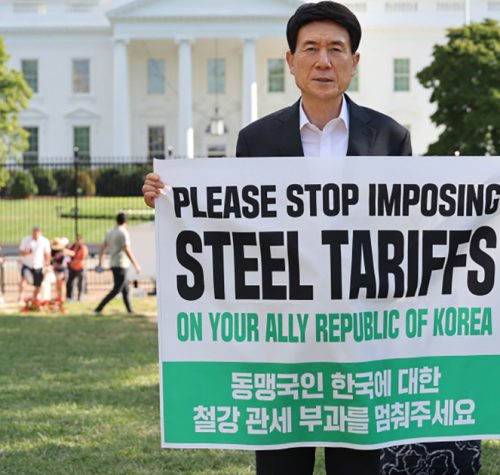
Oct. 29, 2025, 2:00 PM EDTBy Gabe Gutierrez and Sarah DeanPOHANG, South Korea — As President Donald Trump makes his whirlwind trip through Asia, the warning from the mayor of South Korea’s steelmaking hub is dire.“If tariffs keep continuing like this,” Lee Kang-deok told NBC News in an interview Tuesday, “the industry in our city will collapse. And it’s going to have a domino effect.”South Korea, the world’s 10th-biggest economy, has been trying to finalize a U.S. trade agreement to lower the tariff on its goods to 15%, down from 25%. Trump said Wednesday that a trade deal had been “pretty much finalized” with South Korea, while South Korean presidential aide Kim Yong-beom said the two governments had “reached an agreement on the detailed terms of the tariff negotiations,” which include a South Korean pledge to invest $350 billion in the U.S.But Trump’s separate 50% levy on all steel products has devastated Pohang, a port city of about half a million people on the southeastern coast of South Korea. Much like Pittsburgh, it’s synonymous with the steel industry in the country. Steel plants dot the shoreline. Its beaches are in their shadows.The Pohang Iron and Steel Co. — which eventually became POSCO — is one of the largest steel companies in the world, producing more than 37 million tons of crude steel in 2024.“South Korea and the United States have been good friends for a long time,” Lee said. “But this makes us feel that this friendship is transactional.”Trump arrives in South Korea, last stop in 3-country tour of Asia02:10Lee — who’s been mayor for 11 years — said he would like Trump to come visit Pohang, which is just a 30-minute drive from Gyeongju, where the Asia-Pacific Economic Cooperation summit will be held and where Trump addressed a CEOs luncheon Wednesday.Earlier this year, Lee flew halfway across the world to Washington to protest Trump’s tariffs outside the White House with other Pohang representatives. They held English-language signs that said, among other things, “Please stop imposing steel tariffs on your ally Republic of Korea,” referring to South Korea’s formal name.South Korea, a U.S. ally and major steelmaker, is subject to 50% tariffs on its steel exports.Pohang Mayor’s OfficeLee said Pohang, South Korea’s steelmaking capital, was “struggling to the point of dying” amid the U.S. tariffs.Pohang Mayor’s OfficeLee said in a Facebook post after his protest that Pohang was “struggling to the point of dying” and that if the steel industry collapsed, so would construction, automobiles, shipbuilding and energy. He said he felt he was advocating not just for his city, but for the global steel industry and the many indirect jobs it supports.“We didn’t do as much as we’d hoped in Washington, D.C.,” he said. “But I think we sent a strong message to the entire world.”As the tariffs loom large, the South Korean government is bracing for the long-term impacts and has declared Pohang an “Industrial Crisis Response Area,” which qualifies the city for more subsidies.“The whole economic system will be ruined,” Lee said in the interview, adding that while he thinks the U.S. is doing this mainly because of competition with China, the tariffs are hurting longtime allies such as South Korea and Japan.“This could backfire.”Gabe GutierrezGabe Gutierrez is a senior White House correspondent for NBC News.Sarah DeanSarah Dean is a 2024 NBC News campaign embed.Stella Kim contributed.

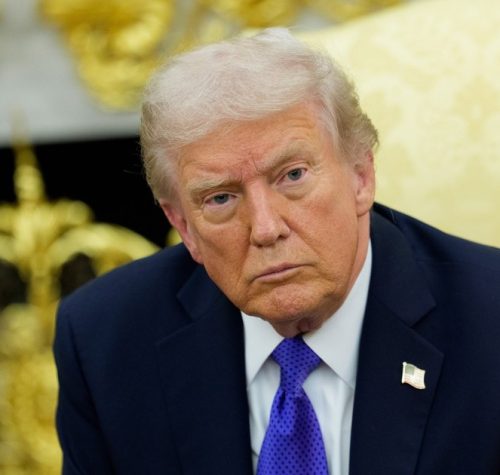
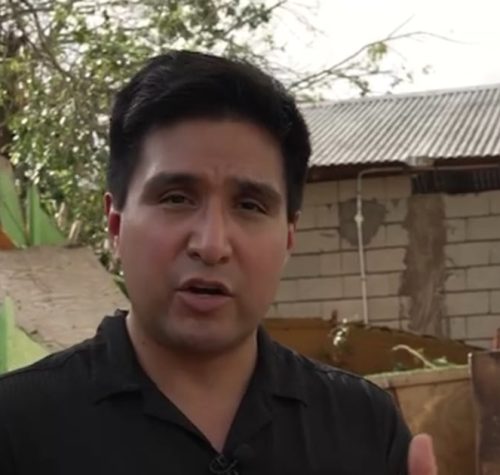
As President Donald Trump makes his whirlwind trip through Asia, the warning from the mayor of South Korea’s steelmaking hub is dire.

Source link

TAGS:
16 views

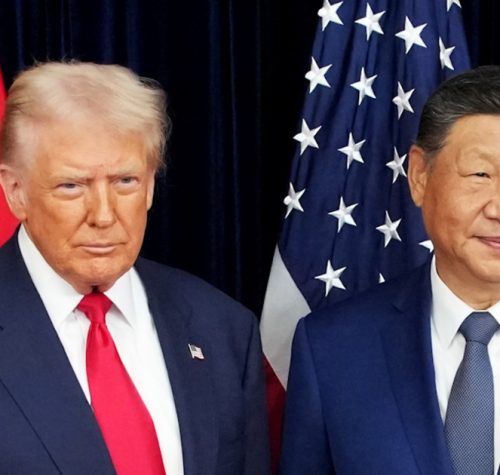
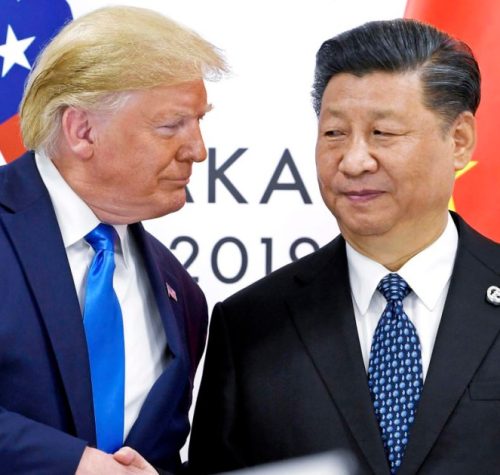
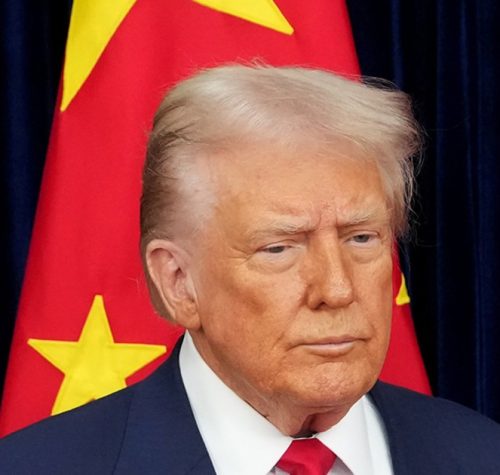
Oct. 29, 2025, 5:41 PM EDTBy Katherine DoyleGYEONGJU, South Korea — President Donald Trump and Chinese leader Xi Jinping will meet in Busan, South Korea, on Thursday morning, looking to cool an increasingly heated relationship.The two sides are expected to discuss moves on tariffs, combating fentanyl and access to rare-earth minerals, while leaving bigger targets for later. The meeting is set to begin at 11 a.m. local time (10 p.m. Wednesday ET).With a Nov. 10 deadline to reach a tariff deal approaching, what began as Trump’s crackdown on the flow of fentanyl into the U.S. has broadened into a longer list of trade and security issues.The working expectation is that Trump and Xi will agree on a pause in the fight rather than finalizing a sweeping deal, a person familiar with the meeting planning said. Beijing could ease export curbs on strategically crucial rare earths, Washington could hold off on broad tariff hikes, and both sides could reach for gestures, such as expanded purchases of U.S. farm goods by China.Xi is also weighing steps on fentanyl chemicals, likely focused on choking off money-laundering networks tied to gangs, this person said. A rollout of a larger agreement could be staged around Trump’s planned visit to China next year.Trump has sounded upbeat about the prospect of reaching agreements. “I think we’re going to do well with China,” he said this week. “We meet, as you know, in South Korea with President Xi … and they want to make a deal. We want to make a deal.”He added that he and Xi have agreed to meet again in China and in the United States, “in either Washington or at Mar-a-Lago.”Treasury Secretary Scott Bessent told NBC News this week that meeting is likely to come before Xi’s trip to the U.S. for the G20 at Trump’s Doral property in Florida next fall. Trump is likely to visit Xi in Beijing early next year, just ahead of the Lunar New Year, Bessent said.The president has said he expects to lower tariffs on China that he imposed over its role in the illicit international flow of fentanyl components. And he hopes to finalize a deal on TikTok that would allow the social media app to continue operating in the U.S. despite a law, passed before he took office, which had been poised to ban it.On Wednesday, Trump was overheard telling leaders at the Asia-Pacific Economic Cooperation forum that he expects the meeting with Xi to last three to four hours. Both Trump and his Chinese counterpart want the optics and tactical aspect of this meeting to go well, the person familiar with the meeting planning said.Dan Caldwell, a former senior adviser to U.S. Defense Secretary Pete Hegseth, said Trump deserves credit for pursuing a pragmatic China policy that maintains what he said was strategic ambiguity while taking steps to restore important military capabilities to deter Chinese aggression.“A lot of folks wanted to assume that he was going to be reflexively hawkish on China,” Caldwell said of Trump. “That hasn’t been the case.”But Caldwell cautioned against expecting a breakthrough in Busan. “I don’t think the overall push hinges on one meeting,” Caldwell said. “Ideally, these go well, but the whole thing does not hinge on just one set of talks.”In other words, the goal is to make enough progress to get to the next date between the leaders of the world’s two biggest economies.Miles Yu, a former State Department adviser on China, said the U.S. and Beijing are “sizing each other out” with trade now a key battleground issue. Washington is pushing for concrete steps on fentanyl, market access and more, he said, while China “stonewalls and foot-drags” and offers only broad “frameworks.”“This is the root cause of the five rounds of futile negotiations so far with China without a breakthrough,” Yu said, adding that the administration is trying to shift China’s approach by rallying its neighbors, a strategy that he said “may or may not work.”After talks with Chinese counterparts in Malaysia last weekend, Bessent said negotiators had shaped a framework for the two leaders to consider that spanned tariffs, trade, fentanyl, rare earths and “substantial” purchases of U.S. agricultural products such as soybeans. He credited Trump’s threat of an additional 100% tariff with creating leverage and said he believes that the framework would avoid that outcome and open space for tackling other issues.Trump’s meeting with Xi in Busan marks the end of a three-country Asia swing, during which he signed agreements with Malaysia, Cambodia, Thailand, Japan and South Korea; made new foreign investment announcements; and proclaimed that tariff leverage can drive warring parties to stand down. Reflecting on his approach, Trump said going against the grain can sometimes deliver results.“Oftentimes you’ll go the opposite way of almost everybody, and you’ll be the one that’s right, and the others will be the one that’s wrong,” he said, offering a peek into his thinking. “That’s where you have your greatest successes.”Still, Trump is continuing a long-standing practice of meeting with allies before Beijing, which former Assistant Secretary of State Dave Stilwell said indicates that the U.S. is not going to trade its alliance commitments for a deal with China.Some of the most sensitive terrain in the discussions involves critical minerals, said Stilwell, who also underscored the political guardrails around concerns for the Beijing-claimed island of Taiwan: “Acknowledge the words, but look at the actions,” he said, citing Secretary of State Marco Rubio’s recent comments that the U.S. isn’t trading away Taiwan’s sovereignty for better deal terms.Some of Trump’s aides are worried that the president could shift the U.S. position on independence for Taiwan, walking away from long-standing U.S. policy, and have advised him against it, NBC News reported this week.Trump seemed to downplay any discussions, saying, “I don’t know that we’ll even speak about Taiwan.” Xi “may want to ask about it,” Trump said. “There’s not that much to ask about. Taiwan is Taiwan.”Analysts in the region, too, see limited room for a sweeping agreement this week. It’s unlikely that Trump and Xi will reach a comprehensive deal that settles the long-term structural differences between the U.S. and China, said Zeng Jinghan, a professor of international relations at the City University of Hong Kong. “But some sort of consensus and agreements are very possible,” said Zeng, given that both sides want “a little bit of de-escalation.”The hope, Zeng added, is for “less aggressive” rhetoric, with both Beijing and Washington likely to come back and declare the meeting a success.After the meeting, Trump plans to board Air Force One and return to the U.S. He has appeared to relish the receptions from foreign leaders on this quick trip across Asia. In Tokyo, he stood alongside Japan’s new prime minister, Sanae Takaichi, accepting a gift of cherry blossom trees and a putter that belonged to his late friend and former Japanese leader Shinzo Abe, and in Seoul received from South Korean President Lee Jae Myung a large gold crown, a replica from the Silla period.In one snapshot, Trump and Lee were pictured in a gift shop at the Gyeongju National Museum, where items on display included a red “USA” hat, Trump-branded sneakers and a shirt bearing the president’s mugshot.Trump praised the welcome he received in “vibrant” Malaysia, where Prime Minister Anwar Ibrahim compared their experiences with their countries’ legal systems, saying, “I was in prison, but you almost got there.”Katherine DoyleKatherine Doyle is a White House reporter for NBC News. Carol E. Lee, Peter Guo and Peter Alexander contributed.

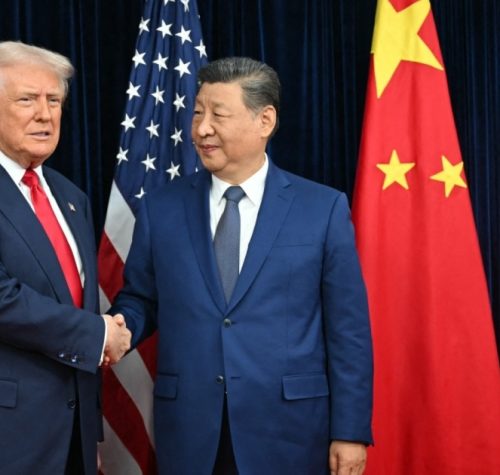
President Donald Trump and Chinese leader Xi Jinping will meet in Busan, South Korea, to discuss tariffs, fentanyl and rare-earth minerals.

Source link

TAGS: