19 views

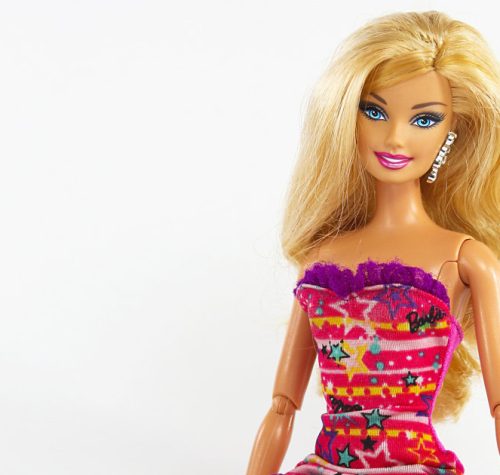
Oct. 27, 2025, 5:40 PM EDTBy Steve KopackPresident Donald Trump’s tariffs are hitting toy giants Mattel and Hasbro as the critical holiday season nears. Still, both companies see a successful year end ahead.“This quarter, our U.S. business was again challenged by industry-wide shifts in retailer ordering patterns,” CEO Ynon Kreiz said on Mattel’s recent earnings call. “That said, consumer demand for our products grew in every region, including in the U.S.” During the most recent quarter, which ended Sept. 30, Mattel said sales slipped 6% globally, led by a 12% decline in North America. International sales rose 3%. Some of the company’s top performing categories included Hot Wheels and action figures, primarily from the “Jurassic World,” Minecraft and WWE franchises. Other Mattel brands saw a drop in sales, however, including Barbie and Fisher-Price.With retail stores waiting until the last minute to assess the level of tariffs that would apply to their holiday orders, Kreiz said “since the beginning of the fourth quarter, orders from retailers in the U.S. have accelerated significantly.”Retailers “expect strong demand for the holiday and they are restocking,” he added. Meanwhile, rival toy giant Hasbro’s revenue jumped 8% in the quarter and it raised its financial guidance for the rest of the year. Key drivers of that included “Peppa Pig” and Marvel franchise toys, as well as the Wizards of the Coast games. Hasbro “managed tariff volatility with agility” and used price hikes to protect its margins, said Gina Goetter, the company’s chief financial officer and chief operating officer.The company remains “firmly on track” to achieve its financial targets.“As we calculate the various scenarios of where that absolute rates will play out, we’re really putting all of our levers to work,” she said on the company’s recent earnings call. “From how we think about pricing, how we’re thinking about our product mix, how we’re thinking about our supply chain, and how we’re managing all of our operating expenses to mitigate and offset the impact” of tariffs, she said.For its part, Hasbro also saw “softness” in the U.S. during the quarter due to retail chains waiting longer to place holiday orders, but said momentum is accelerating as the season gets underway.In July, Mattel’s chief financial officer, Paul Ruh, said that the company was raising prices because of tariffs. “We have implemented a variety of actions that will help us withstand some of those headwinds and those include … supply chain efficiencies and some pricing adjustments, particularly in the U.S.,” Ruh said on the company’s earnings conference call.“So with that array of actions, we’re able to withstand some of the uncertainty that is mostly coming in the top line,” Ruh said. “Our goal is to keep prices as low as possible for our consumers.”Still, Kreiz said that “consumers are buying our products and the toy industry is growing.”He also said that consumers are taking price hikes in stride and those increases haven’t hurt demand: “We are not seeing any slowdown in consumer demand so far.”Hasbro CEO Chris Cocks said the company has also raised some prices, but it was “pretty surgical” in what it chose to adjust.“In terms of ongoing pricing, I think we just kind of have to see how the holiday goes and the consumer holds up,” he told analysts on the company’s earnings call. Cocks also cautioned that there may be a two-tier economy forming, something other executives and economists have observed in recent months.“Right now, I think it’s really kind of a tale of two consumers. The top 20%, particularly in the U.S., continue to spend pretty robustly,” he said. “The balance of households are watching their wallets a bit more.”On Friday, the Labor Department released the latest consumer price index data, which showed that inflation is rising at a 3% annual pace, up from August’s 2.9%.In May, Kreiz told CNBC that approximately half of the company’s toys were sourced from China. Beijing has faced some of the steepest tariffs from Washington of any U.S. trade partner, as Trump has rolled out his disruptive trade agenda this year.Mattel’s Ruh said the company continued to adjust its supply chains in response to shifting global tariff policies.“We will be continuing to work with our retailers to make sure that the product is on the shelf,” he said.At the same time, Hasbro’s Goetter said the company is diversifying its supply chains away from high-tariff countries.“By 2026, we expect approximately 30% of our total Hasbro toy and game revenue will be sourced from China and 30% of our revenue will be based in the U.S., as we opportunistically lean into our U.S. manufacturing capacity,” she said. Steve KopackSteve Kopack is a senior reporter at NBC News covering business and the economy.

President Donald Trump’s tariffs are hitting toy giants Mattel and Hasbro as the critical holiday season nears.

Source link

TAGS:
17 views

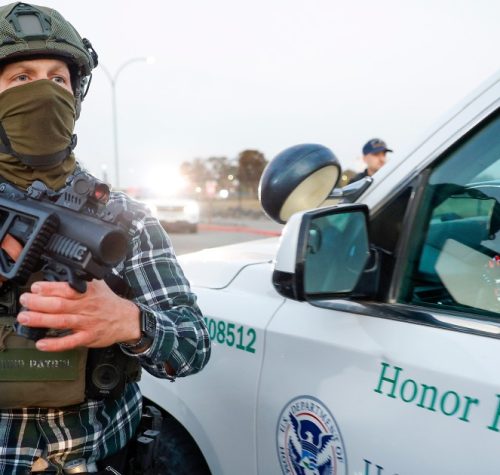
Oct. 27, 2025, 7:22 PM EDTBy Julia Ainsley and Laura StricklerWASHINGTON — The Trump administration is planning to replace some regional leaders at Immigration and Customs Enforcement with Border Patrol officials in an attempt to intensify its mass deportations effort amid growing frustration with the pace of daily arrests, according to two Homeland Security Department officials, one former DHS official and one federal law enforcement official.President Donald Trump’s top aides have welcomed Border Patrol’s more aggressive tactics to secure arrests, such as rappeling into apartment buildings from Black Hawk helicopters and jumping out of rental trucks in Home Depot parking lots, as they’ve become disappointed with ICE, the officials said. “The mentality is CBP does what they’re told, and the administration thinks ICE isn’t getting the job done,” one of the DHS officials said. “So CBP will do it.”The White House has signed off on a list of at least a dozen directors of ICE field officers who are set to be reassigned in coming days, the two DHS officials, the former DHS official and the federal law enforcement official said. They said that at least half of them would be replaced with Border Patrol officials. ICE has 25 field offices around the country, so the move could replace nearly half of the agency’s leaders.The list was compiled by Corey Lewandowski, a special government employee at DHS who advises Homeland Security Secretary Kristi Noem, and Greg Bovino, the Border Patrol sector chief overseeing the agency’s operations in Chicago and previously in Los Angeles, the law enforcement official said. The administration’s shift to leaning more heavily on Border Patrol marks a potential new phase in Trump’s deportation efforts. While ICE has come under criticism for its raids, the agency’s broad approach has been to make targeted arrests of immigrants known to be in the country illegally. Border Patrol’s approach to recent arrests in major U.S. cities has been more aggressive, making large sweeps that have sparked some of the sharpest backlash from protesters and prompted lawsuits. The New York Times was first to report that the Trump administration was planning a shake-up of ICE leadership amid frustration over arrest numbers, citing three people familiar with the plans.As of late September, the latest period for which data is available due to the government shutdown, ICE was arresting 1,178 on average per day — well short of the 3,000 per day that the chief architect of Trump’s deportation policy, White House deputy chief of staff Stephen Miller, has demanded. The Department of Homeland Security did not respond to a request for comment.Asked about any plans to reassign ICE leaders, White House spokesperson Abigail Jackson said in a statement, “The president’s entire team is working in lockstep to implement the President’s policy agenda, and the tremendous results from securing the border to deporting criminal illegal aliens speak for themselves.”Border Patrol has deployed over 1,500 agents to arrest immigrants in cities around the country to assist with deportations, Border Patrol Chief Mike Banks told NBC News. By comparison, there are 8,500 officers working for ICE’s enforcement and removal operations. Border Patrol has been behind some of the most searing images of immigration arrests since Trump took office. Earlier this month in Chicago, Border Patrol agents rappeled from a Black Hawk helicopter into an apartment building as families slept. Last week, videos emerged from Chicago of Bovino throwing a gas canister into a crowd. The incident is now part of a lawsuit accusing the Trump administration of using overly aggressive tactics. Bovino has been ordered before a federal judge in Illinois on Tuesday to face questions on whether recent arrest tactics in the Chicago area, including using tear gas, violated a temporary restraining order against CBP’s use of excessive force. Plaintiffs’ attorneys have pointed to Bovino’s personal use of tear gas as a potential violation of the judge’s order.DHS Assistant Secretary for Public Affairs Tricia McLaughlin said Monday in a statement to NBC News that Bovino had been hit in the head by a rock. “We look forward to the American people viewing the footage,” she said.Some ICE leaders have quietly expressed dismay over Border Patrol’s tactics in cities like Chicago and Los Angeles, the law enforcement official and two DHS officials said. Two former ICE officials said ICE does not own some of the resources Border Patrol has, such as Black Hawks.The White House’s frustration with ICE has been building for months. In mid-May, Miller told ICE’s leaders that if he they did not start arresting 3,000 immigrants per day, he would see that the leaders of the lowest performing regions were taken out of their positions, according to two people who spoke with meeting attendees.At the time, acting ICE Director Todd Lyons resisted the idea of firing ICE field office directors, the two people who spoke with meeting attendees. The Trump administration has increasingly turned to Bovino to oversee Border Patrol operations targeting immigrants in major U.S. cities, most recently in Chicago, where Bovino arrived in mid-October and became the public face of the Trump administration’s enforcement efforts there. The DHS officials said Bovino does not report to the chief of Border Patrol or CBP’s commissioner, as other Border Patrol sector chiefs do. The law enforcement official said Bovino reports directly to Noem, who called him the Border Patrol Commander at Large in a recent op-ed. While the list of ICE field office directors that may soon be removed was compiled by Lewandowski and Bovino, it also is being tightly held inside the White House by Miller, the DHS officials said. The officials did not know the names of the individuals on the list but said they’re expected to be directors whose regions are underperforming in arrest numbers or those who have pushed back on some of the more aggressive tactics that Miller supports and Border Patrol has conducted. Julia AinsleyI am NBC News’ Senior Homeland Security Correspondent.Laura StricklerLaura Strickler is the senior investigative producer on the national security team where she produces television stories and writes for NBCNews.com.Monica Alba and Natasha Korecki contributed.

The administration plans to replace ICE regional leaders to intensify its deportations effort amid

Source link

TAGS:
18 views

Oct. 27, 2025, 5:06 PM EDTBy Lindsey LeakeExtending the length of your daily walks can benefit your heart, new research suggests.In a study conducted among healthy adults, people who accumulated most of their daily steps in bouts of 15 minutes or longer had significantly lower risks of heart disease and death nearly a decade later than those who got in several shorter walks throughout the day. The study was published Monday in the Annals of Internal Medicine.What’s more, adults who had been less active in the past and went on longer walks showed the greatest health gains.An international team of scientists looked at the daily movements of 33,560 adults aged 62 on average and living in the U.K., using information collected from 2013 through 2015 in a medical research database called the UK Biobank. For three to seven days, participants wore an accelerometer on their wrist that recorded their physical activity.Researchers divided the people into four groups, based on how they logged most of their steps each day: in bouts shorter than five minutes, five to less than 10 minutes, 10 to less than 15 minutes and 15 minutes or longer. The largest group — 42.9% of participants — fell into the under-five-minute category.After about 9½ years of follow up, the researchers found that people who had walked in spurts of 15 minutes or longer had the lowest likelihood of dying during the study period, while people who took walks shorter than five minutes had the highest risk.People who walked in longer bouts also had lower risks of heart disease during the follow-up period, with risk increasing as walk duration shortened.Co-lead study author Borja del Pozo Cruz, a professor and researcher in the department of sports sciences at Universidad Europea de Madrid, calls the four walk durations “doses.”“There’s a clear dose response,” del Pozo Cruz said. “The longer the bout, the better it is for the different health outcomes that we analyzed.”The decision to study people’s health via step accumulation patterns, as opposed to total number of steps or intensity of physical activity, was intentional, he said.“It’s easy to translate; everyone understands steps,” del Pozo Cruz said. “Everyone can essentially measure steps with their smartwatches or smartphones or pedometers or whatever. We thought focusing on steps would be much more impactful because their translation is immediate.”Forget ‘exercise snacks’ and 10,000 steps a dayThe notion that adults should strive for 10,000 steps a day is more a marketing ploy to sell fitness trackers than a scientific guideline, according to Steven Riechman, an associate professor in the department of kinesiology and sport management at Texas A&M University, who wasn’t involved in the study.Riechman said that the body goes through a number of adaptations as it shifts from rest mode to exercise mode — changes that take a bit of time. That could explain why people who walked in bouts shorter than five minutes didn’t see as strong health gains, he said.“You need to get all the systems engaged and fully operational, and that’s where the health benefits come from,” Riechman said. “The one I particularly thought of, [which] the article did not mention, is that the increase in body temperature is probably not going to occur in less than five minutes of walking.”Despite mixed research on the health benefits of 10,000 steps a day, the study considered people who achieved an average daily step count under 8,000 to be “suboptimally active.” All study participants logged fewer than 8,000 steps a day, and those who logged fewer than 5,000 were deemed sedentary. The median activity of all participants was 5,165 steps a day.The link between longer walking bouts and lower risks of early death and heart disease was more notable among sedentary participants, researchers found. Within this group, people who walked in bouts shorter than five minutes had a 5.13% risk of death during the study period, compared to a 0.86% risk for people who walked in bouts exceeding 15 minutes. Their risk of developing heart disease during the decade-long study period was 15.39% and 6.89%, respectively.“You have big returns from zero to something,” Riechman said. “Then you keep getting benefits, but they’re just lower and lower. By the time you get to 10,000 [steps], you’re not accumulating too many more benefits.”The study is at odds with previous research that touts the merits of “exercise snacks,” or spurts of physical activity lasting less than five minutes. For instance, a study published earlier this month in the British Journal of Sports Medicine found that exercise snacks improved the fitness levels of physically inactive adults. However, that study defined short spurts as structured, moderate-to-vigorous activity. The short spurts in del Pozo Cruz’s study, on the other hand, included the unstructured, low-intensity steps one might accumulate throughout the course of the day.“Every step counts,” according to the American Heart Association, a mantra Riechman supports. Some physical activity is always better than none.“Getting out and getting some of the steps, for sure, there’s definitely a benefit,” he said. “To me, you’re just not optimizing the benefits.”‘Never too late’ to start walkingThe study had several limitations, including that 97% of participants were white.Another research constraint is that participants’ walking patterns represent a snapshot in time, and people’s exercise habits may fluctuate over the years. Even so, the study’s large sample size likely stabilized such variation, said Carmen Swain, director of the health and exercise science program at the Ohio State University, who wasn’t involved in the research.One of the study’s biggest strengths, she said, is participants’ average age: 62. It’s a time of life when people may assume they’re past the point of lowering their risk of heart disease and early death.“You can start [walking] at any age; it’s not too late,” Swain said. “The physiological adaptations that occur for a 20-year-old are also going to happen for a 60-year-old.”Yes, a 60-year-old may already bear underlying signs of heart disease, she said, which is why it’s even more important for older adults to maintain a walking regimen.“Unfortunately, it’s often a challenge for this population to start because they haven’t done it for so long,” said Swain, who lectures her students on the power of walking. “There has to be motivation.”With heart disease being the No. 1 killer of men and women in the U.S., Swain hopes the heart-health benefits of walking will be motivation enough.“Walking is so democratic. You can just do it wherever you want, whenever you want, however you want,” she said. “It’s a good form of exercise.”Lindsey LeakeLindsey Leake is an award-winning health journalist and contributor to NBC News. She holds an MA in Science Writing from Johns Hopkins University, an MA in Journalism and Digital Storytelling from American University and a BA from Princeton University.

Extending the length of your daily walks can benefit your heart, new research suggests

Source link

TAGS:
18 views

Oct. 27, 2025, 2:49 PM EDTBy Bridget BowmanRecent public polling in the New Jersey governor’s race has shown Democratic Rep. Mikie Sherrill leading Republican Jack Ciattarelli by varying degrees. Like many campaigns in the last decade, President Donald Trump and voter perceptions of his performance have loomed over this race.But Sherrill’s lead also appears to be tied to how voters in New Jersey view another politician: Democratic Gov. Phil Murphy. Kornacki: Trump & Ciattarelli’s different paths to GOP gains in New Jersey03:36Polls conducted in recent weeks have not tested Murphy’s job approval rating, but a Fox News survey conducted Oct. 10-14 found 47% of voters had a favorable view of the two-term governor, while 49% had an unfavorable view of him. Sherrill led Ciattarelli in that survey by 5 points, within the poll’s margin of error. In the handful of public polls that did test Murphy’s job approval during the fall campaign, the three surveys that showed Murphy with an approval rating in the high 40s also saw Sherrill build bigger leads. In two surveys putting Murphy’s job approval at 35%, including one that was conducted for Ciattarelli’s campaign, the gubernatorial results showed a tied or near-tied race — the best results Ciattarelli has enjoyed in the whole campaign.The shift depending on Murphy’s approval rating underscores how views of the current two-term administration could be a key factor in the race.Ciattarelli has tied Sherrill to Murphy and cast himself as the candidate representing change in the race, placing blame for the state’s woes on Murphy and Democrats, who control the state Legislature. “Politicians like Mikie Sherrill and Phil Murphy just don’t get it,” Ciattarelli says in one recent TV ad. “They’re making New Jersey unaffordable, especially for the middle class. We need a change.” Sherrill, meanwhile, has also put some distance between herself and Murphy on the issue of the state’s rising electricity costs, while also casting herself as a candidate who will bring change to state government. “Make no mistake, I’ll also fight Trenton to bring down costs for families,” Sherrill said in a recent debate.Five recent publicly released surveys, all of them conducted in September, measured both Murphy’s standing and the governor’s race in New Jersey. A Fox News survey and a poll from the education group Yes Every Kid both found Sherrill up 7 points, with support from 48% of respondents, while a Quinnipiac survey from mid-September found Sherrill up 8 points, at 49%. Sherrill’s lead in the Fox News survey was outside the poll’s 3-point margin of error, while her leads in the other two surveys were just inside those margins of error. Murphy’s approval rating in those three polls: 47% or 48%.The outlier so far among independent surveys has been one from Emerson College Polling/PIX11/The Hill, which showed the race tied, with both Sherrill and Ciattarelli at 43%, within the survey’s margin of error of plus or minus 3.1 points.Beyond the top-line results, a key difference separating the Emerson poll from others was Murphy’s approval rating, which that poll measured at 35%, more than 10 points lower than the other surveys.As polls show different pictures of Murphy’s approval rating, Trump’s approval rating has remained in the low 40s, with each of the September surveys finding Trump’s approval at 41%.Sherrill has tried to capitalize on that in her advertising, linking Trump to Ciattarelli, who has the president’s endorsement. Democrats are betting that voters’ opposition to Trump will drive them to the polls in November and boost Sherrill in the race. Ciattarelli, meanwhile, has largely praised the president while also brushing off Democratic attacks by arguing that Trump does not affect local issues like property taxes. Meanwhile, both candidates were asked in a recent debate to grade Murphy’s administration, and Sherrill gave the two-term governor a B.“There’s things like paying for the pensions, the nine increases in our credit rating that I like,” Sherrill said. “But overall I think there’s ways Trenton could do a lot better, being much more responsive to people. I’m going to have a culture shift in Trenton. I’m going to make sure we have more accountability in government, driving down costs for people,” Sherrill added, also calling for more action to address housing costs and rail infrastructure. Ciattarelli gave Murphy an F, calling Murphy’s tenure “the worst governorship of our lifetime.” “Take a look at what’s happened in New Jersey. We have an affordability crisis because of property taxes, electricity rate, housing and child care. We have a public education crisis because we watered down the public school curriculum. We have a public safety crisis because we don’t let our local police do their jobs. And we have an overdevelopment crisis in our suburban communities because of high-density housing. It’s been a failure across the board,” Ciattarelli said.Wherever Murphy’s approval rating is, his standing appears to be significantly better than former GOP Gov. Chris Christie’s after his two terms in office.A Fox News survey conducted in October 2017 found 21% of New Jersey voters viewed Christie favorably, while 77% viewed him unfavorably. The survey did not test Christie’s job approval. Bridget BowmanBridget Bowman is a national political reporter for NBC News.

Donald Trump looms over the New Jersey governor’s race. But the results will also be tied to how voters in New Jersey view another politician: Democratic Gov. Phil Murphy.

Source.

TAGS:
17 views

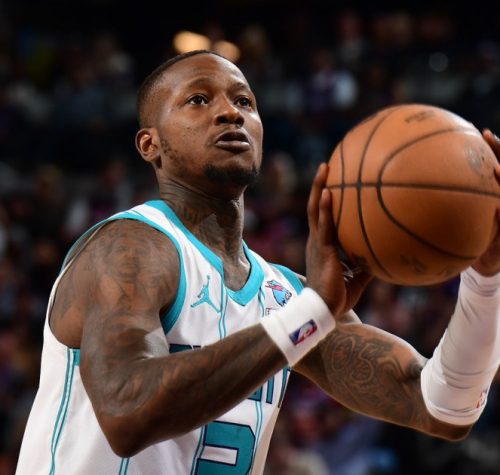
Oct. 27, 2025, 2:55 PM EDTBy Minyvonne Burke and David K. LiThe federal case against NBA guard Terry Rozier — accused of faking an injury during a game to tip off bettors — has exposed what sports medicine experts say is an unforeseen blind spot.Do teams have any other choice but to trust players to tell the truth about how they feel?“If the player says he can’t go in the first quarter, he doesn’t go,” former Dallas Mavericks team physician Tarek Souryal told NBC News last week. “We can’t see pain. You can see swelling. You can see bruising. You can see a cut. But you can’t see pain.”Rozier, 31, was charged Thursday with conspiracy to commit wire fraud and money laundering.Federal prosecutors allege he feigned a right foot injury while playing for the Charlotte Hornets during a March 23, 2023, game in New Orleans, after telling a friend beforehand he planned to bench himself early. The friend then sold that “non-public information” to bettors, according to the indictment. Rozier, now with the Miami Heat, has denied any wrongdoing. His attorney, Jim Trusty, said his client “is not a gambler” and “looks forward to winning this fight.”The case has renewed scrutiny on how the NBA verifies injuries and whether the rise of legalized sports betting has made players’ health status the newest vehicle of inside information.A fateful night in New OrleansRozier logged 35.3 minutes per game in 2022-23 for Charlotte but, on that late-March evening in New Orleans, he lasted for just 9½ minutes of action.After hitting a jumper from the free-throw line with about 6 ½ minutes left in the first period, Rozier hobbled and grabbed at his right foot in distress.Rozier did not appear to land awkwardly when he hit that jumper or show any other discomfort in the moment ahead of the shot.Federal prosecutors claimed that Rozier was actually feigning that injury in front of an arena full of paying, unsuspecting fans. Behind the scenes, Rozier’s friend had raked in tens of thousands of dollars from selling the information, according to the indictment.About a week later, the friend drove to Rozier’s Charlotte home so they could count the money, prosecutors said.In an internal memo sent Monday to all 30 NBA teams, the league said it was reviewing policies on injury reporting and how personnel are trained. It was also looking into ways to enhance “internal and external integrity monitoring programs,” the memo, obtained by NBC News, read. The NBA previously said it investigated unusual activity around the Hornets-Pelicans game but “did not find a violation of NBA rules.” The league said it is cooperating with the U.S. Attorney’s Office for the Eastern District of New York.NBA Commissioner Adam Silver said Friday he was “deeply disturbed” by the allegations.“There’s nothing more important to the league and its fans than the integrity of the competition,” Silver said. “And so I had a pit in my stomach. It was very upsetting.”The NBA insists, though, that there was documentation of Rozier’s injury 2½ years ago.“Any assertion that the NBA had anything to do with Terry Rozier not playing games following his departure from the game on March 23, 2023, is categorically false,” according to a league statement. “Per team doctors, Rozier had a real foot injury confirmed with an MRI.”Rozier’s indictment was part of a broader probe that also charged Portland Trail Blazers coach Chauncey Billups and former player and coach Damon Jones in a separate mob-linked poker cheating scheme.How are injuries assessed?The NBA says that teams “must report information concerning player injuries, illnesses, other medical conditions, or rest for all games [by] 5 p.m. local time the day before a game.”In addition, the policy says, teams must “designate a participation status and identify a specific injury, illness, other medical condition, or other reason for any player whose participation in the game may be affected for any reason.”But Souryal said there is “no league-wide rule on how injuries are assessed.” “Each team does it different. Every doctor does it different,” he said. Trainers are the first to evaluate a player, but the athlete has the “ultimate last say” on whether he plays, Souryal added.Art Caplan, who heads the division of medical ethics at New York University, said team doctors have no way to independently verify claims of pain during a game.“‘Pete’ comes off the court and says my heel hurts or my knee is killing me, you take that seriously on the spot as something that he’s telling the truth,” Caplan said. “In that setting of sports, the athlete’s complaint literally drives what happens.”Who has the ‘ultimate last say’?Souryal said athletic trainers are typically the first to evaluate an injured player. Depending on the severity of the injury, the team physician will be notified to do another evaluation and order any necessary testing, Souryal said.“If it happens on the court, then you evaluate him on the court, you get him to the locker room, you evaluate him again in the locker room,” he said. “But if it’s one of those things where ‘Player X’ is complaining of hamstring pain, that’s something that can be assessed during halftime or after the game. There is no protocol.”Souryal said that most teams follow the same “chain of command,” except when a player says he’s injured to the point where he cannot play in a game.Even if an X-ray shows no signs of a serious injury, Souryal said the player “has the ultimate last say” on whether he hits the court.While the allegations against Rozier have led to speculation about his injury, Souryal said he does not think the Hornets could have done anything differently.“We always have to take the player’s word as medical staff, and given the time and the setting and the situation, I don’t know that anything differently could have been done by the team or the staff,” he said.Rozier was placed on immediate leave from the Miami Heat following his arrest. ‘Injuries’ play role in gamesmanshipFaking an injury isn’t completely foreign to big-time sports, though it’s usually done for competitive edge and not to throw a game or prop wager.Modern offenses in pro and major college football often run high-tempo attacks, prompting some defenders to feign injury just to slow down an opponent’s pace.In late 2022, the NFL went as far as to threaten teams with heavy fines and lost draft picks to stop the practice.In college football last month, the Atlantic Coast Conference fined Syracuse $25,000 for feigning injuries in a victory over Clemson.The role of gambling in NBARozier’s case isn’t the first time an NBA player has been accused of consorting with gamblers since a landmark 2018 Supreme Court ruling opened the floodgates to legalized sports wagering.In 2024, the league banned Toronto Raptors forward Jontay Porter alleging that he bet on games, passed on information to gamblers and claimed illness to influence a wager.The NBA said its investigation found that Porter had engaged in widespread gambling, against league rules.It alleged that he “disclosed confidential information” about his own health status to an individual he knew to be an NBA bettor” before a March 20, 2024, game.Porter claimed to suffer from an illness during the game and played only three minutes, the league said.“When sports gambling first came into sports … I always thought that how injuries are handled was going to be a potential problem,” Souryal, the former Mavs team doctor, said.An $80,000 online bet that he would underperform was placed ahead of that game, which would have paid out $1.1 million. The conspicuously large amount led to the wager’s being “frozen” and “not paid out,” the NBA said.Rozier’s attorney, Trusty, insists his client has done nothing wrong and accused federal authorities of grandstanding.“We got a trophy hunt, so we’re going to fight it,” Trusty said.Minyvonne BurkeMinyvonne Burke is a senior breaking news reporter for NBC News.David K. LiSenior Breaking News ReporterPhil Helsel, Doha Madani and Rohan Nadkarni contributed.

The federal case against NBA guard Terry Rozier — accused of faking an injury during a game to tip off bettors — has exposed what sports medicine experts say is.

TAGS: