21 views

Oct. 15, 2025, 2:00 PM EDTBy Matt BradleyCAESAREA, Israel — Ten years ago this week, two Palestinian attackers boarded a bus in Jerusalem and shot, beat and stabbed Israeli American educator Richard Lakin to death along with two others before police killed one of the militants and injured and arrested the other.The surviving assailant, Bilal Abu Ghanem, was freed in February from his three consecutive life sentences for murder as part of the last Israeli ceasefire and hostage release deal with Hamas.That’s when his son, Micah Avni, had to watch his father’s murderer go free.“It feels like I’ve been betrayed by my country,” Avni, 56, said the day before Hamas exchanged 24 Israeli hostages for about 2,000 Palestinian detainees and prisoners, including 250 serving life sentences for serious crimes including terrorism. Bilal Abu Ghanem, in 2016.Ahman Gharabli / AFP via Getty Images fileAvni’s anguish and anger have now merged with a larger collective, shared by many Israelis whose loved ones were killed or maimed in terror attacks and who must now watch the perpetrators walk free as part of the latest ceasefire negotiated by the Trump administration.Their torment hasn’t just punctured the euphoria surrounding last week’s agreement — it very nearly halted the deal and could still frustrate its full implementation.Two far-right political parties in Israel’s government cited the release of 250 convicts as their reason for voting against President Donald Trump’s ceasefire and hostage release plan.“Alongside this joy, it is absolutely forbidden to ignore the question of the price: the release of thousands of terrorists,” said Itamar Ben-Gvir, the far-right minister of national security and leader of the Otzma Yehudit party, in a statement explaining his party’s opposition. “These are terrorists whose past experience proves that they will return to terrorism and their art of working to murder Jews.”While Ben-Gvir and others refer to thousands of “terrorists” released, 250 of those released were convicted of serious crimes.Most of the rest of the more than 1,700 people let go, among them doctors, nurses and journalists, had been held without charge. These detainees were not involved in the Oct. 7, 2023, attacks and were held under a controversial practice called administrative detention, which allows Israel to detain people for an indefinite period of time without ever charging them. More than 20 minors were on the list.For Palestinians in Gaza and the occupied West Bank, the releases were cause for celebrations. Prisoners and detainees who returned to Gaza rode on the tops of buses through crowds of well-wishers.Families wait outside the Ramallah Cultural Palace for the Palestinian prisoners to be released on Monday.Daniele Hamamdjian / NBC NewsIn the West Bank, families waited for the released prisoners outside the Ramallah Cultural Palace in the Palestinians’ provisional capital. Some women and young girls arrived in traditional Palestinian dresses. Many refused to speak to the gathered press: Israel’s military, they said, had called them and warned them not speak to the media.The prisoners’ families said they had seen others being re-arrested in the past and didn’t want to gamble on the convicts’ hard-won freedom.“For Israel, any Palestinian is a terrorist,” said the uncle of one of the released Palestinians, who refused to give his name, “even if they didn’t do anything.”Palestinian relatives mourn at Al-Shifa Hospital in Gaza City.Khames Alrefi / Anadolu via Getty ImagesIn addition, there is the collective pain of nearly 2 million in Gaza who have endured Israel’s two-year war against Hamas. There is little hope among Palestinians that anybody will be held responsible for the tens of thousands of innocent civilians killed by Israeli fire, along with those maimed in attacks.Israel has accused Hamas of operating in civilian areas, thus necessitating attacks that endanger noncombatants. In November, the International Criminal Court issued arrest warrants for Israeli Prime Minister Benjamin Netanyahu and former Defense Minister Yoav Gallant, as well as Hamas military chief Mohammed Deif, whom Israel said it had killed, over alleged crimes against humanity and war crimes.Israel has forcefully rejected the allegations, and Netanyahu’s office branded the decision “antisemitic,” rejecting them as “absurd and false” and condemning the ICC as a “biased and discriminatory political body.”Tinged with sadnessPrime Minister Benjamin Netanyahu acknowledged many Israelis’ public pain in comments on Sunday night.“Tomorrow, our sons will return to their borders,” he said. “This is a historic event that is tinged with sadness over the release of murderers — and joy over the return of kidnapped people.”Under President Donald Trump’s 20-point plan for ending the fighting, Hamas fighters who lay down their weapons would be spared any punishment — a condition that has also raised grave reservations among many Israelis, including Netanyahu, who had hoped to see Hamas destroyed.Rachel Goldberg-Polin, an American Israeli whose son, Hersh, was kidnapped on Oct. 7 and then killed by Hamas last year, said she’s rejected the feelings of anger that come with grief.Jon Polin and Rachel Goldberg-Polin, parents of Hersh, in Jerusalem in October 2024.Dmitry Solovyov / NBC News“Nothing can bring Hersh back,” she said in an interview last week. “I tend to look at this in a very zoomed-out way. I don’t have this fiery venomous anger that I think wouldn’t serve me in any purpose.”Avni, who opposed this week’s deal, said he worries that the released convicts will simply return to the battlefield or engage in terrorism against Israelis.“Obviously, every single Jewish person wants to get the hostages back,” he said. “It doesn’t mean that strategically trading thousands of terrorists for 20 lives makes sense.”Avni has advocated executing terrorists as a way to remove prisoner exchanges from the negotiating table. Israeli law allows for capital punishment, but only for treason and “crimes against humanity.” The death sentence has been used only twice in Israeli history.In the hours after his father’s murder, Avni admits that he considered taking matters into his own hands. Both Lakin and Abu Ghanem were taken to the same ward in the same Jerusalem hospital after the attack.The scene of the Jerusalem bus attack on Oct. 13, 2015, that resulted in Richard Lakin’s death.Kobi Gideon / Getty Images fileZaka volunteers and security forces inspect the scene after the bus attack that left Lakin and two other civilians dead.Gali Tibbon / AFP via Getty Images fileThe two men were treated only yards apart. Lakin died, but his killer survived.“I think I would have jumped on him and done something but he had police standing there,” Avni said. “I remember thinking to myself, you know, you’ll go to jail for life, and you’ve got responsibilities.”Recounting the cruel irony of his father’s killing still brings tears to Avni’s eyes. His father had been a peace-loving school principal who advocated for racially integrated education, had marched with Martin Luther King Jr. and participated in the anti-segregation “Freedom Riders” movement during the 1960s.The family moved to Israel when Avni was 15 years old.“He was a big believer in coexistence. I wish everybody could be like that, but they’re not,” Avni said of his father. “It was an innocent world view.”Richard Lakin, his grandchild, and his son, Micah Avni.Family handoutMatt Bradley reported from Caesarea, and Daniele Hamamdjian from Ramallah in the occupied West Bank. Matt BradleyMatt Bradley is an international correspondent for NBC News based in Israel.Daniele Hamamdjian contributed.

Many Israelis whose loved ones were killed or maimed in terror attacks must now watch the perpetrators walk free as part of the ceasefire.

Source link

TAGS:
20 views

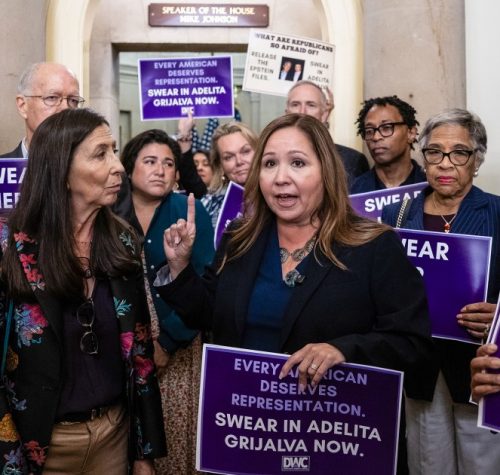
Savewith a NBCUniversal ProfileCreate your free profile or log in to save this articleOct. 15, 2025, 2:11 PM EDTBy Scott Wong, Gabrielle Khoriaty and Kyle StewartWASHINGTON — Democrats are ramping up pressure on House Speaker Mike Johnson to seat Rep.-elect Adelita Grijalva, staging a protest at his office, holding news conferences and threatening a lawsuit to try to get him to swear in the newest Democratic member of Congress.Grijalva won the Arizona House seat of her father, the late progressive leader Rep. Raul Grijalva, in a Sept. 23 special election. But the House has not been in session since her election as part of the stalemate over the government shutdown.While Grijalva has been in and around the Capitol complex waiting to take the oath, Johnson, R-La., has said for the past two weeks he won’t swear her in until the government reopens.House Dems march to demand Johnson swear in Grijalva00:56Once she is seated, Grijalva would bring the House to 219 Republicans and 214 Democrats. She is also expected to be the final signature needed to force a House vote to release the Justice Department’s Jeffrey Epstein files.Now, Democrats are trying new, more aggressive tactics to force Johnson to reverse course.On Tuesday night, Grijalva and members of the Democratic Women’s Caucus marched to Johnson’s office, chanting “Swear her in!” A U.S. Capitol Police officer briefly tried to stop lawmakers and could be seen on video getting into a short verbal altercation with Rep. Nanette Barragán, D-Calif. She claimed that the officer grabbed her, but a video only shows her pushing past an officer into the speaker’s foyer. Capitol Police did not immediately respond to a request for comment.In remarks outside Johnson’s office, Grijalva said she has heard “not one word” from the speaker.“I am a woman of color from Arizona, and 700,000 people deserve to have their voice heard, …” Grijlava said. “Let’s just be really clear, if I were a Republican, I would have already been sworn, and that is not acceptable. They’re afraid of me signing and being the 218th signer to the Epstein petition.”Johnson was not in the Capitol during the protest. But Arizona’s two Democratic senators — Ruben Gallego and Mark Kelly — verbally sparred with Johnson in the same spot just last week over his refusal to immediately seat Grijalva.Tuesday night’s protest came on the same day that top Arizona state officials certified the results of Grijalva’s election victory. And on Tuesday, Arizona Attorney General Kris Mayes, a Democrat, sent a letter to Johnson threatening to sue if he did not seat Grijalva or set a date to do so.“Failing to seat Ms. Grijalva immediately or to otherwise provide a reasonable explanation as to when she will be seated will prompt legal action,” Mayes wrote.She added: “You and your staff have provided ever-shifting, unsatisfactory, and sometimes absurd stories as to why Ms. Grijalva has not been sworn in. In a particularly worrisome comment, an aide connected the swearing-in and admission to the ongoing budget fight, suggesting that the House is trying to use Arizona’s constitutional right to representation in the House as a bargaining chip.”When asked about Mayes’ letter, Johnson said in a short statement, “The House will follow customary practice by swearing in Rep-elect Grijalva when the House is in legislative session.”Speaking to reporters Wednesday, Johnson accused Democrats of “playing political games” and disrespecting police by protesting at his office. “They stormed my office. Maybe you saw some of the video online that they themselves shared. … They berated a Capitol Police officer, screamed at him. He was just merely standing his post. It shows, again, their disdain for law enforcement, as we see all around the country … and it shows their desperation.”House Minority Leader Hakeem Jeffries, D-N.Y., Grijalva and other Democrats have pointed out that Johnson, in April, swore in two Florida Republicans — Rep. Jimmy Patronis and Randy Fine — shortly after their special elections, while the House was out of town.Johnson has argued it was because the pair of Floridians had family in Washington at the time, so he did it as a courtesy to accommodate visiting family members. He also told reporters Tuesday he wants to ensure Grijalva has “all the pomp and circumstance” of having a full chamber in session to witness her being sworn in.And the speaker has repeatedly said the delay has nothing to do with the effort to force a vote on the Epstein files.Following the Tuesday protest, Democrats in both the Arizona delegation and the Congressional Hispanic Caucus on Wednesday stood in front of the Capitol and again demanded he administer the oath of office.“I don’t need bells and whistles,” Grijalva said, rejecting the speaker’s explanation. “I don’t need pomp and circumstance. I just need to get to work for southern Arizona.”Kelly, the Arizona senator, noted he and his family live in Grijalva’s district, which extends along the southern border from Yuma to Tucson.“We currently do not have representation in the U.S. House of Representatives,” Kelly said, “and that is wrong.”Scott WongScott Wong is a senior congressional reporter for NBC News. Gabrielle KhoriatyGabrielle Khoriaty is a desk assistant in the NBC News Washington bureau.Kyle StewartKyle Stewart is a producer and off-air reporter covering Congress for NBC News, managing coverage of the House.Frank Thorp V contributed.

Democrats are ramping up pressure on House Speaker Mike Johnson to swear in Rep.-elect Adelita Grijalva, the newest Democratic member of Congress.

Source link

TAGS:
22 views

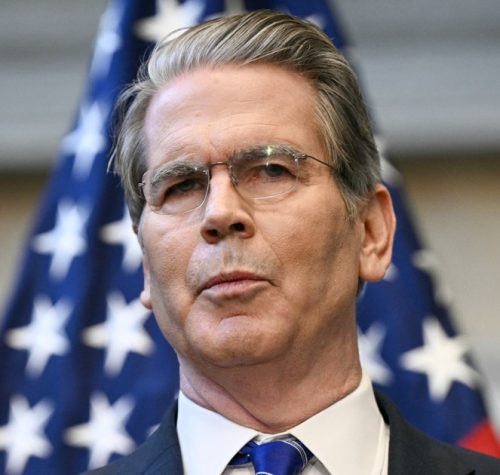
Oct. 15, 2025, 11:08 AM EDTBy Steve Kopack and Christine RomansU.S. Trade Representative Jamieson Greer said Wednesday that China’s recent restrictions on rare earths exports are a “global supply chain power grab.”Greer and Treasury Secretary Scott Bessent spoke to reporters at the Treasury Department in Washington, D.C., where Bessent said Beijing’s actions amounted to a provocation. The remarks were the latest sign that the U.S.-China trade relationship continues to deteriorate after Beijing’s surprise announcement Thursday of new limits on rare earth minerals and related technologies.In response, President Donald Trump threatened to impose 100% tariffs on China as well as export controls on “any and all critical software.” U.S. Treasury Secretary Scott Bessent and Chinese Vice Premier He Lifeng prior to the first meeting of the China-U.S. economic and trade consultation mechanism in London on June 9.Li Ying / Xinhua News Agency via Getty Images fileThe only way China can avoid those new tariffs, Greer told NBC News, is to drop the proposed export controls. Both Bessent and Greer were cautiously optimistic that Beijing would back down and return to the negotiating table“Our expectation is that they won’t implement [the controls] and that we’ll be able to be back to where we were a week ago,” said Greer, “where we had the tariff levels we’ve agreed to and we have the flow of rare earth magnets we agreed to.”In the meantime, Bessent said Washington was conferring with its allied trade partners about a unified response to the restrictions. “This is China vs. the world,” he said. “We and our allies will neither be commanded, nor controlled.”Rare earth minerals are critical to the manufacture of a wide range of products such as batteries, electric vehicles, household goods, TVs and smartphones and solar panels.After three rounds of what the officials called successful trade talks, China also has yet to officially approve the sale of TikTok U.S. and has not bought any soybeans from American farmers since May. Nonetheless, Greer and Bessent said the current 90-day tariff pause in place with China — renewed at least three times so far — could be re-upped again for a longer interval if China lifts the rare earths restrictions.Steve KopackSteve Kopack is a senior reporter at NBC News covering business and the economy.Christine RomansChristine Romans is the senior business correspondent at NBC News.

Top U.S. officials say China’s latest rare earths export restrictions amount to a “global supply chain power grab.”

Source link

TAGS: