
23 views

Oct. 15, 2025, 5:00 AM EDTBy Dan De Luce, Gordon Lubold and Courtney KubeWASHINGTON — Members of Congress are growing concerned over a lack of information from the Trump administration about the intelligence and strategy underlying its strikes on alleged drug smuggling boats in the Caribbean, six sources told NBC News. Republicans and Democrats on Capitol Hill have left briefings about the strikes frustrated with the lack of information, said these people: five congressional sources and an additional source with knowledge of the matter. Some have asked for unedited video of the strikes, reflecting the kind of basic information they seek, but the administration has so far refused to provide it. At a briefing a few weeks ago, Republican lawmakers were clearly upset with the answers they received, one of the congressional sources said. “The Republicans were mad that the briefers were unable to answer questions about the legal basis for the operations,” the source said. Some members of Congress — including Republicans who broadly support the attacks and the administration generally — are also concerned about the level of precision of the intelligence used to determine targets and the possibility that an American citizen could be killed in the operations, several of the sources said. A Defense Department spokesperson said members are being fully informed, and last week most GOP senators voted to defeat a measure that would have required congressional approval before more attacks were launched.Lawmakers are also asking the administration to explain who was killed in the strikes, how they were positively identified as legitimate targets for lethal force, what intelligence indicated that they had possible links to drug trafficking gangs and what information showed that they were heading to the United States with drugs, the sources said. President Donald Trump said on social media that the U.S. military had conducted another strike against a Venezuelan boat.@realDonaldTrump via Truth SocialThey have also asked whether the administration has weighed the potential response from trafficking groups, including the possibility of retaliation inside the United States.Since Sept. 2, President Donald Trump has ordered at least five military strikes in the Caribbean on boats his administration says were moving illicit drugs from Venezuela to the United States. Officials say 27 people have been killed in the attacks, the most recent of which Trump announced Tuesday. Trump and Defense Secretary Pete Hegseth posted short, grainy video clips of the strikes on social media. The clips include multiple edits, contributing to questions in Congress about whether the targets are definitely the drug smuggling boats the administration has said they are and about the circumstances and locations of the operations. Raw, unedited video could help reassure lawmakers about the origins of the vessels being targeted, as well as provide more context for them to better understand the circumstances under which the vessels are targeted or even where the strikes are occurring. After the first strike, Trump said the boat the United States destroyed was linked to the Venezuelan gang Tren de Aragua, but the White House has yet to provide evidence to back up that claim. Drugs were found in the water after one strike, an official from the Dominican Republic said at a news conference last month. The United States has not revealed evidence that drugs were on all the boats. Asked about the lawmakers’ request for more information and video, chief Pentagon spokesman Sean Parnell said administration officials have kept Congress fully informed about the strikes and the legal authorities involved with frequent briefings.“The Department of War has given numerous briefs and notifications to Congress that have extensive details of the policy, operations, tactical intelligence, and authorities invoked,” Parnell said in an email.Parnell and the White House did not directly address why the administration so far has not provided lawmakers with access to unedited video of the attacks.A White House official told NBC News, “The Department of War is working through additional requests for information from the Hill.”The administration has provided six classified briefings to relevant congressional committees and lawmakers over the past month, Pentagon and White House officials said.Although no one on the congressional side disputes that there have been briefings by Pentagon officials, members from both parties have come away from them dissatisfied and frustrated at the vague nature of the information that was shared, the sources said. NBC News has reported that the United States has been preparing options for strikes inside Venezuela’s borders. Many lawmakers fear that extending the bombing to targets on land would pose a significant risk of civilian casualties, two of the congressional sources and the source with knowledge of the matter said. Targeting a vessel on the open seas is one thing, they believe, but striking a location on land brings more perils, including the possibility of inadvertent civilian deaths.A member of the national militia holds a Venezuelan flag at a rally in support of President Nicolás Maduro in Caracas on Oct. 6 amid rising tensions with the United States.Leonardo Fernandez Viloria / Reuters fileSome members of Congress also believe the strikes are illegal; others have concerns about their legality. The administration provided a letter to Congress in which it said Trump has determined that the United States is now engaged in an “armed conflict” with drug trafficking organizations and that it views members of those groups as “armed combatants,” using the same legal rationale the government has previously used to go after Al Qaeda, the Islamic State and other terrorist groups.After the first classified briefing by Pentagon officials, which they felt was lacking, multiple lawmakers asked the administration to give access to unedited video of the strikes to members of Congress, who would view the video only behind closed doors, the sources said. Members believe the raw video could help answer some of their questions. So far, though, the administration has not agreed to the request, the sources said. During previous administrations, Pentagon and intelligence officials in some cases provided lawmakers with classified, nonpublic video or photos of specific counterterrorism operations. Although Republicans have privately voiced concerns about the lack of information and clarity about the strikes, last week all but two GOP senators joined in voting down a resolution that would have required the Trump administration to seek congressional approval before it launched more attacks.The resolution went down to defeat in a 51-48 vote. Two Republicans, Rand Paul of Kentucky and Lisa Murkowski of Alaska, joined almost all Democrats in voting in favor. (John Fetterman of Pennsylvania crossed the aisle and joined the rest of the Republicans in voting no.) Paul said that he believes the strikes have no legal foundation and that the administration needs to provide evidence to justify the lethal bombing raids. “Is it too much to ask to know the names of those we kill before we kill them, to know what evidence exists of their guilt?” Paul said in a speech on the Senate floor. Sen. Rand Paul, R-Ky., at a committee hearing in Washington on Sept. 17.Kevin Dietsch / Getty Images fileSen. Todd Young, R-Ind., voted against the resolution but said afterward that he was still “highly concerned about the legality” of the strikes, as well as the deployment of U.S. warships and other resources to the Caribbean that could be needed to counter China in the Pacific.“The administration should adhere to the Constitution and keep the people’s representatives informed on this critical national security issue,” Young said in a statement.‘Secret list’More than 20 Democrats in Congress wrote a letter to the administration last month posing a list of questions about the recent strikes and asking for a copy of all legal assessments of the attacks by federal agencies. The administration has yet to respond to the letter, according to a spokesperson for Sen. Tim Kaine, D-Va. Sen. Elissa Slotkin, D-Mich., last week accused the administration of failing to inform Congress and the American people about all the groups being targeted and all the groups Trump has designated as terrorist organizations. At a Senate Armed Services Committee hearing, Slotkin asked Charles Young, the principal deputy general counsel for the Defense Department, to identify the drug cartels that are viewed as adversaries in the campaign.“How many new terrorist organizations are we currently in armed conflict with, and could you name them?” Slotkin asked. Young, who has been nominated to be the Army’s next general counsel, told Slotkin: “Senator, it may be more appropriate to discuss that with you in a closed session.”Slotkin replied that “we couldn’t get it in a closed session” held with the Defense Department’s new general counsel. “I was a CIA officer and helped with targeting. I have no problem with going after these cartels,” she added. “I have no problem designating terrorist organizations in general. But we’ve never had an instance where there’s a secret list of what I understand to be dozens of new terrorist organizations that the American public and certainly the oversight committees don’t get to know.”In justifying labeling cartels as foreign terrorist organizations, officials often cite the high death toll from fentanyl use in the United States. But Venezuela is not considered a source for the illegal fentanyl in the United States, which is mainly smuggled over land routes in small, easily concealed amounts across the Mexico-U.S. border, not by boat through the Caribbean, experts say. A claim by Colombian President Gustavo Petro last week appeared to reflect the concern U.S. lawmakers have about the precision of the strikes and the intelligence behind them. Petro wrote on social media last week that a boat struck on Oct. 3, which the United States portrayed as Venezuelan, was actually from his country and carried Colombian citizens, and he also criticized what he said was a broader political campaign against Venezuela. In a statement, a White House spokesperson dismissed what Petro said, but it was unclear whether the spokesperson was rejecting his central claim, that the boat was Colombian with Colombian citizens on it, not Venezuelan. The spokesperson did not respond to an attempt to clarify the administration’s position.“The United States looks forward to President Petro publicly retracting his baseless and reprehensible statement so that we can return to a productive dialogue on building a strong, prosperous future for the people of the United States and Colombia,” the statement read. Dan De LuceDan De Luce is a reporter for the NBC News Investigative Unit. Gordon LuboldGordon Lubold is a national security reporter for NBC News.Courtney KubeCourtney Kube is a correspondent covering national security and the military for the NBC News Investigative Unit.

The Trump administration has declined to provide members of Congress unedited video of military strikes against suspected drug running boats in the Caribbean.

Source link

TAGS:
25 views

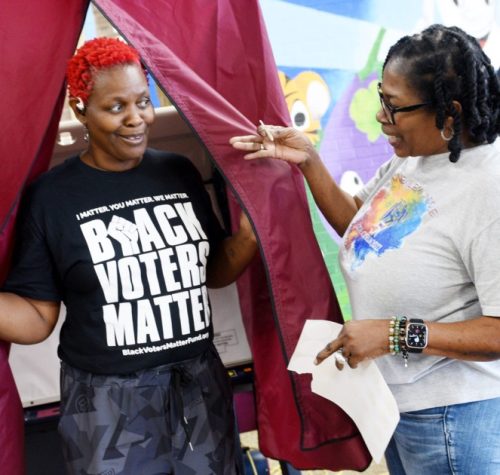
Savewith a NBCUniversal ProfileCreate your free profile or log in to save this articleOct. 15, 2025, 5:00 AM EDTBy Lawrence HurleyWASHINGTON — The conservative-majority Supreme Court on Wednesday will consider whether to eviscerate a key provision of the landmark Voting Rights Act in a congressional redistricting case from Louisiana.The justices, who expanded the scope of the case over the summer, will hear oral arguments on whether states can ever consider race in drawing new districts while seeking to comply with Section 2 of the 1965 law, which was enacted against a backdrop of historic racial discrimination to protect minority voters.The long-running dispute concerns the congressional map that Louisiana was required to redraw last year after being sued under the Voting Rights Act to ensure that there were two majority-Black districts. The original map only had one such district in a state where a third of the population is Black.The Supreme Court originally heard the case earlier this year on a narrower set of legal issues, but in a rare move, it asked in June for the parties to reargue it. The court then raised the stakes by asking the lawyers to focus on a larger constitutional issue.Now, the justices will be deciding whether drawing a map to ensure there are majority-Black districts violates the Constitution’s 14th and 15th amendments, which were both enacted after the Civil War to ensure equal rights for former slaves, including the right to vote.Conservatives argue that both constitutional amendments prohibit consideration of race at any time. The Supreme Court has previously embraced this “colorblind” interpretation of the Constitution, most notably in its 2023 ruling that ended the consideration of race in college admissions.Louisiana, which initially defended its new map, has switched sides and joined a group of self-identified “non-African-American” voters who sued to block it on constitutional grounds. The Trump administration also backs the state’s new position.The map is being defended by civil rights groups that challenged the original map.The Voting Rights Act has long been a target of conservative legal attacks, with the Supreme Court weakening it in two major rulings in 2013 and 2021.But two years ago, the court surprisingly reaffirmed the requirement that race be used to redraw districts when necessary to comply with the law in a different congressional redistricting case from Alabama.The ruling was 5-4, with two conservatives, Chief Justice John Roberts and Justice Brett Kavanaugh, joining the court’s three liberals in the majority. Kavanaugh, however, expressed reservations about the long-term future of Section 2.A broad ruling in Louisiana’s favor would reduce the need for states to draw legislative districts composed largely of minority groups and would likely lead to a reduction in the number of minority lawmakers in Congress and state legislatures.A quick ruling could give Louisiana and other states time to draw new districts ahead of the 2026 midterm elections. With Black voters often voting Democratic, such a move could benefit Republicans.Lawrence HurleyLawrence Hurley is a senior Supreme Court reporter for NBC News.

The conservative-majority Supreme Court on Wednesday will consider whether to eviscerate a key provision of the landmark Voting Rights Act in a congressional redistricting case from Louisiana.

Source link

TAGS:
21 views

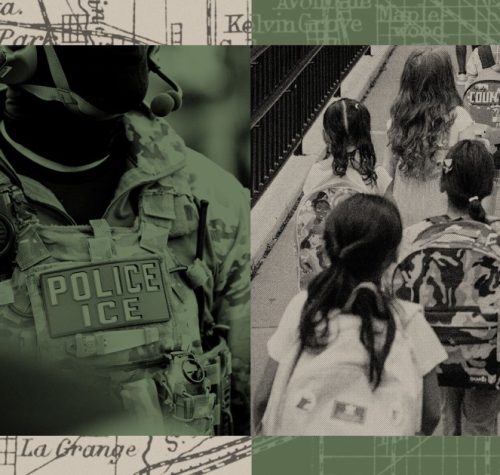
Oct. 14, 2025, 6:26 PM EDTBy Daniella Silva and Natasha KoreckiCHICAGO — A teacher said tear gas drifted toward a school playground, forcing students and recess indoors. A viral video recorded near another school showed law enforcement dragging a woman out of her van and onto the ground. And students say they have seen ICE vehicles in their neighborhoods, leading them to feel frightened, according to one instructor. Educators say those incidents and others that have taken place as federal immigration agents increase arrests in Chicago are disrupting their jobs, upending their communities and traumatizing their students.“Everyone’s very anxious,” said Sheena Shukla, a school social worker for Chicago Public Schools. “Can you imagine telling a 12-year-old that people are out there who might want to take their family? We can’t shield our children from these realities, so we provide them with a level of support that they can understand.” In response, school staff members have organized teams to report and respond to Immigration and Customs Enforcement activity around their schools, including patrolling the area, keeping concerned parents informed and helping escort some families to and from school, according to members of the Chicago Teachers Union. That work includes talking to their students in age-appropriate ways about what’s going on in their communities in a city that is nearly 30% Latino and more than 22% foreign-born, Shukla said.Armed federal agents clash with protesters in Chicago03:13The Chicago Public Schools district is holding daily calls with city leaders and its labor partners. It said in a statement to NBC News that while there has been law enforcement activity near some schools, there have been no incidents inside its schools and facilities. Nonetheless, the district and the Chicago Teachers Union have been issuing guidance and taking steps in preparation for federal immigration enforcement since President Donald Trump returned to office in January.“School remains the safest and best place for students. CPS staff have safety protocols, including how to respond if federal representatives seek access to school property or interaction with students or staff,” the district said.The district has also been vocal about the fact that it does not collaborate with federal immigration enforcement agencies, including ICE. Agents will not be granted access to its schools unless they present a “valid criminal judicial warrant signed by a federal judge,” the district said in its statement.The Department of Homeland Security referred NBC News to a statement saying ICE does not target schools or children. “ICE is not going to schools to make arrests of children. Criminals are no longer able to hide in America’s schools to avoid arrest. The Trump Administration will not tie the hands of our brave law enforcement and instead trusts them to use common sense,” DHS spokeswoman Tricia McLaughlin said in the statement. “If a dangerous illegal alien felon were to flee into a school, or a child sex offender is working as an employee, there may be a situation where an arrest is made to protect public safety. But this has not happened.” On Tuesday, DHS said on social media that its enforcement surge in the area, known as Operation Midway Blitz, “is making Illinois SAFE again” and had arrested over 1,500 people across Illinois, including criminals and gang members.Last week, Chicago Teachers Union officials met with about a dozen teachers at Funston Elementary School to talk about a recent incident involving immigration officials and tear gas being deployed near the school.More on immigration enforcement in IllinoisHow immigration enforcement turned sleepy Broadview into a chaotic, militarized townIllinois officials issue orders and file lawsuits as protesters clash with immigration agentsBodycam videos show ICE agents’ initial reactions to fatal Chicago shootingIllinois Gov. JB Pritzker calls armed immigration officers in Chicago an ‘attack on Americans’Maria Heavener, a first grade teacher at the school, described how she was teaching on Oct. 3 when she heard what sounded like helicopters, horns blowing on the street and a whistle educators used to announce ICE activity. She then saw a message from a fifth grade teacher at the school who spotted ICE “less than 100 feet from our building” while walking to a store called Rico Fresh Market for lunch. “Tear gas filled the streets, blowing into the parking lot of Rico Fresh and towards the direction of our playground across the street,” Heavener said at a news conference with Chicago Mayor Brandon Johnson.A class that had been outside was quickly pulled inside so it was not affected by the tear gas, Heavener said. The school said in a letter to families that it held recess indoors for the rest of the day out of an abundance of caution and that staff members were well-versed in the protocols for keeping students safe.By dismissal time, about 100 community members were lined up and down the streets near the school, “creating safe passage for our children and families and sending a clear message that ICE is not welcome in our community,” Heavener said.DHS did not respond to a request for comment about enforcement activity and deploying tear gas near the school or concerns about using chemical agents near schools.“There is no institution available right now that is constructed to deal with the trauma, the impact that our young people and their families and our communities are experiencing,” CTU President Stacy Davis Gates said.Heavener and other school staff members told NBC News they have seen a drop in attendance as the immigration enforcement operations have increased. “Some families and students, they’re not leaving the home,” said Shukla, the social worker.Videos of apparent immigration enforcement activity around the city have kept teachers on high alert, including a recent viral post showing federal agents taking a woman out of her car and putting her on the ground while they were detaining her. The person who recorded and posted the video said that she is a teacher and that the incident took place near the school they work at during dismissal as parents were picking up their children. The teacher claimed she heard students shouting “It’s ICE!” and running away. NBC News could not independently verify the details described in the post, and the poster of the video did not immediately respond to a request for comment. DHS said in a statement about the incident that while it was conducting targeted immigration enforcement operations, Border Patrol was “harassed and recklessly followed by agitators with megaphones and whistles who began to yell inflammatory remarks and alerted the public of the officers’ presence.”“They were driving recklessly, including weaving between lanes and putting other motorists at risk. Following the driver abruptly stopping in the middle of traffic near a school, law enforcement approached the vehicle,” McLaughlin said. “The occupants refused to exit the vehicle and follow law enforcement commands.”She said the people in the car were two immigrants in the country illegally from Mexico but did not identify them or specify whether they were detained.A teacher at a school in Englewood, a neighborhood in Chicago’s South Side, told NBC News that students have reported witnessing ICE vans near their homes or driving by during recess. The teacher said that during a check-in with a seventh-grade class, a student said “she was feeling sad because she witnessed somebody getting abducted by ICE. Immediately, the entire class just became a discussion of ICE activity.” The teacher, who asked to remain anonymous because of fears that federal immigration agents could target his school community, said some of his students’ family members have been arrested by immigration agents.“It ripples out. Now there are other students who are missing their friends,” he said. Heavener said her young students have a hard time comprehending what is going on.When school returned the Monday after the incident near Funston Elementary, Heavener said, she asked her first grade class how they were feeling and whether they had questions about what happened.Some were confused, and others “knew exactly what Immigrations and Customs Enforcement was, they knew what a tear gas canister was.”“They were telling me that they feel sad and they feel scared. It doesn’t make sense to them,” she said. “In social studies, we’re also doing a unit on community, about getting along with others, about rules and laws, about citizenship and respect, and they’re seeing all of these things be violated in real time. The things that they’re learning and the things that they’re seeing outside of the window don’t line up.” Heavener asked students to share a word that described how they felt. Most said “scared” or “worried.” Then one student said they felt brave, she said.The student said, “I feel brave, because at the end of the day, did you see how many neighbors were outside? They were there to keep us safe,” she recounted.“Then another kid, encouraged by that, said: ‘I feel confident, because I know school is the safest place to be. My mom was telling me that school, they can’t come into our school,’” Heavener said. “I think that is also what gave me hope in the moment.”Daniella SilvaDaniella Silva is a national reporter for NBC News, focusing on immigration and education.Natasha KoreckiNatasha Korecki is a senior national political reporter for NBC News.

Staff members are reporting ICE activity and patrolling areas around their schools and, in some cases, escorting families to and from school.

Source link

TAGS:
25 views

Savewith a NBCUniversal ProfileCreate your free profile or log in to save this articleOct. 14, 2025, 5:12 PM EDTBy Angela YangBefore Sebastian Castillo cracks open a book on the bus, he has an intrusive thought: Should he tap the stranger next to him on the shoulder and clarify that yes, he’s starting this book on Page 1, but he has, in fact, read many other books before?Castillo, a novelist and English literature instructor, said he realizes that is extreme. He’d never do that. But the urge reflects a recent anxiety that has burgeoned around the act of reading in public in the digital age, when everything is scrutinized as possibly “performative.”“If you’re on the bus or at the park or at a cafe, nobody really cares about you or what you’re doing,” said Castillo, 37. “And so I think it’s, more than anything, just kind of a silly way to think about how people tend to observe themselves more than how other people observe them.”It’s a feeling that many people have started to put into words.On social media, real and staged videos of people reading at coffee shops, on escalators or at basketball games have become fodder for jokes about “performative reading,” or the idea that people want to look like they’re reading without actually doing so. Some have playfully shared their own lists of books they deem suitable to “read performatively” on public transit. The singer Sombr even poked fun at the concept in the middle of a concert this year.Many of the callouts are simply memes, running jokes for people to get in on. But avid readers say the concept of reading for social points is a very real phenomenon that has unwittingly influenced how people approach books.The discourse around so-called performative reading is the latest iteration of a broader cultural fixation on authenticity in the era of casual social media surveillance — when anything done in public could be farmed for content and people could find themselves going viral at any time.And it’s not just books. “Performative male” contests have also popped up across the United States this year in which people offer their own tongue-in-cheek versions of men who dress and act in ways that come off as socially aware — complete with tote bags, matcha lattes and dog-eared copies of feminist literature under their arms.That idea has particularly resonated in the online book community.On platforms like TikTok, Instagram, X and Goodreads, bookish users often tout images of impressive titles and aesthetically pleasing reading setups or monthly reading lists with dozens of books already checked off.Raol Muong, a creator who shares video essays about internet culture, made a TikTok video analyzing why books have seemingly become the new accessory in public spaces, as well as in literary circles online. “Especially on TikTok and in Instagram Reels, we can see that the algorithm basically rewards what looks good, like the eye-catching cover and the staged coffee shots in a downtown cafe,” said Muong, 17. “They’re focusing on what looks good and not whether the book is being read or not. And I think, because of this, platforms turn books into basically aesthetic props to curate in their Instagram dumps.”Muong said literary classics by the likes of Jane Austen and Joan Didion appear more performative, as it’s tempting to scrutinize whether people are carrying around popularly renowned books to give off an air of intellectualism or good taste.Even some longtime readers say they’ve sometimes been influenced by the pressure to perform.Éva Jéga-Szabó, a book lover since she was a young child, typically reads about 50 books a year. But she said the online culture of judgment around how quickly people read, or even the format in which they read — in some circles, audiobooks don’t count — pushed her to change her habits.“I found myself going for shorter books or novellas rather than what I actually wanted to read. I was pushing for the numbers rather than just engaging with literature the way I wanted. And only recently, when I stopped being attached to the numbers, did I start enjoying it again,” said Jéga-Szabó, 25. “I see this from a lot of people who say that they feel a lot of pressure and shame and they’re going through these reading slogs and they don’t want to read anymore.”Selwa Khan, a recent university graduate who enjoys sharing her reads on social media, said she feels it’s common for many online, including her, to “aestheticize our hobbies” for content. But Khan, 21, said a little bit of performance doesn’t necessarily take away from the authentic joy of reading.“I think social media makes everybody perform, whether they acknowledge it or not,” she said. “We’re all performing, and a lot of us are saying that we’re not performing, but the fact that you’re on a platform at all implies the existence of performance, right?”Khan said she also takes issue with the assumption that any visible reading must be an act, noting that that mindset only reveals the people who can’t imagine themselves genuinely taking pleasure in a book.“I’ve seen for years posts on BookTok, Bookstagram and all these platforms of titles that are ‘performative,’ which always happen to be titles that I really enjoy,” Khan said. “So there’s always this thought in my head of: What makes these performative? Or are people just projecting their own insecurities with reading?”Much of the mockery around performative reading seems to take aim at men. Over time, reading has taken on a reputation of being more of a woman-dominated activity. Many in-person book clubs have also noticed a dearth of male members. To some online, that has led to the perception that heterosexual men are so unlikely to pick up a book that if one is reading, he must be trying to impress a woman.Jafei Pollitt, a frequent reader who has jokingly pushed back against that meme online, said she hopes young men don’t take the trend too seriously or let it discourage them from reading in public.“Even if it is to impress a girl, if they do have a feminist piece of literature in their hand and they are actually reading it, I don’t quite see the harm in that,” said Pollitt, 27. “Because they’re getting some knowledge in their brain, and by the end of it, they might genuinely be like, ‘Oh, this is how to respect women.’”Similarly, Pollitt said, she doesn’t judge anyone who does appear to be reading performatively, because even pretending to read still encourages somebody to actually take in the words.“It’s a little bit of ‘fake until you make it.’ Yes, you can start off wanting to read for the aesthetics, but eventually you might involve yourself in the book, and you actually might like reading,” she said. “So as long as the book is in your hand and you’re reading the book, I don’t know if it totally matters how you got there.”Angela YangAngela Yang is a culture and trends reporter for NBC News.

Before Sebastian Castillo cracks open a book on the bus, he has an intrusive thought: Should he tap the stranger next to him on the shoulder and clarify that yes,.

TAGS:
25 views

Trump’s new warning to Hamas to disarm

Families of hostages released as part of President Trump’s peace deal described torture and starvation at the hands of their Hamas captors. NBC Nightly News anchor Tom Llamas reports. 

Source link
TAGS: