25 views

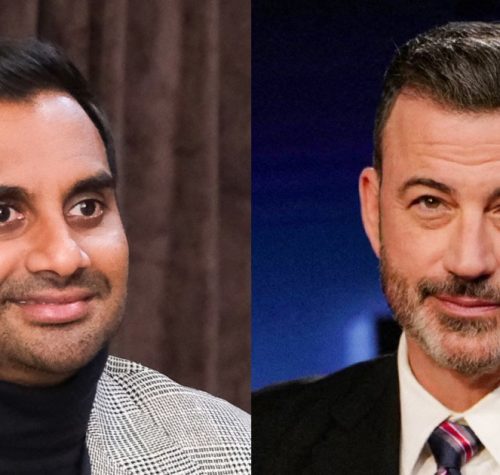
Savewith a NBCUniversal ProfileCreate your free profile or log in to save this articleOct. 9, 2025, 3:53 PM EDTBy Kate Reilly and Saba HamedyJimmy Kimmel pressed comedian Aziz Ansari this week about his decision to perform at Saudi Arabia’s Riyadh Comedy Festival, with Kimmel calling the Saudi government a “pretty brutal regime” and questioning why Ansari would “take their money.”Held in Saudi Arabia’s capital city, the Riyadh Comedy Festival began on Sept. 26 and ends Thursday. The event has hosted over 50 stand-up comedians from around the world, including big names such as Ansari, Kevin Hart, Pete Davidson and Dave Chappelle. Those comedians have been facing backlash since accepting seemingly lucrative deals to perform in a country that has been criticized for its human rights violations.In an interview on “Jimmy Kimmel Live!” on Tuesday night, Kimmel pressed Ansari about his decision to take the stage in Riyadh. “People, a lot of comedians especially, are very upset, because the people who paid the comedians to come to this are not good people,” Kimmel said. “It’s a pretty brutal regime. They’ve done a lot of horrible, horrible things.” The talk show host then asked Ansari why he chose to appear at the event, stating that “people are questioning why you would go over there and take their money to perform in front of these people.”Ansari said he put a lot of thought into the decision, explaining that he consulted his aunt, who used to live in Saudi Arabia.”There’s people over there that don’t agree with the stuff that the government’s doing, and to ascribe like the worst behavior of the government onto those people, that’s not fair,” Ansari said his aunt pointed out. “Just like there’s people in America that don’t agree with the things the government is doing.”Kimmel agreed that “we’re doing horrible things over here,” but pushed back on Ansari’s comparison between the U.S. and Saudi Arabia. “They murdered a journalist,” Kimmel said, referring to Washington Post columnist Jamal Khashoggi, who was killed at the Saudi Consulate in Istanbul in 2018. Kimmel then asked Ansari if he had dealt “with those people specifically.”Ansari replied, “No, I was just there to do a show for the people.” The comedian further explained his thought process, saying his wife told him that “whenever there’s repressive societies like this, they try to keep things out — whether it’s rock ‘n’ roll music or blue jeans — because it makes people curious about outside ideas, outside values.”Ansari, who is Indian American, went on to add that “to me, a comedy festival felt like something that’s pushing things to be more open and to push a dialogue.” He then discussed how his own background compelled him to do the performance.”For me, especially being me and looking the way I do and being from a Muslim background, it felt like something I should be a part of. And I hope it pushes things in a positive direction.”Ansari did not immediately respond to an NBC News request for comment. When speaking to Bloomberg’s Lucas Shaw at the publication’s Screentime event on Wednesday, Kimmel — whose show recently returned to the air after it was briefly suspended by ABC and Disney over the host’s remarks about Charlie Kirk’s assassination — addressed why he pressed Ansari on the matter.“I wouldn’t have gone (to Riyadh), but I wanted to hear his reasons,” said Kimmel, who also noted that Ansari was aware he would ask him about the festival.“Nothing’s black and white,” Kimmel added. “It’s not something I would do, but I do understand the idea that if we close ourselves off to the world … maybe that’s not good. I don’t know that my reasoning is correct reasoning.”He drew a parallel to current U.S. politics. “We see it happening in this country, too,” he said. “We travel abroad, many of us don’t want to be held accountable for what our president does and says.” Kimmel’s skepticism about the Riyadh Comedy Festival comes after many comedians have publicly criticized the event.”WFT” podcast host Marc Maron ripped into the festival in a stand-up clip posted to Instagram on Sept. 23. “I mean, how do you even promote that?” Maron said. “Like, ‘From the folks that brought you 9/11, two weeks of laughter in the desert. Don’t miss it.’”Shane Gillis also condemned the event on his podcast, and said that the festival organizers “doubled the bag” after he declined to perform. Human Rights Watch wrote in a press release published on Sept. 23 that the Saudi government is using the comedy festival “to deflect attention from its brutal repression of free speech and other pervasive human rights violations.”The Saudi Embassy in Washington, D.C., and Saudi Arabia’s General Entertainment Authority, which announced the festival in July, did not immediately respond to requests for comment.Kate ReillyKate Reilly is a news associate with NBC News.Saba HamedySaba Hamedy is the trends and culture editor for NBC News.

Jimmy Kimmel pressed comedian Aziz Ansari this week about his decision to perform at Saudi Arabia’s Riyadh Comedy Festival, with Kimmel calling the Saudi government a “pretty brutal regime” and.

TAGS:
24 views

Savewith a NBCUniversal ProfileCreate your free profile or log in to save this articleOct. 9, 2025, 3:20 PM EDTBy Sahil Kapur and Scott WongWASHINGTON — Eight days into the government shutdown, Senate Democratic communications directors received a private briefing and a memo from pollster Geoff Garin.The crux of the message: Stay the course because Democrats are winning the battle of public opinion.“Voters continue to blame Trump and Republicans more than Democrats for the shutdown,” said the memo, which was obtained by NBC News and featured new polling data conducted by Hart Research, with findings that are backed by other public national surveys on the shutdown fight.It added that voters are siding with Democrats’ health care funding demands, that “Republicans are starting the feel the heat” on the issue and that the GOP’s political pain will worsen “the longer and more aggressively” Democrats litigate it.ACA subsidies set to expire fueling government shutdown01:48The memo helps explain why Democrats are refusing to blink in the staring contest, defying predictions by the White House and Republican leaders that they would have backed down by now.Republicans need five more Democratic votes to break a filibuster and pass their bill to reopen the government on a temporary basis and buy time for a larger spending deal. On Thursday, the Senate voted again — for the seventh time — on that plan and a Democratic alternative. No senators budged.Instead, Democratic leaders, emboldened and energized, are taking every opportunity to highlight their central demand: extend the expiring Obamacare subsidies to avoid health insurance premium hikes or coverage losses for millions of Americans next year. Insurers are already sending out notices of upcoming rate hikes in the mail, and bringing costs back down will get messy if Congress waits until the end of the year to act.We’d like to hear from you about how you’re experiencing the government shutdown, whether you’re a federal employee who can’t work right now or someone who is feeling the effects of shuttered services in your everyday life. Please contact us at tips@nbcuni.com or reach out to us here.The health care subsidies are used by scores of working-class voters, including Trump supporters. Enrollment in Obamacare is about 24 million, and an estimated 92% of those insured benefit from the enhanced tax credit, which was first passed in the 2021 Covid-19 relief bill.A KFF national poll showed that 57% of “MAGA supporters” favor extending the subsidies, while 43% are opposed. Overall, 78% of U.S. adults said they favor extending the funding, while 22% say it should expire.But Republican leaders, facing a divided conference with many members who want to end the subsidies, are refusing to make any promises on the issue. Instead, they say, Democrats must vote to reopen the government, and then the two parties can discuss the subsidies.The pivot to health care has frustrated House Speaker Mike Johnson, R-La.“They’re trying to make this about health care. It’s not. It’s about keeping Congress operating so we can get to health care. We always were going to. They’re lying to you,” Johnson told reporters on Thursday. “The health care issues were always going to be something discussed and deliberated and contemplated and debated in October and November.”Senate Majority Leader John Thune, R-S.D., has referred to them as “Covid subsidies” that were designed to expire for a reason, and insisted on imposing new restrictions on the funding in order to have any chance of preventing a full sunset.Democrats are refusing to settle for assurances of a debate or a future vote. They say they want an extension attached to government funding legislation in order to win their votes. They have offered their own government funding bill, which includes attached Obamacare funding and repeals President Donald Trump’s recent Medicaid cuts and changes.Republicans, meanwhile, have seized on a quote published in Punchbowl in which Senate Minority Leader Chuck Schumer, D-N.Y., said, “Every day gets better for us.”Thune had a poster made of the quote and brought it to the floor on Thursday. Senate Majority Whip John Barrasso, R-Wyo., made his own poster of Schumer’s face with the quote.“He said, ‘Every day gets better for us.’ Who is us?” Barrasso asked on the floor. “Not better for the American people. Who does he mean by us? Not the military who’s not getting paid. Not the Border Patrol who’s not getting paid. Not the traffic controllers who aren’t getting paid.”On the Senate floor Thursday, Schumer attempted to clarify his remarks, arguing that with each passing day of the shutdown, Democrats’ “case to fix health care and end the shutdown gets better and better, stronger and stronger.”This is now the eighth-longest government shutdown in history, according to an NBC News analysis. If the government is still closed at the end of Friday, it will become the seventh-longest shutdown.#embed-20251002-shutdown-milestones iframe {width: 1px;min-width: 100%}Federal workers, including members of the military, are working without pay and will begin to miss paychecks in the coming days if the government remains shuttered. The direct deposit deadline is Friday, while physical checks are scheduled to go out on Oct. 15; those payments will not occur during a shutdown.With Johnson keeping the House out of session for a third consecutive week, tensions are running high among the few lawmakers running around the Capitol. On Wednesday, Johnson and fellow Republican Rep. Mike Lawler of New York sparred with Arizona Democratic Sens. Ruben Gallego and Mark Kelly over Johnson’s delay in seating Rep.-elect Adelita Grijalva, D-Ariz.Later, Lawler, a Republican representing a swing district, confronted House Minority Leader Hakeem Jeffries, D-N.Y., after his news conference over Democrats’ refusal to back the GOP funding bill or a one-year extension of Obamacare subsidies. The debate devolved into a shouting match about Trump’s “big bill,” health care cuts and Lawler’s chances for re-election.Johnson and Senate Democrats argue about government shutdown and health care03:20There are some signs that House Republicans are beginning to grow restless and feeling pressure from constituents back home.Rep. Marjorie Taylor Greene, R-Ga., a onetime Trump loyalist who has recently broken with the president, has faulted Johnson and her party for having no plan to address the expiring health care subsidies.And Rep. Jen Kiggans, R-Va., who, like Lawler, faces a tough re-election fight in next year’s midterms, is one of a handful of Republicans who have called on Johnson to reconvene the House. She represents a military-heavy district in Virginia Beach and is demanding a vote on her legislation, the Pay Our Troops Act.“I’m urging the Speaker and our House leadership to immediately pass my bill to ensure our servicemembers, many of whom live paycheck to paycheck while supporting their families, receive the pay they’ve earned,” Kiggans wrote on X. “Military pay should not be held hostage due to Washington’s dysfunction!”Responding Thursday, Johnson said that House Republicans already passed a bill on Sept. 19 to fund the entire government, which includes paying the troops, through Nov. 21.“We put that bill on the floor, and the Republicans voted to pay the troops, TSA agents, border patrol, air traffic and everybody else,” Johnson told reporters. “The Democrats voted no.”Asked about his confrontation with the Democratic senators a day earlier, Johnson acknowledged that “emotions are high” between the parties.“And so is it better for them, probably, to be physically separated right now? Yeah, probably is, frankly,” the speaker said. “I wish that weren’t the case, but we do have to turn the volume down. The best way to turn the volume down is to turn the lights back on and get the government open for the people.”Sahil KapurSahil Kapur is a senior national political reporter for NBC News.Scott WongScott Wong is a senior congressional reporter for NBC News. Kyle Stewart and Frank Thorp V contributed.

Eight days into the government shutdown, Democrats believe the public and polling is on their side and are pushing for Obamacare funding to reopen the government.

Source link

TAGS:
24 views

Oct. 9, 2025, 1:08 PM EDTBy Jessica SherwoodPresident Donald Trump has announced that Israel and Hamas have agreed on the first phase of a ceasefire deal — but there are significant lingering questions about what the 20-point plan will mean for the future of the Gaza Strip.“This means that ALL of the Hostages will be released very soon, and Israel will withdraw their Troops to an agreed upon line as the first steps toward a Strong, Durable, and Everlasting Peace,” Trump said in a post on Truth Social.What is Trump’s proposed plan?Key components of Trump’s proposal include: The release of all living and dead hostages in Gaza within 72 hours of Israel accepting the agreement.Once all hostages are released, Israel will release 250 life-sentence prisoners plus 1,700 Palestinians detained after Oct. 7, 2023.A requirement for Hamas to lay down its arms, and a withdrawal of Israeli troops from the territory.The delivery of humanitarian aid and the installation of a civilian governing authority for Palestinians.Secretary of State Marco Rubio speaks to President Donald Trump during a roundtable discussion at the White House on Wednesday.Anna Moneymaker / Getty ImagesWhat happens next?The Israel Defense Forces said Thursday that they were moving to “adjusted deployment lines soon” but warned that parts of Gaza were still a “dangerous combat zone.”But a ceasefire would take effect in Gaza “within 24 hours” of a government meeting set for Thursday evening, a spokesperson for the Israeli prime minister’s office told reporters.Following that 24-hour period, a 72-hour window would open in which Hamas would release the remaining hostages. Earlier, the White House said it expected hostages to be released Monday. Forty-eight hostages remain to be returned, of which Israel says it believes 20 are still alive.An Israeli official briefed on the matter told NBC News that all living hostages would be released at one time.People react at Hostage Square in Tel Aviv on Thursday following news of a new Gaza ceasefire deal.Maya Levin / AFP via Getty ImagesThe agreement comes almost two years to the day after the Hamas-led terrorist attacks on Israel that killed 1,200 people. Since then, Israel has killed more than 67,000 people in Gaza, according to the Palestinian health ministry.Gaza’s future?The first phase of Trump’s plan does not address Gaza’s medium- and long-term future. With most of Gaza’s buildings damaged or destroyed in Israel’s offensive, according to the United Nations, and its population largely forced from their homes, what comes next is an urgent question.Trump’s plan says the enclave should be temporarily governed by a “technocratic, apolitical Palestinian committee” overseen by a “Board of Peace” led by Trump and former British Prime Minister Tony Blair.That is until the Palestinian Authority, which controls part of the occupied West Bank and is the Palestinians’ main representative internationally, can be “reformed,” according to the plan.Meanwhile, Hamas has agreed to participate in the hostage and prisoner exchange but has not said it will disarm and disband — a key stipulation of Trump’s proposal.Smoke rises from southern Gaza following Israeli airstrikes in Deir al-Balah on Thursday.Ali Jadallah / Anadolu via Getty ImagesJessica SherwoodJessica Sherwood is a social editor based in NBC News’ London bureau.Matt Bradley contributed.

There are still lingering questions about what Trump’s 20-point plan will mean for the future of the Gaza Strip.

Source link

TAGS: