16 views

Nov. 14, 2025, 9:39 AM ESTBy Rebecca CohenBryan Kohberger, the man convicted of killing four University of Idaho students in 2022, must pay for the urns for two of the slain students as a part of restitution, a judge ruled.Kohberger killed four students — Madison Mogen, 21; Kaylee Goncalves, 21; Xana Kernodle, 20; and Ethan Chapin, 20 — at an off-campus house on Nov. 13, 2022. He took a plea deal over the summer and was sentenced to four consecutive life sentences for four counts of first-degree murder and 10 years in prison for a burglary charge.From top left, Kaylee Goncalves, Madison Mogen, Ethan Chapin and Xana Kernodle.On Thursday, the anniversary of the slayings, an Ada County judge said Kohberger would be financially responsible for the urns for two of his victims — Goncalves and Mogen. The total of the two urns is $3075.58. Additionally, Kohberger has also been ordered to pay $251,227.50 in criminal fines and fees, a civil judgment of $20,000 to each family, and $31,964.67 in restitution orders to the families of Kernodle and Chapin. A public defender listed for Kohberger did not immediately respond to a request for comment on the ruling.The ruling follows the already agreed-upon restitution that Kohberger would pay to the families of his victims, and after his defense team argued he should not be responsible for the urns because Kohberger will be in prison for the rest of his life and therefore does not have an opportunity to earn more money to cover extra expenses. District Judge Steven Hippler wrote that the cost of the urns is considered a funeral expense, something Kohberger had already agreed to pay for under the plea agreement. He also said that the additional cost for the urn “represents minimal additional burden on Defendant’s financial obligations in connection with this case” and that Kohberger has already received enough donations to cover the agreed-upon restitution. Hippler added that he believes Kohberger will receive more donations over the course of his life that can cover the cost of the urns, and that he can also get a job in prison to earn more funds. Also on Thursday, the third anniversary of the students’ deaths, tributes poured in remembering them. The University of Idaho posted a slideshow of photos on Instagram that appeared to show a campus memorial dedicated to the four students. “Forever in our hearts,” the school wrote in the post’s caption. Idaho Gov. Brad Little wrote on X that the students’ slayings “shook our state to its core.” “Idahoans continue to offer our love and support to the families and many, many loved ones of these four beautiful souls,” Little added. Rebecca CohenRebecca Cohen is a breaking news reporter for NBC News Digital.

Bryan Kohberger, the man convicted of killing four University of Idaho students in 2022, must pay for the urns for two of the slain students as a part of restitution,.

TAGS:
13 views

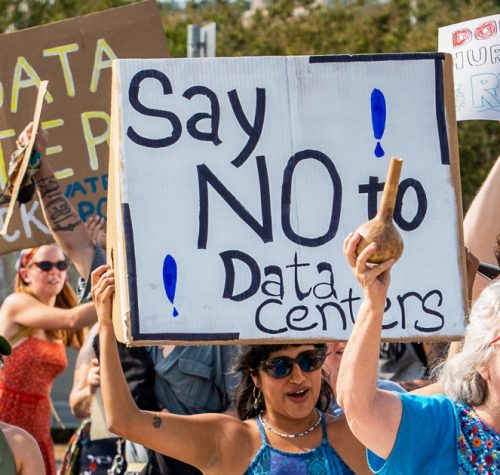
Nov. 14, 2025, 5:00 AM ESTBy Allan SmithA new study found the total value of blocked or delayed data center projects during a three-month stretch earlier this year exceeded the total in the prior two years, signaling accelerating opposition to a foundational piece of artificial intelligence development in the U.S.The study — conducted by Data Center Watch, a project of AI intelligence firm 10a Labs that tracks local data center activity — found that an estimated $98 billion in data center projects were blocked or delayed from late March through June. That compares to $64 billion worth of projects that were blocked or delayed between 2023 and late March 2025.“Opposition to data centers is accelerating,” the authors wrote in the report, shared exclusively with NBC News. “As political resistance builds and local organizing becomes more coordinated, this is now a sustained and intensifying trend.”Leaders in both parties are locked in competition to encourage tech giants to put sprawling data centers in their states, looking for an economic leg up and an innovation edge in the early days of the artificial intelligence boom. But resident backlash has intensified in recent months as the projects have contributed to rising electricity bills, among other concerns.This month in Virginia, data centers were at the center of the campaign in one of the state legislative districts Democrats flipped, with Democratic challenger John McAuliff accusing Republican incumbent Geary Higgins of allowing the “unchecked growth” of data centers, while Higgins said in one of his own ads, “We need to ensure that data centers aren’t built near homes or in our open spaces.”Meanwhile, Meta is running a TV ad in markets around the country in which a longtime resident of Altoona, Iowa, praises the company for opening a data center in the town, saying it brought different kinds of jobs there, according to AdImpact, an ad-tracking firm.In a statement to NBC News last month, Dan Diorio, vice president of state policy for the Data Center Coalition, a group that advocates on behalf of the industry, highlighted the jobs, tax revenue and economic development connected to data center growth, adding the industry “is committed to paying its full cost of service for the energy it uses, including transmission costs.”The new study from Data Center Watch found that key projects were blocked or delayed in Indiana, Kentucky, Georgia and South Dakota, among other states. The researchers tracked “active opposition efforts” in 17 states, with 53 different groups taking action against 30 projects. Those opposition groups were successful in blocking or delaying two out of every three projects they protested, the report said, “underscoring the growing impact of organized local resistance.”“Opposition is cross-partisan and geographically mixed,” the researchers wrote. “Blue and red states alike are tightening rules or rethinking incentives; legislators in places like Virginia, Minnesota, and South Dakota are scrutinizing subsidies, grid impacts, and local authority, often cutting across traditional party lines.”“As development expands and media attention intensifies, local groups are learning from one another,” the researchers added. “Petitions, public hearings, and grassroots organizing are reshaping approval processes — especially in Indiana and Georgia.”The report’s authors cautioned, though, that such organized opposition can’t exclusively explain project delays, noting that multiple dynamics have played roles. That said, the authors wrote: “Political, regulatory, and community opposition is accelerating in both scale and frequency.”And the authors noted that data center tax incentives are starting to be rolled back as well.“Lawmakers are increasingly questioning the value of data center subsidies, citing concerns around energy use, fairness, and infrastructure impact,” the authors wrote.Political leaders are only recently gaining awareness of the opposition. One Pennsylvania official, speaking on condition of anonymity to discuss the issue candidly, said they have seen opposition to data center projects sprout in Cumberland and York counties.“I am conflicted on the data centers because I don’t believe in holding back technology. I don’t support degrowth. We should be building great things,” this person said, adding: “I think the economic promise of data centers is muddy at best for the places that put them in.”This person said the opposition to the projects “is all grassroots-driven.”“People are really pissed off,” this person said. “They’re like, ‘I’m sick of this s—. I don’t get anything out of this.’ And I think people are a little freaked out by AI. I worry that people are a little blind to the public animosity.”Allan SmithAllan Smith is a political reporter for NBC News.

A new study found the total value of blocked or delayed data center projects during a three-month stretch earlier this year exceeded the total in the prior two years, signaling.

TAGS: