14 views

Nov. 12, 2025, 10:39 PM ESTBy Dan De Luce, Courtney Kube and Andrea MitchellThe United Kingdom has stopped sharing intelligence on suspected drug smuggling boats in the Caribbean because of concerns about the legality of recent U.S. military strikes, two sources with knowledge of the matter told NBC News.A British government spokesperson in London declined to comment directly on whether the U.K. had suspended some information-sharing with Washington.“It is our longstanding policy to not comment on intelligence matters,” the Downing Street spokesperson said in an email. “The U.S. is our closest ally on security and intelligence. We continue to work together to uphold global peace and security, defend freedom of navigation, and respond to emerging threats.”CNN first reported the suspension of intelligence sharing on narcotics trafficking vessels in Latin America. The CIA declined to comment. The Pentagon did not immediately respond to a request for comment Wednesday.Britain is America’s most important intelligence partner in a spying alliance of five English-speaking democracies known as “Five Eyes,” which also includes Australia, Canada and New Zealand. Britain, France and the Netherlands have territories in the Caribbean and have long worked with the United States and other regional governments to try to stem narcotics trafficking. In the past decade, cocaine smuggling to Europe from South America via the Caribbean has spiked, according to government reports and experts.Former military lawyers, legal experts and Democrats in Congress say the strikes violate international and U.S. laws that prohibit using military force to target civilians. They argue that drug gangs do not meet the legal standard of an armed group at war with the United States. The subject of America’s military attacks on alleged drug smuggling boats came up during a meeting in Canada of foreign ministers from the Group of Seven industrialized democracies, Kaja Kallas, the European Union’s foreign affairs chief, told NBC News. Secretary of State Marco Rubio on Wednesday denied that Britain had stopped sharing intelligence. He also said his counterparts did not raise the U.S. military campaign in Latin America and intelligence support for the operation during the discussions. “Not with me — no one raised it,” Rubio told reporters after the meeting in Niagara-on-the-Lake, near the U.S. border.“It didn’t come up once,” Rubio said. He added: “Again, nothing has changed or happened that is impeded in any way our ability to do what we’re doing, nor are we asking anyone to help us with what we’re doing — in any realm. And that includes military.”Asked about European concerns as to whether the U.S. was adhering to international law with its boat strikes, Rubio said it was up to the United States to safeguard its security.“I don’t think that the European Union gets to determine what international law is. What they certainly don’t get to determine is how the United States defends its national security,” Rubio said. “The United States is under attack from organized criminal, narco-terrorists in our hemisphere, and the president is responding in the defense of our country.”Asked whether the Canadian government is withholding intelligence from Washington on narcotics trafficking in Latin America, Canada’s foreign affairs minister, Anita Anand, told reporters Wednesday: “The U.S. has made it clear it is using its own intelligence. We have no involvement in the operations you were referring to.”Canada’s intelligence service did not immediately respond to a request for comment. NATO allies have said little publicly about President Donald Trump’s military campaign in the Caribbean and the Pacific, which marks the first time an American commander-in-chief has treated drug smugglers as a military adversary at “war” with the United States.On the legality of the strikes, a spokesperson for British Prime Minister Keir Starmer told reporters Tuesday: “Decisions on this are a matter for the U.S. Issues around whether or not anything is against international law is a matter for a competent international court, not for governments to determine.”France’s foreign minister, Jean-Noel Barrot, expressed concern on Tuesday about the legal foundation for the U.S. military strikes. “We have followed with concern the strikes carried out by the United States in international waters, in disregard of international law and the law of the sea,” Barrot told the French newspaper La Journal du Dimanche. Barrot added that, “We cannot allow these lawless criminal networks to thrive” and that, “France does not hesitate to deploy its military assets to intercept drug traffickers’ vessels, in close cooperation with the countries concerned . . .”The U.N. High Commissioner for Human Rights Volker Türk said last month that there is no justification for the strikes under international law.“These attacks — and their mounting human cost — are unacceptable. The US must halt such attacks and take all measures necessary to prevent the extrajudicial killing of people aboard these boats, whatever the criminal conduct alleged against them,” Turk said in a statement.The Trump administration, however, maintains that drug cartels pose a threat to America’s national security by transporting narcotics to the United States that claim tens of thousands of lives each year. The administration has labeled multiple cartels from Venezuela, Mexico and elsewhere as foreign terrorist organizations.The strikes, which began in early September, have killed at least 75 people, according to numbers announced by the Pentagon.Colombian President Gustavo Petro on Tuesday ordered his country’s security forces to stop sharing intelligence with Washington until the Trump administration halted the strikes on suspected drug traffickers in the Caribbean.In a post on X, Petro wrote that Colombia’s military must immediately end “communications and other agreements with U.S. security agencies.” The Trump administration has portrayed Petro as failing to crack down on narco-traffickers and criticized his decision not to extradite Colombian rebel leaders involved in the drug trade to the United States.Dan De LuceDan De Luce is a reporter for the NBC News Investigative Unit. Courtney KubeCourtney Kube is a correspondent covering national security and the military for the NBC News Investigative Unit.Andrea MitchellAndrea Mitchell is chief Washington correspondent and chief foreign affairs correspondent for NBC News.

The United Kingdom has stopped sharing intelligence on suspected drug smuggling boats in the Caribbean because of concerns about the legality of recent U.S. military strikes, two sources with knowledge.

TAGS:
13 views

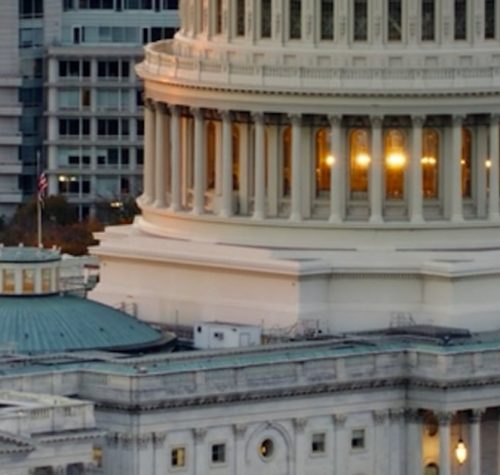
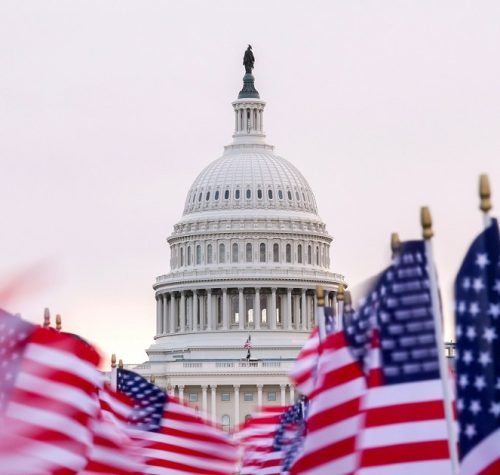
Nov. 12, 2025, 1:29 PM EST / Updated Nov. 12, 2025, 8:44 PM ESTBy Sahil Kapur, Scott Wong and Kyle StewartWASHINGTON — The House on Wednesday night voted to pass legislation to reopen the federal government and end an acrimonious 43-day shutdown, the longest in American history.The successful vote came after Speaker Mike Johnson, R-La., brought the Republican-controlled chamber back into session for the first time since Sept. 19, wrapping up an extraordinarily long and unscheduled recess.The House passed the measure in a 222-209 vote, with six Democrats joining nearly all Republicans in voting yes and two Republicans joining most Democrats in voting no. The Senate had approved the same legislation Monday when eight Democrats peeled off and voted with Republicans to break a filibuster to end the shutdown.The bill now heads to President Donald Trump’s desk to become law and reopen the government, restoring funding that has been frozen or halted.Before the vote, Johnson apologized to Americans for the disruptive shutdown, blaming Democrats for mass flight delays and cancellations, millions of civilian workers going without pay, and families going hungry. He said Senate Democrats blocked a bill to fund the government 14 times before ultimately caving.“While the Democrats keep voting to shut their government down, Republicans are going to vote to open it back up,” Johnson said in a floor speech before the vote. “And with that, we’re going to get the American government running again and working for the people, as they deserve.”The package includes a “minibus” of three appropriations bills through next September and keeps the rest of the government open at current levels through Jan. 30.It includes full funding for the Supplemental Nutrition Assistance Program, also known as food stamps, which will keep the program afloat through September. More than 40 million Americans rely on SNAP. Some told NBC News that they ran out of food as the shutdown cut off money for the program, and the Trump administration fought in the courts against having to shift money around to fully fund it.The legislation also provides limited protections for federal workers who’ve been under assault since Trump’s inauguration. It reinstates thousands of workers who were laid off during the shutdown and ensures there are no more reductions in force (known as “RIFs”), at least through the end of January. And it provides back pay for workers who were furloughed or working without pay these past six weeks.But in a major concession from Democrats, the bill does not include an extension of enhanced subsidies under the Affordable Care Act, or Obamacare, after Republicans held firm against extending those funds beyond this year. That means more than 20 million Americans could see their premiums spike next year.Many House and Senate Democrats are fuming over the failure to secure health care funding as part of the bill. Senate Majority Leader John Thune, R-S.D., has promised a Senate vote on a to-be-determined ACA funding bill, with no guarantees that it will pass. Johnson has not promised a vote in the House. “We cannot enable this kind of cruelty with our cowardice,” said progressive Rep. Alexandria Ocasio-Cortez, D-N.Y. In the House Rules Committee on Tuesday, Republicans rejected Democratic motions to guarantee a floor vote on an ACA funding extension, and turned away an amendment by Rep. Steven Horsford, D-Nev., to redirect Trump’s $40 billion “bailout” to Argentina and instead put that to extending ACA funding.“I guess MAGA stands for MAKE ARGENTINA GREAT AGAIN,” Rep. Teresa Leger Fernández, D-N.M., said in response.#embed-20251002-shutdown-milestones iframe {width: 1px;min-width: 100%}In a bullish sign for the legislation’s prospects, the sometimes rebellious House Freedom Caucus circulated talking points internally praising the bill, which were obtained by NBC News. The document calls it a “responsible CR” that funds the government into 2026 and avoids a “bloated” omnibus to be negotiated over Christmas. And, it notes, the appropriations bills in the minibus either kept spending flat or contained only modest increases.“The House Freedom Caucus has fought in lock-step with President Trump and Republican leadership in Congress,” the Freedom Caucus document said.The two Republicans who bucked their leadership and voted against the bill Wednesday night were Reps. Thomas Massie of Kentucky and Greg Steube of Florida.The six Democrats who broke with their party and voted yes all hail from swing districts: Reps. Henry Cuellar of Texas, Don Davis of North Carolina, Marie Glusenkamp Perez of Washington, Jared Golden of Maine, Adam Gray of California, and Tom Suozzi of New York. Golden is not seeking re-election next year.Tucked inside the bill is a provision that is generating heavy pushback from Democrats and even some grumbling among House Republicans. It would allow senators — but not House members — to sue the federal government for hundreds of thousands of dollars if their phone records were obtained without prior notification as part of the Jan. 6, 2021, investigation. It appears to apply to eight specific GOP senators.Although emotions are raw in the Democratic caucus over some of their senators caving, party leaders say the high-stakes showdown with Trump and the Republicans “crystallized” how Democrats are fighting for health care and affordability for millions of Americans. That economic message, they say, juiced turnout and propelled them to victory in last week’s elections in Virginia and New Jersey and will help the party in 2026.“That will be one of the defining contrasts of the midterms: Democrats working on behalf of the people to lower costs versus Republicans who have made life more expensive for everyday families,” Rep. Suzan DelBene, D-Wash., head of the House Democrats’ campaign arm, said in a statement to NBC News.“The House Democrats have the better message, stronger candidates, and as we all saw in last week’s elections, the American people are on our side as we go into the midterms,” the statement said.Shortly before Wednesday’s vote, House Minority Leader Hakeem Jeffries, D-N.Y., filed a discharge petition in a bid to bypass Johnson and force a future floor vote on a three-year extension of the expiring Obamacare subsidies. But that would need the support of at least four House Republicans to force a vote.“We’ll fight until we win this battle for the American people. That’s our commitment as House Democrats,” Jeffries said on the floor, adding that the fight will end either Republicans accept a funding extension to prevent premium hikes, “or the American people will throw Republicans out of their jobs next year and end the speakership of Donald J. Trump once and for all.”The U.S. Capitol is shown the morning after the Senate passed legislation to reopen the federal government on November 11, 2025 on Capitol Hill in Washington, DC. The Senate reached a deal late Sunday to fund the government, aiming to end the longest shutdown in history once the House of Representatives votes on the legislation later this week.Win McNamee / Getty ImagesThere was plenty of pain during the six-week impasse, some of it caused by the Trump administration as it tried to ramp up pressure on the targeted bloc of moderate Senate Democrats. In addition to the mass layoffs, the White House had threatened to halt SNAP payments to states until the shutdown ended; it ultimately doled out partial payments under a judge’s order, while fighting the issue up to the Supreme Court.On top of that, Transportation Secretary Sean Duffy last week announced that the Federal Aviation Administration would have to cut the number of flights in American skies by 4% starting last weekend and ramped up reductions to 6% by Tuesday, due to air traffic controller staffing shortages spurred by the shutdown.Thousands of flights have been either delayed or canceled, snarling airports nationwide. It is expected to take a few days for airports to recover after the bill is signed into law.And while the end of the shutdown will spark a new debate about the expiring health care funds, some conservatives feel emboldened in their push to end them, including Rep. Ralph Norman, R-S.C.. who said shortly before the final vote that the money should “absolutely” expire.“There’s not gonna be any deal cut,” Norman said Wednesday evening, adding that he believes Johnson shares his view.Sahil KapurSahil Kapur is a senior national political reporter for NBC News.Scott WongScott Wong is a senior congressional reporter for NBC News. Kyle StewartKyle Stewart is a producer and off-air reporter covering Congress for NBC News, managing coverage of the House.Lillie Boudreaux, Frank Thorp V and Brennan Leach contributed.

The House on Wednesday night passed bipartisan legislation to reopen the federal government and end an acrimonious 43-day shutdown, the longest in U.S. history.

Source link

TAGS: