13 views

Savewith a NBCUniversal ProfileCreate your free profile or log in to save this articleNov. 10, 2025, 5:57 AM ESTBy Chantal Da Silva, Ammar Cheikh Omar, Abigail Williams and Monica AlbaThe Oval Office is a long way from Abu Ghraib.When he’s greeted by President Donald Trump on Monday, Ahmad al-Sharaa will have completed his journey from jihadist leader to head of state receiving a warm White House welcome.Since toppling the regime of President Bashar al-Assad, Syria‘s interim leader has spent the past year transforming his global image while tackling deep divisions at home.Now, al-Sharaa, who has thrown off his nom de guerre Abu Mohammad al-Jolani, will make history as the first Syrian president to visit the White House.“I think he’s doing a very good job,” Trump said last week, setting the tone for his landmark meeting with al-Sharaa, who would not have been able to set foot in the U.S. a year ago thanks to the $10 million bounty on his head. “It’s a tough neighborhood and he’s a tough guy, but I got along with him very well and a lot of progress has been made with Syria,” Trump said.During his Washington visit, Al-Sharaa is expected to commit to joining the U.S.-led coalition to defeat ISIS, two U.S. officials told NBC News. It would be a significant step in his country’s engagement with the West.The State Department removed al-Sharaa and his interior minister from the Specially Designated Global Terrorist list on Friday, while the U.K. and Europe removed sanctions on al-Sharaa after the United Nations Security Council voted in favor of a U.S.-drafted resolution to do so.The Washington trip is “a high-level sign of the trust that the American administration has placed in al-Sharaa — and the hope that he will succeed in holding Syria together during this incredibly complicated transition period,” said Burcu Ozcelik, a senior research fellow at the Royal United Services Institute, a London-based think tank.A ‘turning point’Al-Sharaa rose to power after leading Hayat Tahrir al-Sham, or HTS, in toppling Assad’s regime last December.Since then, he has sought to distance himself from his past as a jihadist who had been jailed by U.S. forces in Iraq, trading military fatigues for smart suits and vowing to rebuild Syria and unify its myriad religious and ethnic groups.Trump’s approach, a dramatic shift for the U.S., has underscored al-Sharaa’s success in breaking the country’s decadeslong global isolation.The U.S. removed its terrorist designation for HTS, along with the bounty on al-Sharaa himself, before lifting a string of sanctions following a May meeting between the Syrian leader and Trump in Saudi Arabia.President Donald Trump and Syrian President Ahmed al-Sharaa.@PressSec / via XAl-Sharaa was in New York in September to address the United Nations General Assembly, but Syria’s Ministry of Information said that being welcomed to the White House marked a “major turning point” for the country.At home, however, al-Sharaa has struggled to unify a deeply divided Syria while grappling with broader threats: a resurgent ISIS, fraught relations with increasingly assertive neighbor Israel, and Russia’s determination to maintain its strategic foothold in Syria while giving safe haven to Assad.Syria has experienced flashes of violence, including deadly attacks against minority groups allegedly carried out in part by government forces. Growing tensions with Kurdish authorities in northeast Syria have also erupted into violent clashes.“He’s certainly being (very) smart,” John Jenkins, a former British diplomat who has previously served as head of mission in Syria, said of al-Sharaa in emailed comments.“A trip to D.C. makes him look respectable,” said Jenkins, an associate fellow at Chatham House and a leader at Cambridge University’s Centre for Geopolitics. But, he added,”the key issues are domestic.”And within Syria, opinions have been deeply divided.“He does not represent the Syrian people,” said Sami Zain Al-Din, a 72-year-old political activist from Sweida, a southern city that was rocked by deadly clashes involving the Druze community, which has close ties to Israel.For doctor Jalnar Hamad, doubts over al-Sharaa were balanced against hopes that his meeting with Trump could open a “new chapter” that could see Sweida “benefit from development or reconstruction programs,” she said.Syria’s President Ahmed al-Sharaa with representatives of Syrian-American organizations in Washington D.C. on Sunday.AFP via Getty ImagesIlham Ahmed, co-chair of the Syrian Democratic Council, the political arm of the Kurdish-led and U.S.-backed Syrian Democratic Forces, said the Trump meeting was “an opportunity to redefine the position of the new Syrian state.” It’s also a chance for Trump to address “the rights of the Kurdish people and the coalition partners who fought terrorism on behalf of the world,” he said, referring to the SDF’s role against ISIS.Further sanctions lifted?Al-Sharaa will be hoping to emerge strengthened domestically, and key to that effort is his bid to remove remaining sanctions imposed on Syria during Assad’s rule.Already, “the pace with which sanctions have been eased on Syria since May has been absolutely spectacular,” Karam Shaar, a consultant on Syria and the research director at the Operations and Policy Center think tank in Turkey, said in a voice note.Shaar said he expected that two “main pieces of sanctions will have been either lifted or just about to be lifted” by the time al-Sharaa and Trump meet, including the removal of Syria from America’s list of “state sponsors of terrorism” and the repeal of sanctions under the Caesar Act, a 2019 law targeting the Assad regime.But sanctions will not be the only focus, with the effort to quell ISIS’ resurgence and relations with Israel also expected to play a central role.The U.S. ally has faced growing isolation on the global stage over its deadly assault in Gaza, but Trump has previously expressed hopes Syria would join other Arab nations in normalizing ties with Israel under the Abraham Accords, which were expanded again last week.It remains unclear whether Trump will push the matter during talks with al-Sharaa on Monday.Syria, historically a staunch ally of Iran, has never recognized Israel and has been locked in a state of conflict with the country since its establishment in 1948. Iranian proxy Hezbollah has also long been deeply embedded in Syria after joining the Assad regime’s military efforts.When Assad was in power, Israel routinely carried out airstrikes against what it said were Iranian-linked targets inside Syria, and since his ouster, it has deployed troops to a United Nations-patrolled buffer zone and has repeatedly launched airstrikes and incursions into Syria. Damascus has so far refused to retaliate, while both countries have kept the lines of communication open.Chantal Da SilvaChantal Da Silva reports on world news for NBC News Digital and is based in London.Ammar Cheikh OmarAmmar Cheikh Omar is a producer for NBC News.Abigail WilliamsAbigail Williams is a producer and reporter for NBC News covering the State Department.Monica AlbaMonica Alba is a White House correspondent for NBC News.

Syrian interim President Ahmed al-Sharaa will meet with President Donald Trump in Washington on Monday.

Source link

TAGS:
13 views

Nov. 10, 2025, 5:00 AM ESTBy Lawrence HurleyWASHINGTON — The Supreme Court on Monday will weigh whether a devout Rastafarian can bring a damages claim against Louisiana prison officials who cut his dreadlocks in violation of his religious rights.The court, which has a 6-3 conservative majority, is often solicitous toward religious claims, although the bulk of recent cases have involved cases brought by conservative Christians.Prior to the 2020 incident at the Raymond Laborde Correctional Center, Damon Landor had not cut his hair for almost 20 years, following a practice known as “the Nazarite vow.”Landor was serving a five-month sentence on a drug-related charge when he was transferred to the facility.Over his objections, a corrections officer handcuffed him to a chair while two others shaved his head.“In an instant, they stripped him of decades of religious practice at the heart of his identity,” Landor’s lawyers wrote in a court filing.The officers went ahead even though Landor had shown them a copy of a binding court ruling that said it would be a religious rights violation to cut a Rastafarian’s dreadlocks.Landor subsequently filed suit against the state. The claim at the Supreme Court revolves around whether he can claim money damages under a law called the Religious Land Use and Institutionalized Persons Act, or RLUIPA.The state, represented by Attorney General Elizabeth Murrill, a Republican, has conceded that Landor’s lawsuit raised claims “antithetical to religious freedom and fair treatment of state prisoners” and said the prison system has since changed its grooming policy.But she argues that damages are not warranted.Landor’s lawyers are asking the Supreme Court to rule that damages should be allowed under RLUIPA, citing a ruling in 2020 that said damages are available under a similar law called the Religious Freedom Restoration Act.Without damages, the protection afforded by RLUIPA would “ring hollow,” they wrote.The state says the outcome is not determined by how the court ruled in the 2020 case in part because that dispute involved federal, not state, officials.Lower courts ruled in favor of the state, prompting Landor to turn to the Supreme Court.Lawrence HurleyLawrence Hurley is a senior Supreme Court reporter for NBC News.

The Supreme Court weighs whether a devout Rastafarian can seek damages against Louisiana prison officials who cut his dreadlocks in violation of his religious rights.

Source link

TAGS:
16 views

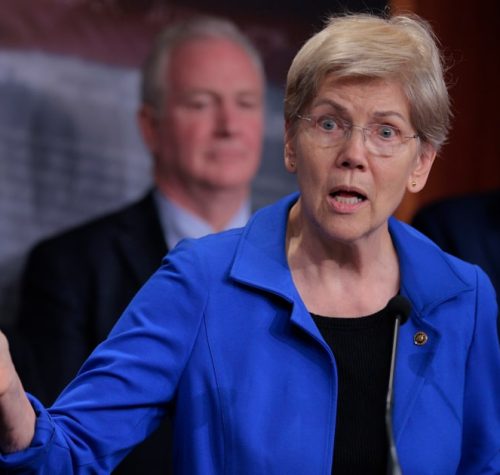
Nov. 10, 2025, 5:00 AM ESTBy Monica AlbaWASHINGTON — A group of Senate Democrats is pushing for an investigation into the Trump administration’s use of federal agency websites and emails to post partisan messages blaming Democrats for the government shutdown.In a letter obtained by NBC News, Sen. Elizabeth Warren of Massachusetts and other Democrats ask the Government Accountability Office to open a probe into whether the political messages violated federal appropriations laws.The lawmakers point specifically to a rule that prohibits the executive branch from using funds for “purely partisan” purposes. They are asking for more information from the GAO to see if several agencies violated laws that pertain to ethics and partisan political activity.Text shown on the USDA’s website.USDAAs NBC News previously reported, multiple agencies have posted messages on their official federal websites blaming Democrats and the “radical left” for the shutdown. Some also encouraged employees to post similar messages in their out-of-office replies. And five employees of the Department of Education told NBC News that their automatic email replies were changed to partisan messages without their consent.Hakeem Jeffries says ‘I hope’ shutdown ends before Thanksgiving: Full interview12:52The letter points to a message posted two days before funding lapsed at the end of September on the Department of Housing and Urban Development’s website as an example. “The Radical Left are going to shut down the government and inflict massive pain on the American people unless they get their $1.5 trillion wish list of demands,” the post read. “The Trump administration wants to keep the government open for the American people.”Once the shutdown began, it was amended to: “The Radical Left shut down the government. HUD will use available resources to help Americans in need.”A spokesperson for HUD defended the message to NBC News in October, saying it was carefully crafted not to blame a political party, but instead focused on an ideology.The departments of Agriculture, Justice and the Treasury, as well as the Small Business Administration, used similar language on their websites, with some specifically naming Democrats. The Transportation Security Administration began playing videos at some airports nationwide that blamed the shutdown on Democrats as well.

Senate Democrats call for an investigation into the Trump administration’s posts on federal agency websites blaming Democrats for the government shutdown.

Source link

TAGS:
14 views

Nov. 9, 2025, 9:45 AM ESTBy Kaitlin SullivanDrinking caffeinated coffee is safe for people with atrial fibrillation and may help protect against recurrence of the disorder, a new study finds.More than 10 million Americans live with atrial fibrillation, or A-fib, a common heart disorder that causes heart palpitations and can lead to heart failure, blood clots and stroke. Doctors have long tried to understand whether caffeine — which can increase heart rate and blood pressure — appears to trigger episodes that feel like a fluttering or thumping in the chest and cause dizziness or breathlessness.“There is no standard advice for atrial fibrillation and caffeine,” said Dr. Gregory Marcus, a cardiologist and professor of medicine at the University of California, San Francisco, who led the DECAF (Does Eliminating Coffee Avoid Fibrillation?) study. “It is very common for me to encounter patients who have stopped drinking caffeinated coffee only because their physician has told them to do so because of their atrial fibrillation.”The results of the DECAF study, a four-year clinical trial examining the effects of drinking coffee in people with a history of irregular heart rhythm that had either resolved or been treated, were presented Sunday at the annual American Heart Association conference in New Orleans and published in JAMA. Marcus is an associate editor of JAMA.The researchers recruited 200 older adults in Australia, Canada and the United States who were regular coffee drinkers at some point in the last five years. The average age was 70 and one-third were women.Over six months, the participants were randomized to two groups: those who cut out caffeine, and those who had at least one cup every day. Everyone self-reported their coffee and caffeinated beverage consumption during telehealth or video check-ins that occurred one, three and six months into the trial.Using data from electrocardiograms, or ECGs, taken in a doctor’s office, wearable heart monitors and implantable cardiac devices, Marcus and his team determined if and when people in each group had their first recurrent episode of A-fib. They included episodes of atrial flutter, a related condition that also causes abnormal contractions in the upper chambers of the heart.Both groups had about the same alcohol habits. Not everyone was a coffee drinker when the study began, but the number of daily coffee drinkers in each group was similar.Before the study began, 60% of people in the coffee-drinking group and 65% in the no-coffee group said that coffee had never triggered an A-fib episode.During the six-month study, 111 people, or 56%, had a recurrent episode of atrial flutter. People in the coffee drinking group were less likely to have a recurrence — 47% compared to 64% of people in the no-coffee group — and went a longer period of time before they had their first episode.(About a third of people in the no-coffee group did admit to drinking at least a cup during the study, while the rest didn’t consume any.)A cup a day ‘perfectly safe’It’s the latest study to show coffee may lower risks of heart problems and other metabolic disease. Previous observational research has suggested that people who drank coffee had less of a risk of A-fib, but the new trial shows a cause-and-effect relationship, said Marcus.“I was somewhat surprised at the magnitude of how protective caffeinated coffee does seem to be to prevent atrial fibrillation,” Marcus said.Dr. Johanna Contreras, a cardiologist at Mount Sinai Fuster Heart Hospital in New York, said the most significant takeaway from the study was that drinking a cup of coffee a day seems to be perfectly safe for people with A-fib, rather than that coffee is protective.“There’s not a hard-and-fast rule. Not everyone has the same reaction to caffeine,” said Contreras, who was not involved with the trial.There are notable limitations in the study, including the effects of caffeinated beverages other than coffee. The trial didn’t track differences in exercise habits or diet. People who drink coffee may also be exercising more, Marcus suggested.The study found that drinking just one cup of coffee per day appeared to have a protective effect, and while some people in the study did drink more than that, it’s unclear if more than a cup of coffee per day could have any effect on A-fib recurrence.Moderation is key, Contreras said.“If people are having six or seven cups of coffee, and then Red Bulls and Celsius, that’s different,” she said.It’s unclear why drinking coffee was linked with a lower risk of irregular heartbeat recurrence. It’s possible that an anti-inflammatory compound in coffee, not specifically caffeine, could have reduced recurrence in the coffee-drinking group, Marcus said.If caffeine is at play, it is possible that stimulating the body’s adrenaline response with caffeine could help stave off A-fib. People often report episodes when they are relaxed, such as while sleeping or after a big meal, when adrenaline is low, Marcus said, when the “rest and digest” part of the nervous system is activated.Also, the trial included only people who were not currently experiencing episodes of A-fib. The findings may not translate to people with the unmanaged disorder.“If someone was in the midst of A-fib, caffeine could certainly increase the pulse rate during that episode and therefore lead to worse symptoms,” he said.For people who are already regular coffee drinkers, “this shows you can have a cup of coffee in the morning and be OK if you have A-fib,” Contreras said.Kaitlin SullivanKaitlin Sullivan is a contributor for NBCNews.com who has worked with NBC News Investigations. She reports on health, science and the environment and is a graduate of the Craig Newmark Graduate School of Journalism at City University of New York.

Drinking caffeinated coffee is safe for people with atrial fibrillation and may help protect against recurrence of the disorder, a new study finds

Source link

TAGS: