19 views

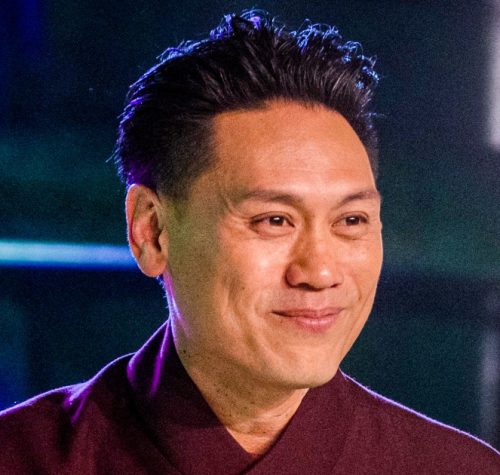
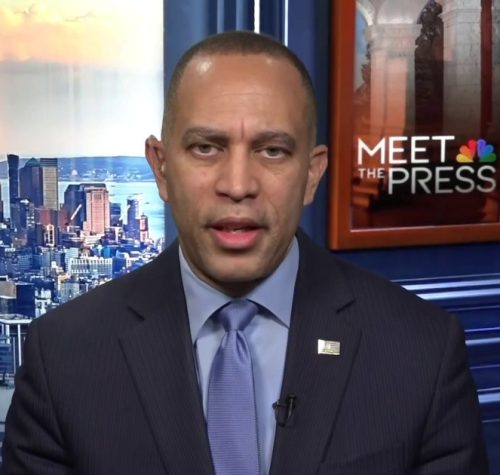
Nov. 9, 2025, 9:00 AM ESTBy Juhi Doshi“Wicked: For Good” director Jon M. Chu has built his career on turning stories about outsiders into celebrations of belonging. But in an interview with “Meet the Press” that aired Sunday, the filmmaker opened up about following his own yellow brick road: one marked by rejection and resilience.“My whole life, I’ve been trying to prove myself, that I can be here, that I can be in this business,” Chu told “Meet the Press” moderator Kristen Welker. “And I think I was always searching for that kind of validation. But through the process of making movies and doing it over — and I had a whole long career before ever doing ‘Wicked’ — I think I got killed many times.”“Wicked: For Good,” the second chapter in his adaptation of the hit Broadway musical, will hit theaters on Nov. 21. It is loosely based on Gregory Maguire’s 1995 novel — a creative reimagining of “The Wizard of Oz.” The new film is produced by Universal Pictures, part of NBCUniversal.“Wicked,” which Chu also directed, is the most profitable Broadway film adaptation of all time and was nominated for 10 Oscars, of which it won two.Chu says he found that lesson of authenticity reflected in his film’s two main characters — Elphaba and Glinda — and in the actors who played them, Cynthia Erivo and Ariana Grande.Glinda, played by Grande, and Elphaba, played by Erivo, form an unlikely friendship, each challenging the other to view life from a new perspective and defy the expectations their world pins onto them.“I learned so much from Elphaba and Glinda and from Cynthia and Ariana,” he said. “I think I’ve gotten to let go of that idea of proving yourself.”When Chu was just 23, fresh out of the University of Southern California’s film school, he landed two movie deals. Both collapsed before production began.“There were days where I was like, ‘Am I a fool?’ … I would go into USC — they asked me to speak at USC, because this is the guy that just came out of college and got his deal … and I sit in the loading dock, and I’m watching all these kids excited about making a movie. And I feel like nothing. I feel like — and I just started to weep. It was probably the first time I cried in 20 years or something at that point. I was like, ‘These people think I’m a complete fake.’”Years later, after gaining experience and completing a variety of film projects such as “Step Up 2” and “Now You See Me 2,” Chu found a story that changed the trajectory of his career and became a watershed moment for Asian American representation on screen: “Crazy Rich Asians.”“‘Crazy Rich Asians’ was great, because it cracked the door open or showed a path for the other people who needed to invest money in this. I’m not sure if it was for us,” he said. “I think it was for everyone else to say, ‘Oh, these actors have value.’”“Crazy Rich Asians” was the first major Hollywood studio film to feature a majority-Asian cast in 25 years and was the highest-grossing romantic comedy of the decade. Chu says he sees his film as an “avenue” for other Asian American filmmakers to share aspects of their own experience: “Let’s own our stories and tell every version of our story we could.”However, Chu said that more representation “takes time.”“I think we have to be careful to expect too big of a change too quickly,” he said. “Of course we want that, but to change culture, it takes time. You cannot force people to do that.”Chu also says he remains deeply committed to the movie theater experience, despite the growth of streaming.“I think movies are one of our last analog spaces. It’s a space that we have to protect,” Chu said. “You have to make a choice to go in. You have to leave your phone … and then you have to just sit back in the dark and watch something for two hours through someone else’s perspective. That is maybe one of the last spaces we have to do that. It is a part of our culture.”And that, he says, is what “Wicked” is all about.“Even though it’s a fantasy, even though it’s a fairy tale, it’s our access into a human experience. What does it feel like when you believe so deeply, when you love so deeply, when you sacrifice everything? That we still have the capacity to do that,” Chu said. “It’s what my parents taught me. It’s what America has taught me.”Juhi DoshiJuhi Doshi is an associate producer with NBC News’ “Meet the Press.”

“Wicked: For Good” director Jon M. Chu has built his career on turning stories about outsiders into celebrations of belonging.

Source link

TAGS:
14 views

Nov. 9, 2025, 6:00 AM ESTBy Alexander SmithFears over dependency on Chinese technology have reached an unlikely corner of the West: the previously serene and efficient world of Scandinavian public transportation.European nations have become increasingly worried that their vast amounts of Chinese-built infrastructure could be weaponized — tampered with, immobilized or even commandeered — if tensions were to rise with Beijing. Now, bus providers in Denmark and Norway say they are urgently investigating and remedying what they say is a security loophole discovered in their fleets of vehicles made by Yutong, a company based in Zhengzhou, China, that is the world’s largest manufacturer of buses by sales volume.Because these buses can receive updates and diagnostic tests “over the air,” they can be “stopped remotely, either by the manufacturer or by a hacker,” Jeppe Gaard, chief operating officer of the Danish public transport provider Movia, told NBC News in an email Wednesday.“Electric buses, like electric cars, in principle can be remotely deactivated if their software systems have online access,” he said. This isn’t just a “Chinese bus concern; it is a challenge for all types of vehicles and devices with these kinds of electronics built in,” Gaard added.In Denmark, Movia’s fleet includes 262 Yutong buses, which have been phased in since 2019 across a network that covers the capital, Copenhagen, and the east of the country, Movia said.Trump reaches trade war truce with China01:49The alarm was first raised earlier this month by the Norwegian bus operator Ruter, which runs half of the country’s public transport, including in Oslo, the capital.Ruter performed underground tests “inside a mountain” on two buses: the Yutong model and one from the Dutch manufacturer VDL.While the Dutch buses “do not have the capability for autonomous software updates over the air,” Yutong “has direct digital access to each individual bus for software updates and diagnostics,” it said.In theory, “this bus can be stopped or rendered inoperable by the manufacturer,” it said, although Yutong wouldn’t be able to remotely drive these vehicles.Asked for comment on the Danish and Norwegian moves, Yutong sent an emailed statement saying that it “understands and highly values the public’s concerns regarding vehicle safety and data privacy protection,” and “strictly complies with the applicable laws, regulations, and industry standards.”It said its vehicle data in the European Union is stored in an Amazon Web Services data center in Frankfurt, Germany, where it is “protected by storage encryption and access control measures,” and that “without customer authorization, no one is allowed to access or operate the system.”China’s Ministry of Commerce did not immediately respond to a request for comment.This is just the latest episode in Europe’s complex relationship with China: deeply reliant on Beijing’s trade and increasing know-how, but critical of its alleged cyber-aggression, rampant intellectual property theft and human rights violations.Even as hope rises for a new trade agreement between China and the E.U., there are grave concerns over plans for a new mega-embassy in London and a lingering scandal over the collapse of an alleged spying case at the heart of Westminster.Meanwhile, the Dutch government has seized control of the Chinese chipmaker Nexperia, in a saga that has raised fears that car production could come to a halt on the Continent.Even more so than the United States, European nations have relied on China for critical infrastructure — only to conclude that it poses a problem if and when relations go south.A number of European governments have torn out 5G networks made by the Chinese giants Huawei and ZTE — under pressure from Washington — because of fears they could be used by Beijing to compromise Western national security.Today’s hot-button issue is Chinese electric vehicles, which are effectively blocked from sale in the U.S. but whose market share is ballooning in Europe, doubling to 5.1% in the first half of 2025 from last year, according to the auto consultancy JATO Dynamics.As with other Western concerns, China has roundly rejected that its EVs and other technologies present a security risk.In January, China’s Foreign Ministry condemned American moves to block Chinese tech from the U.S. auto market, accusing it of “overstretching the concept of national security” and calling for Washington to “stop going after Chinese companies,” spokesman Guo Jiakun said at a daily news briefing. But plenty of security and intelligence officials are concerned.Western nations had “the whole problem with Huawei and 5G, and you’ve now got a similar problem in Chinese electric cars: that they can all be immobilized at a switch from the manufacturer,” the former head of Britain’s MI6 intelligence agency, Richard Dearlove, told NBC News in an interview earlier this year. “So if we have a crisis with China, they can bring London to a complete halt by reprogramming” these vehicles.In reality, this is also true of any electric vehicle — including those made by Tesla, for example — and many other items reliant on internet connectivity, said Ken Munro, founder of the British American cybersecurity consultancy Pen Test Partners.In Norway, Ruter, the electric bus operator, said it had carried out several fixes, including stricter controls on future bus purchases, “firewalls” to protect against hackers, and “collaborating with national and local authorities on clear cybersecurity requirements.”Are experts convinced this will work?“Not really,” Munro said.“Any degree of connectivity and the ability to update software, which we all want as consumers,” he said, “has to be enabled.” Munro added: “The only way to do this, to my mind, would be for the operator to remove all connectivity from that vehicle.”Munro questioned whether China would actually want to exploit a potential vulnerability like the one identified in the Scandinavian buses.“Do we believe that China would destroy its entire export industry for vehicles, EVs or not, in order to prove a political and military point? It is within the bounds of plausibility,” but the chances are “incredibly small,” Munro said.“It just comes down to trust,” he added. Alexander SmithAlexander Smith is a senior reporter for NBC News Digital based in London.Peter Guo contributed.

Bus providers in Denmark and Norway are urgently investigating what they say is a security loophole in their fleets of vehicles made by China’s Yutong.

Source link

TAGS:
15 views

Nov. 9, 2025, 5:02 AM ESTBy Andrew GreifIt’s the middle of the NFL season. Do you know who your Super Bowl contenders are? Good luck determining that. For the first time since 2010, every team has at least two losses through Week 9, according to research by NBC Sports. Further, of the league’s eight divisions, six have a team in first place either outright, or tied for first, that didn’t win it last year. One site that calculates playoff probabilities has pegged 10 teams with at least a 10% chance of making the Feb. 8 Super Bowl in Santa Clara, California. Everything feels wide open — with the exception of one division. And given the history of the NFC East, that’s a surprise.The NFC East hasn’t had a repeat division winner since 2003-04, making it an outlier in a league where division titles infrequently change hands. Last season’s champions of the AFC East, West, South and North and the NFC South and North all were repeat winners. And the only exception, the NFC West, last saw a repeat winner in 2022-23.Eight games still remain in the regular season, and though the Eagles are 6-2, they haven’t been the picture of dominance; one more loss will tie their season total from all of last year. Last year, their combination of an elite offensive line and running back led to a Super Bowl title while producing 179 rushing yards per game. This season, that average has dropped by 37 percent. The Eagles also are averaging nearly a full yard less per carry. Still, it’s not too early to suggest that Philadelphia is primed to finally produce a repeat champ in the NFC East. That’s because what was one of last season’s strongest divisions — it produced both conference finalists, in the Eagles and Washington Commanders — has fallen apart. Dallas (3-5-1), Washington (3-6) and New York (2-7) all have losing records, are currently on losing streaks and have been outscored on the season. The chances any of the three threatens a comeback could be slim; the Eagles have just three divisional games remaining. What else we’re watching in Week 10Falcons (3-5) at Colts (7-2): The NFL’s first game played in Berlin features two elite running backs: Atlanta’s Bijan Robinson (1.058 yards from scrimmage) and Indianapolis’ Jonathan Taylor (1,113). But Taylor was held to a season-low 45 rushing yards last week in a loss.Saints (1-8) at Panthers (5-4): Carolina quarterback Bryce Young has won his last four starts, and running back Rico Dowdle’s 735 yards are third-most in the league.Giants (2-7) at Bears (5-3): The Giants have lost 10 straight road games. The Bears have won five of their last six. Jaguars (5-3) at Texans (3-5): With quarterback C.J. Stroud (concussion) sidelined, Houston’s Davis Mills will start for the first time since 2022. He’ll be supported by the league’s best defense in yards (267) and points (15.1) allowed per game.Bills (6-2) at Dolphins (2-7): Buffalo has won 14 of its last 15 games against Miami, which has scored 10 points or less three times this season.Ravens (3-5) at Vikings (4-4): It’s hard to believe but Justin Jefferson’s touchdown catch last week was his first since Week 1. With 76 yards, Jefferson will pass Torry Holt for the most receiving yards through a player’s first six seasons.Browns (2-6) at Jets (1-7): New York’s rebuilding defense plays for the first time since trading Pro-Bowlers Quinnen Williams and Sauce Gardner. Cleveland has lost 12 consecutive road games.Patriots (7-2) at Buccaneers (6-2): Both teams are off to their best start since each was quarterbacked by Tom Brady: 2021 for Tampa Bay, and 2019 for New England.Cardinals (3-5) at Seahawks (6-2): Seattle has won eight straight games in this matchup. Rams (6-2) at 49ers (6-3): A key game in the race for the NFC West crown, where these teams and the Seahawks all have six wins. The Rams have allowed a minuscule 6.7 points per game during their three-game winning streak.Lions (5-3) at Commanders (3-6): Detroit has won 12 straight games coming off of a loss, dating to 2022. To win again, they’ll need Jahmyr Gibbs and David Montgomery to produce more than the 65 rushing yards they combined for last week. Steelers (5-3) at Chargers (6-3): A Steelers defense that just forced six turnovers now faces Justin Herbert, whose 2,390 passing yards and 18 passing touchdowns are second-most in the league. Eagles (6-2) at Packers (5-2-1): On Monday night, the key is turnovers. Green Bay has given the ball away just five times all season. The only team with fewer? Green Bay, with three. Andrew GreifAndrew Greif is a sports reporter for NBC News Digital. 

It’s the middle of the NFL season.

Source link

TAGS:
20 views

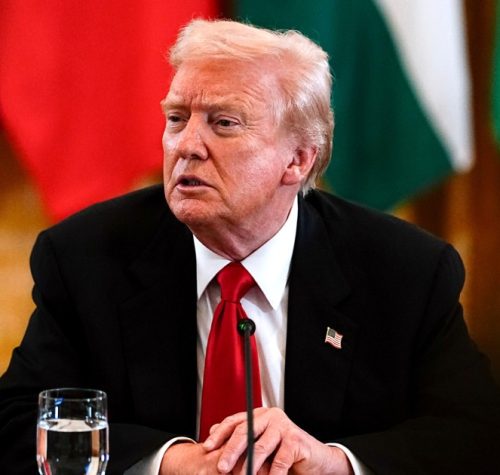
Nov. 9, 2025, 5:00 AM ESTBy Jonathan AllenIt’s not in President Donald Trump’s nature to accentuate the negative — at least not when it comes to his own performance or plans — and in the current moment, that has put him at risk of sounding out of touch with Americans who are struggling to make ends meet.“We had the greatest economy in the history of our country,” Trump said of his first term in an interview with Norah O’Donnell for CBS’ “60 Minutes” a week ago. “But my second term is blowing it away.”Two days later, voters blew away Republican candidates up and down the ballot in Virginia and New Jersey, results that reinforced NBC News polling showing that the vast majority of voters — about two-thirds — think the president hasn’t lived up to his promises to curb inflation and improve the economy. The common watchword for Democratic candidates who won on Tuesday — both progressives and centrists — was “affordability.”Look no further than Trump’s predecessor to see the peril for the president. Early in his single term, President Joe Biden ignored inflation, then his administration dismissed it as a “transitory” effect of government spending during the Covid-19 pandemic, before scrambling to minimize the political fallout of losing trust with the public.For Trump, who has described himself as a “cheerleader” for the country, his handling of the substance and messaging around affordability amounts to a bet that he’s on the right track — and can prove it quickly — even if most American voters don’t see it that way right now. Biden thought the same.“Trump has an enormous gamble,” said Newt Gingrich, a former House speaker and a Trump ally. He is betting that his economic policies — including tariffs, tax cuts and investments in the U.S. — will combine to create a “boom of extraordinary proportions” by next summer, Gingrich said in an interview.“If that’s true, Republicans are going to have a very good 2026,” Gingrich said of next year’s midterm elections. “If it’s not true, Republicans are going to have a very tough 2026.”Like Trump, Biden argued that the broader economy was strong, even as taxpayers suffered. And like Trump, Biden watched his party’s fortunes change at the ballot box a year after his own election.“As our economy has come roaring back, we’ve seen some price increases,” Biden said in July 2021. “Some folks have raised worries that this could be a sign of persistent inflation. But that is not our view. Our experts believe, and the data shows, that most of the price increases we’ve seen are expected to be temporary.”Trump hosts Gatsby-inspired Halloween party at Mar-a-Lago00:33In November of that year, 12 months after Biden won Virginia over Trump by 10 percentage points, Republican Glenn Youngkin won the state’s governorship by 2 percentage points. On Tuesday, Gov.-elect Abigail Spanberger, a Democrat, won Virginia by about 15 percentage points. NBC News exit polls showed that the economy was the top issue for 48% of voters — more than double the 21% who picked health care, which was the second-highest-ranking topic.Trump, who is collecting hundreds of millions of private dollars to build a White House ballroom and who hosted a “Great Gatsby”-themed Halloween party in the middle of the ongoing government shutdown, said this week that the costs of everyday life are not something he wants to address.“The reason I don’t want to talk about affordability is because everybody knows that it’s far less expensive under Trump than it was under ‘Sleepy Joe Biden,’ and the prices are way down,” he said of his predecessor in remarks to reporters last week.Trump is frustrated because he doesn’t believe he’s getting the credit he deserves for efforts to bring down prices, said one senior White House official who conceded that the administration is not doing a good enough job of communicating on affordability.Kornacki: How Mikie Sherrill swept New Jersey despite Trump’s 2024 gains15:16It’s clear that other Republicans are taking a cue from voters. In announcing her bid for governor of New York on Friday, Republican Rep. Elise Stefanik put the issue of affordability front and center. Rather than blame Trump, with whom she is close, Stefanik drew a bead on Democratic Gov. Kathy Hochul, who is seeking re-election.“The No. 1 issue is affordability,” Stefanik said in an interview with WHAM radio’s Bob Lonsberry. “New York is the most unaffordable state in the nation because of Kathy Hochul’s leadership.”And even if Trump won’t acknowledge it, his aides say that the White House is paying attention to the squeeze that families across the country say they’re feeling.“The president is very keyed in to what’s going on, and he recognizes, like anybody, that it takes time to do an economic turnaround, but all the fundamentals are there, and I think you’ll see him be very, very focused on prices and cost of living,” White House deputy chief of staff James Blair told Politico.But that, too, presents a messaging challenge for Trump, who is presiding over consumer prices that rose 3% in the 12 months ending at the close of September. He has the biggest megaphone in the country, and his own words — which sound a lot like Biden’s — may drown out anything his aides say.Many Democrats who served in the Biden White House remember a president who disagreed with voters on the strength of the economy and paid a price for failing to acknowledge the sentiments of the electorate.“The economic statistics may be great, and in President Biden’s case they were,” Democratic strategist Adrienne Elrod said in an exchange of text messages. “But when prices are too high and the messenger keeps saying ‘No, you’re wrong, the economy is actually fantastic,’ the messenger starts to lose credibility with voters.”Elrod, who worked for Biden on the campaign trail and in the White House, said Trump is making the same mistakes as Biden and Vice President Kamala Harris, who took his place at the top of the Democratic ticket in 2024.“You have to meet the voters where they are — never forget President Clinton’s effective use of the line ‘I feel your pain,’” she said. “Our failure to do that in 2024 is ultimately one of the reasons we lost the presidential election, and Trump’s failure to do that now is one of the reasons he is perpetually under water with voters on the economy.”Jonathan AllenJonathan Allen is a senior national politics reporter for NBC News. Peter Nicholas and Monica Alba contributed.

Even as Republicans have started to feel political heat on economic issues, Trump has continued to insist that the economy is better than ever.

Source link

TAGS:
12 views

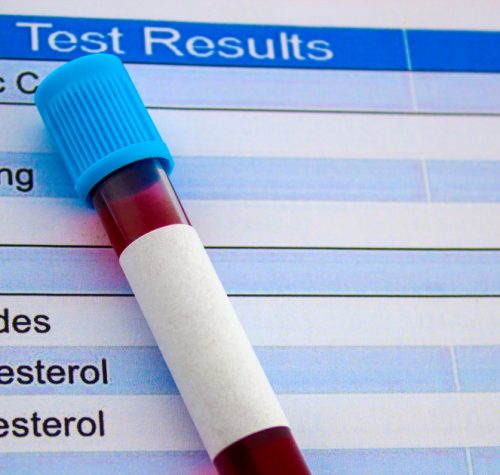
Nov. 8, 2025, 9:56 AM ESTBy Erika EdwardsAltering a single gene may help people lower dangerously high levels of cholesterol and other fats in the blood, according to new research presented Saturday at the annual meeting of the American Heart Association in New Orleans.The Phase 1 clinical trial of 15 people was intended to show whether the experimental gene-editing therapy was safe to use in humans.It was, the researchers said. It was also effective: One infusion of the medicine drove down low-density lipoprotein (LDL) cholesterol and triglycerides by about half — an effect that could decrease patients’ heart disease risk for the rest of their lives.“Frankly, if you’d asked me 15 years ago if we would be able to do this, I would have thought you were crazy,” said Dr. Steven Nissen, chief academic officer at the Cleveland Clinic’s Heart, Vascular & Thoracic Institute and one of the study’s investigators. “The results were pretty spectacular.”The experimental drug employs CRISPR, a gene-editing tool that makes cuts and changes to the body’s genetic code. In this case, it manipulates a single gene in the liver that normally boosts cholesterol levels. Unlike cholesterol-lowering drugs like statins that need to be taken daily, this approach is meant to work permanently after one dose. (CRISPR Therapeutics makes the drug and helped fund the study.)The research, which was also published Saturday in The New England Journal of Medicine, created a mix of excitement and concern among cardiologists.“It’s a good proof-of-principle study, meaning we know we can do it,” said Dr. Karol Watson, co-director of the Program of Preventive Cardiology at UCLA Health. “It doesn’t answer the question, ‘Should we do it?’”The CRISPR technique would be considered a lifelong change in a person’s genetic makeup. As such, its long-term safety is unknown. Ongoing studies will need to make certain that the therapy doesn’t cause harm to the liver, where its effects are primarily seen.“Here’s the thing,” Watson said. “We already have really safe, really good medications that lower LDL and triglycerides that are easy, once-daily oral medications. They will have to show us that CRISPR is very effective and safe. Long-term safety will be key.”According to Nissen, however, about half of people prescribed daily statins stop using them within a year, often because they have side effects. Moreover, the clinical trial only included patients who had tried, without success, to lower their cholesterol through standard approaches.Dr. Nishant Shah, a preventive cardiologist at Duke University Medical Center in Durham, North Carolina, said the technology is far from being used in everyday practice “for good reason.”“These are long-lasting effects,” he said, “so we really need to make sure we understand safety before we can provide these therapies.”But if the drug is deemed to be safe, Shah said, “the future is very promising to be able to take care of patients at high risk for cardiovascular disease.”Heart disease is the No. 1 cause of death for Americans. The accumulation of fats in the blood including LDL cholesterol and triglycerides can clog arteries and lead to heart attack and stroke.About a quarter of U.S. adults, 25.5%, have dangerously high LDL levels of more than 130 mg/dL, according to the AHA. LDL levels below 100 mg/dL are considered healthy for most adults.The drug targets a gene called ANGPTL3, which tells the body to make a protein that prevents the liver from breaking down cholesterol. Some people have naturally low-functioning versions of this gene, resulting in lifelong reductions in LDL cholesterol and triglyceride levels, according to the study. The drug is meant to mimic this effect, by turning off the gene so the liver is able to break down more cholesterol and fats.The 15 trial participants lived in Australia, New Zealand and the U.K. They were in their 50s and 60s. Thirteen were men. All had uncontrolled high LDL, triglycerides or a combination of the two.At the beginning of the trial, the median LDL cholesterol level was 155 mg/dL, and the median triglyceride level was 192 mg/dL, far above what’s considered healthy (below 150 mg/dL).Participants got different doses of the treatment, called CTX310, in a single infusion that lasted up to 4 ½ hours. A few people had side effects like nausea or back pain during the infusion. One volunteer had a temporary spike in liver enzymes that eventually returned to normal. And one person died for an unrelated reason months after the infusion, researchers said.The highest dose was given to four participants. In those people, LDL cholesterol decreased by 48.9%, and triglycerides fell by 55.2% within two months of treatment.“What’s nice about this target of ANGPTL3 is that it not only lowers the LDL, the bad cholesterol, but it also has some effectiveness on people who have very high triglycerides,” said Dr. Elizabeth McNally, a human geneticist and cardiologist at the Northwestern Feinberg School of Medicine in Chicago.“This could be helpful, but it really does remain to be seen how this is better than existing therapies,” said McNally, who was not involved with the current research.This isn’t the first time an experimental gene therapy has proved successful at driving down cholesterol in early studies. Two studies presented at the AHA meeting in 2023 went after genes to lower cholesterol levels. Larger studies on those treatments are ongoing.CRISPR technology is relatively new, with excitement growing for the tool since it was first used in 2012. (Its inventors won the Nobel Prize in medicine in 2020.) In 2023, the Food and Drug Administration approved the first CRISPR drug in the U.S., Casgevy, which treats sickle cell disease.Nissen said the next phase of clinical trials on the CTX310 treatment will include more patients, including people in the U.S. “We’ve got a ways to go, but this is the door to the future,” he said.Erika EdwardsErika Edwards is a health and medical news writer and reporter for NBC News and “TODAY.”Kaan Ozcan contributed.

People who have tried medication to lower their dangerously high levels of cholesterol and other blood fats – without success – may benefit from an experimental treatment.

Source link

TAGS: