
20 views

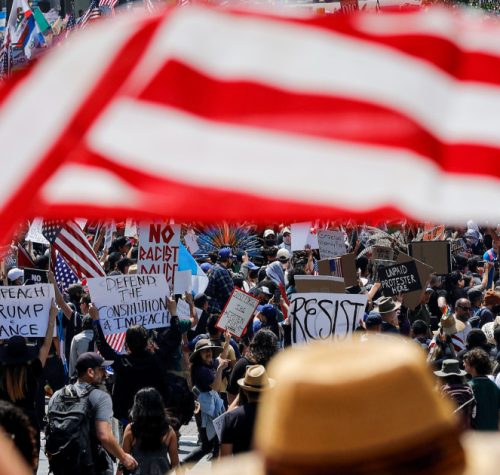
Nov. 8, 2025, 7:00 AM ESTBy Alicia Victoria LozanoLOS ANGELES — Federal prosecutors in Los Angeles have taken a hard line against alleged violence at protests, charging nearly 100 protesters since June in cases that could result in long prison sentences. But a fifth of those cases have been dismissed or resulted in acquittals in what some former federal prosecutors and free speech advocates say is a rare rebuke of the U.S. attorney’s office’s mission and credibility.After tens of thousands of people flooded the streets in June and October during “No Kings” protests against the Trump administration, at least 20 of 97 federal cases filed against Los Angeles protesters since June have failed in court, according to records provided to NBC News by the U.S. Attorney’s Office for the Central District of California. Eighteen of those cases were dismissed and two ended in acquittals. Experts weren’t able to provide an average number of cases but said the recent rate of unsuccessful ones seemed high.Last week, Trump-appointed U.S. Attorney Bill Essayli announced charges against 12 defendants stemming from June 8 protests across Southern California. The defendants were charged in a single complaint with obstructing, impeding and interfering with law enforcement during a civil disorder, according to the Department of Justice.NBC News spoke with four former federal prosecutors who all said that in their experience, protest cases on the federal level were not common before this year. Instead, prosecutors in the U.S. attorney’s office typically focus on high-level crimes such as human and drug trafficking, corruption and white-collar offenses.Summer Lacey, who served as a federal public defender in Los Angeles from 2014 to 2018, said her team never came across such high numbers of federal charges against protesters. Those cases were usually left to local district attorneys.L.A. County District Attorney Nathan Hochman has charged 42 people in protest-related cases since June, according to his office. NBC News asked the district attorney’s office how many of these cases have been dismissed or resulted in acquittal but did not receive an immediate reply.“What we’re seeing is that when these cases are scrutinized, so many of them are falling apart,” said Lacey, who is now an attorney with the ACLU’s Southern California chapter. “There isn’t an evidentiary base to support it, but people are being put through the process.”Across the nation, the Trump administration has used increasingly hostile language to describe protesters, sometimes calling them “domestic terrorists” and “rioters,” while characterizing cities like Portland, Oregon, and Chicago as “war-ravaged” and a “war zone.” Yet firsthand accounts from those cities paint a very different picture.Some former federal prosecutors say the discrepancies in how the Trump administration is describing protest behavior has created a credibility problem for current prosecutors, who are increasingly facing skeptical juries and judges. One said that is happening not just in Los Angeles but also in cities like Chicago and Portland, where protests and arrests continue.“People want federal prosecutors to be thoughtful and careful as to how they use their discretion,” said Laurie Levenson, a former federal prosecutor and a current law professor at Loyola Marymount University in Los Angeles. “It takes a long time to regain the public’s confidence, and the presumption of credibility is weakening.”On Tuesday, federal prosecutors in Illinois filed a motion to dismiss a case against an Oak Park resident who was accused of shoving a border agent during an Oct. 3 protest outside an Immigration and Customs Enforcement facility near Chicago. Cole Sheridan was charged with assaulting, impeding or resisting a federal agent.Magistrate Judge Heather K. McShain appeared skeptical of the federal government’s case during a recent hearing, according to local media reports. Arguments largely hinged on testimony provided by U.S. Border Patrol boss Gregory Bovino, who was involved in Sheridan’s arrest but testified that he was not wearing body cameras at the time of the skirmish.How Greg Bovino became a rising star in Trump’s immigration efforts03:55“This is part of a larger political narrative and discussion as opposed to really being about doing anything to enhance or increase public safety,” said Ed Yohnka, director of communications and public policy at the American Civil Liberties Union of Illinois, which was not involved in the Sheridan case.“This administration clearly believes that anybody who protests against them is an enemy that has to be punished,” he added.The U.S. attorney’s office in Chicago did not return a request for comment.“We’re seeing grand juries reject those cases, or seeing those cases being dismissed,” said Cristine DeBerry, a former federal prosecutor who is now with the nonprofit watchdog Prosecutors Alliance, which advocates for criminal justice reform. “They’re weak at best, and that there’s very little evidence to support what the federal government is trying to do.”Federal prosecutors have been facing an uphill battle in Los Angeles as charges continue to be dropped against protesters.Last month, assault charges were dismissed against a protester who was accused of intentionally hitting a federal officer during an October protest outside an immigration detention facility.But defense lawyers for Ashleigh Brown argued that prosecutors’ account was inaccurate. According to court filings, Brown was followed to her car by two federal officers who attempted to block her from driving away. Brown’s lawyers argued that the federal government failed to disclose a history of assault and excessive force by one of the officers who was allegedly attacked by Brown, according to court documents provided to NBC News.Her case was dismissed with prejudice, meaning new charges cannot be brought against her for the same incident.In an emailed statement, a spokesperson for the U.S. Attorney’s Office for the Central District of California, which includes Los Angeles, said, “First Amendment protects peaceful protest. Violence — including violence against law enforcement and property — is not constitutionally protected.”“There has been an incredible amount of violence directed at federal officers and property in what has been the largest immigration enforcement action in decades,” Ciaran McEvoy wrote in the statement. “That must be factored in.”In the first cases brought against protesters following the June 8 No Kings protests, seven of nine assault and impeding cases were dismissed, according to court documents.DHS agents accused protesters of shoving or assaulting law enforcement officers, but footage presented in court appeared to show the opposite, which led to at least one acquittal.“The challenge we have is we don’t have a federal government that is playing by the normal rules,” DeBerry said. “We are not supposed to bring a case you cannot prove beyond a reasonable doubt. But they are filing cases they know they cannot prove beyond a reasonable doubt.”Alicia Victoria LozanoAlicia Victoria Lozano is a California-based reporter for NBC News focusing on climate change, wildfires and the changing politics of drug laws.

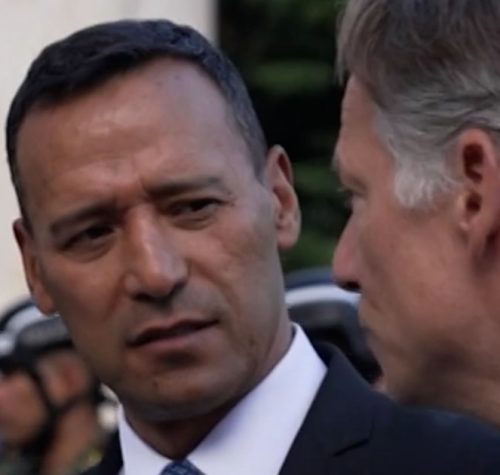
Some former federal prosecutors say the discrepancies in how the Trump administration is describing protest behavior may create a credibility problem for current prosecutors.

Source link

TAGS:
15 views

Savewith a NBCUniversal ProfileCreate your free profile or log in to save this articleNov. 8, 2025, 5:00 AM ESTBy Mithil AggarwalNEW DELHI — When the weight loss drug Mounjaro came on the market in India earlier this year, Shyamanthak Kiran was one of the first patients to try it.Kiran, a 27-year-old financial trader who has struggled with hypothyroidism, said he “did not have a lot of expectations” when it came to losing weight. But “luck turned out in my favor,” he said, and in six months he lost all of the 60-plus pounds he had gained a few years earlier.“It was a two-year struggle that came to an end, and I couldn’t be happier,” he told NBC News.Indians trying to lose weight are embracing drugs such as Mounjaro, which is also used to treat diabetes in a country that has been called the world’s diabetes capital. The injectable medication from American pharmaceutical company Eli Lilly has become India’s most popular drug by value since being approved in March, with over $11 million in sales in October, pharmaceutical market research firm Pharmarack said Friday.Mounjaro is an injectable medication used to treat diabetes. Saumya Khandelwal for NBC NewsEven before India’s more recent approval of Ozempic, another drug that is widely used for weight loss in the United States and other countries, there was already surging demand in the country for semaglutide, its active ingredient.Ozempic’s Danish drugmaker, Novo Nordisk, says it is “actively working” to widen the availability of the drug, which Indian regulators have approved for diabetes but not obesity. The company also makes other semaglutide drugs that are already used for weight loss in India, including Wegovy, an injectable, and Rybelsus, which is taken orally.Demand could grow even further when the patent for Ozempic’s active ingredient, semaglutide, expires next March in India, a pharmaceutical manufacturing giant where companies are eager to produce cheaper generic versions of the lucrative weight-loss drugs.The exploding popularity of the drugs has taken aback some doctors and officials, with Jitendra Singh, a government minister and physician, warning in August against the “unchecked spread of disinformation” through “fad regimens” and emphasizing the importance of lifestyle interventions such as regular yoga practice.Semaglutide and tirzepatide, the active ingredient in Mounjaro, are GLP-1 agonists that were first developed to treat diabetes and have also been approved in many countries for the treatment of obesity. They regulate blood sugar and help slow how quickly food passes through the stomach, curbing hunger as a result.India, the world’s most populous country, has over 100 million people with diabetes, or nearly 10% of its adult population, according to a 2023 study by the Indian Council of Medical Research. An additional 135 million people are prediabetic, the study found.Diabetes information displayed on the walls of a clinic in New Delhi last month.Saumya Khandelwal for NBC NewsDoctors say the situation is worsening as India’s burgeoning middle class adopts a more Western lifestyle, eating more high-fat, high-sugar foods and exercising less.“Compared to, say, a decade ago, there are more people now in their late 20s and early 30s who are being diagnosed with diabetes, as compared to the elderly population,” said Dr. Saurav Shishir Agrawal, an endocrinologist in Noida, which is part of Delhi’s capital region.“They ask us to just give them pills,” Agrawal said, “but these medicines work better only when you are clubbing them with lifestyle changes.”Agrawal practices at the newly built Medanta Hospital, where staff greet patients with a gentle “Namaste.” It is an example of the growing number of modern and high-end hospitals popping up around increasingly dense megacities such as Delhi, home to 33 million people, where diabetes has a greater hold.Saurav Agrawal, an endocrinologist at Medanta Hospital in Noida, India.Saumya Khandelwal for NBC NewsA monthly course of Mounjaro can cost as much as $250, the average monthly salary in many parts of India. But for more affluent Indians, a bigger deterrent is the idea of injecting themselves, said Dr. Tribhuvan Gulati, an endocrinologist.“People get scared whenever you tell them that they’re going to be on an injectable,” said Gulati, who has a clinic in central Delhi.Gulati keeps a demo pen of Mounjaro in a drawer to show how easy it is to use the medicine, which just needs to be refrigerated before use.But the ease of use is also what worries Gulati and other doctors, who say many patients fail to overhaul the lifestyle and dietary habits causing or contributing to their health issues in the first place.“If you look at the causes of obesity in India, it is 90% lifestyle and 10% anything else,” said Dr. Anoop Misra, chairman of the Fortis Centre for Diabetes, Obesity and Cholesterol and head of India’s National Diabetes Obesity and Cholesterol Foundation.“The diet now is totally imbalanced because of free availability of food everywhere,” he said.The potential gastrointestinal and other side effects from the weight-loss drugs, which in the U.S. have prompted multiple lawsuits against GLP-1 makers, give some patients pause, Gulati said. But others “are OK with continuing it throughout their life because they know that they won’t be able to control themselves.”A handbook about managing diabetes at a clinic in New Delhi.Saumya Khandelwal for NBC NewsDiabetic patients such as Moinak Pal, who has high insulin resistance, say that GLP-1 drugs have been the easiest way to lose weight.“I have been fat-shamed since I was a child,” said Pal, 34, a Noida-based journalist. He said he has been losing about 3 pounds a week since he started taking Mounjaro.It was “extremely difficult for me to lose weight by conventional means,” he said.Part of the problem, Misra said, is the lifestyle in India’s sprawling and congested urban areas, where commutes can last as long as four hours round-trip. When workers get home, apps can deliver everything from food to clothes to their doorsteps in minutes.“They want quick fixes that don’t involve going on a restrictive diet or daily exercise of an hour and so on,” he said of some of his patients. “As a result, diabetes is everywhere. Every day I see patients who are young, who have uncontrolled Type 2 diabetes.”Rajendra Nath Dixit blames nobody but himself for his health problems. The retired banker had heart bypass surgery earlier this year, and before that had been spending almost 8,000 rupees ($90) a month just on his insulin.“I was fond of taking the typical Indian oily foods, samosas, chole bhature, and in the evening I would take five or six rotis,” said Dixit, 66. “Every bad habit was there.”In the five months since his surgery, Dixit has switched over completely to the oral semaglutide Rybelsus, is exercising more and is consuming less fat and sugar. He is spending 11,000 rupees ($125) a month on Rybelsus, but has been able to stop using insulin.“I’m feeling very good, very light,” he said. “My confidence has gone up, and my life has totally changed.”Mithil AggarwalMithil Aggarwal is a Hong Kong-based reporter/producer for NBC News.

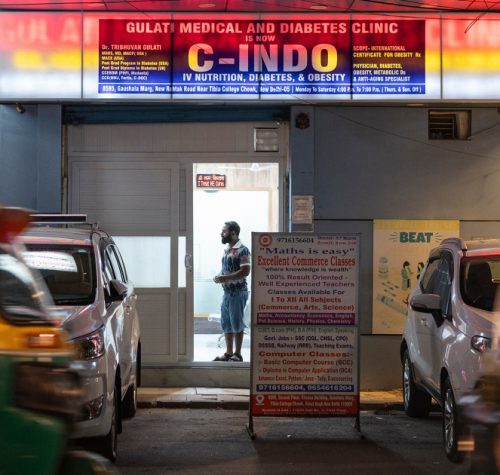
Middle-class Indians trying to lose weight are embracing drugs such as Mounjaro in a country that has been called the world’s diabetes capital.

Source link

TAGS:
12 views

Nov. 8, 2025, 6:00 AM ESTBy Evan BushNine seismic stations in Alaska are set to go dark this month, leaving tsunami forecasters without important data used to determine whether an earthquake will send a destructive wave barreling toward the West Coast. The stations relied on a federal grant that lapsed last year; this fall, the Trump administration declined to renew it. Data from the stations helps researchers determine the magnitude and shape of earthquakes along the Alaskan Subduction Zone, a fault that can produce some of the most powerful quakes in the world and put California, Oregon, Washington and Hawaii at risk. Losing the stations could lead Alaska’s coastal communities to receive delayed notice of an impending tsunami, according to Michael West, the director of the Alaska Earthquake Center. And communities farther away, like in Washington state, could get a less precise forecast.“In sheer statistics, the last domestic tsunami came from Alaska, and the next one likely will,” he said.It’s the latest blow to the U.S.’ tsunami warning system, which was already struggling with disinvestment and understaffing. Researchers said they are concerned that the network is beginning to crumble. “All the things in the tsunami warning system are going backwards,” West said. “There’s a compound problem.”The U.S. has two tsunami warning centers — one in Palmer, Alaska, and the other in Honolulu — that operate around-the-clock making predictions that help emergency managers determine whether coastal evacuations are necessary after an earthquake. The data from Alaska’s seismic stations has historically fed into the centers.Both centers are already short-staffed. Of the 20 full-time positions at the center in Alaska, only 11 are currently filled, according to Tom Fahy, the union legislative director for the National Weather Service Employees Organization. In Hawaii, four of the 16 roles are open. (Both locations are in the process of hiring scientists, Fahy said.)Additionally, the National Oceanographic and Atmospheric Administration has decreased funding for the National Tsunami Hazard Mitigation Program, which pays for the majority of states’ tsunami risk reduction work. The agency provided $4 million in 2025 — far less than the $6 million it has historically offered. “It’s on life support,” West said of the program. A tsunami evacuation route sign in Bolinas, Calif.Stephen Lam / San Francisco Chronicle via Getty Images fileOn top of that, NOAA laid off the National Weather Service’s tsunami program manager, Corina Allen, as part of the Trump administration’s firing of probationary workers in February, according to Harold Tobin, the Washington state seismologist. Allen, who had recently started at the agency, declined to comment via a spokesperson for her new employer, the Washington State Department of Natural Resources. These recent cuts have played out amid the Trump administration’s broader efforts to slash federal spending on science and climate research, among other areas. NOAA fired hundreds of workers in February, curtailed weather balloon launches and halted research on the costs of climate and weather disasters, among other cuts. Most of the seismic stations being shut down in Alaska are in remote areas of the Aleutian Islands, West said. The chain extends west from the Alaskan Peninsula toward Russia, tracing an underwater subduction zone. KHNS, a public radio station in Alaska, first reported the news that the stations would be taken offline.A NOAA grant for about $300,000 each year had supported the stations. The Alaska Earthquake Center requested new grant funding through 2028, but it was denied, according to an email between West and NOAA staffers that was viewed by NBC News. Kim Doster, a NOAA spokeswoman, said the federal agency stopped providing the money in 2024 under the Biden administration. In the spring, the University of Alaska Fairbanks ponied up funds to keep the program going for another year, believing that the federal government would ultimately cover the cost, said Uma Bhatt, a University of Alaska Fairbanks professor and associate director of the research institute that administered the grant. But new funds never materialized.“The loss of these observations does not prevent the Tsunami Warning Center from being able to carry out its mission,” Doster said. “The AEC [Alaska Earthquake Center] is one of many partners supporting the National Weather Service’s tsunami operations, and NWS continues to use many mechanisms to ensure the collection of seismic data across the state of Alaska.”The White House did not respond to a request for comment. West said the Alaska Earthquake Center provides the majority of data used for tsunami warnings in the state. The grant that supported the nine seismic stations also funded a data feed with information from the center’s other sensors, according to West. The national tsunami warning centers will no longer have direct access to the feed. West said the stations on the Aleutian Islands cover a huge geographic range. “There’s nothing else around,” he said. “It’s not like there’s another instrument 20 miles down the road. There’s no road.” The plan is to abandon the stations later this month and leave their equipment in place, West added. Tobin, in Washington state, said he worries that the closures “could delay or degrade the quality of tsunami warnings.” “This is a region that’s sparsely monitored. We kind of need to have a stethoscope on this region,” he said, adding: “These programs are in the background until a big, terrible event happens.”The Alaska-Aleutian subduction zone is one of the most active faults in the world and has produced significant tsunamis in the past. In 1964, a tsunami produced by a magnitude-9.2 earthquake killed 124 people, including 13 in California and five in Oregon, according to NOAA. Most of the California deaths were in Crescent City, where a 21-foot wave destroyed 29 city blocks, according to the city’s website.Tsunami experts said the stations in the Aleutian Islands are critical in quickly understanding nearby earthquakes. The closer a quake is to a sensor, the less uncertainty about a subsequent tsunami.NOAA’s tsunami warning centers aim to put out an initial forecast within five minutes, West said, which is critical for local communities. (A strong earthquake in the Aleutian Islands could send an initial wave into nearby Alaskan communities within minutes.) The only data available quickly enough to inform those initial forecasts comes from seismic signals (rather than tide gauges or pressure sensors attached to buoys).The warning centers then put out a more specific forecast of wave heights after about 40 minutes. Daniel Eungard, the tsunami program lead for the Washington Geological Survey, said that not having the Alaska sensors would create more uncertainty about the heights of waves expected, complicating decisions about whether to evacuate along the Washington coastline.“We try not to over-evacuate,” he said, adding that it costs time, money and trust if warnings prove unnecessary.How a massive quake off Russia sent tsunami waves across the Pacific02:55Over the last year, the national tsunami warning centers have had their hands full. A magnitude-7.0 earthquake near Cape Mendocino, California, triggered tsunami alerts along the state’s coast in December. In July, a magnitude-8.8 quake off Russia’s Kamchatka peninsula prompted a widespread alert along the U.S. West Coast. The peninsula is just west of the Aleutian Islands. NOAA helped build many of the seismic stations that have been part of the Alaska Earthquake Center’s network. But West said the agency has decreased its support over the past two decades; nine NOAA-built stations were decommissioned in 2013. “It’s now or never to decide whether or not NOAA is part of this,” he said. “What I really want to do is spark a discussion about tsunami efforts in the U.S. and have that not be triggered by the next devastating tsunami.”Evan BushEvan Bush is a science reporter for NBC News.

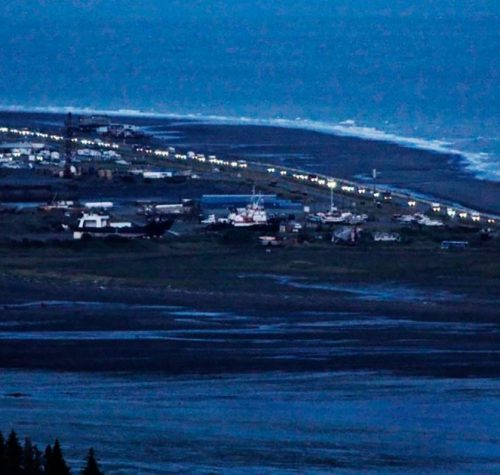
Nine earthquake monitoring stations in Alaska are set to go dark, leaving tsunami forecasters without important data to assess risks for the West Coast.

Source link

TAGS: